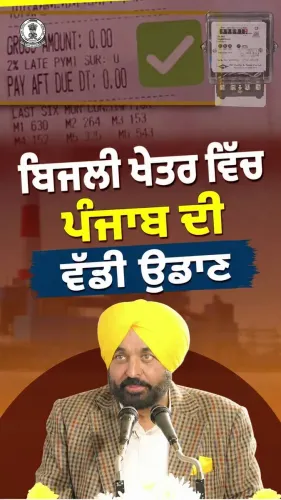
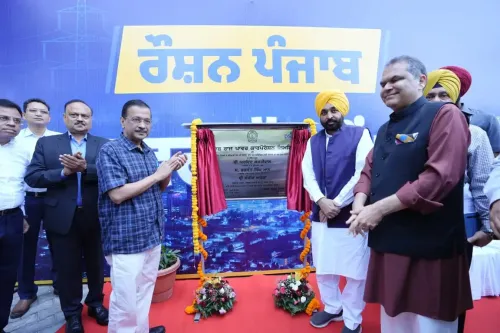
Punjab CM Bhagwant Mann launches Roshan Punjab with ₹5,000 Cr outlay
Synopsis
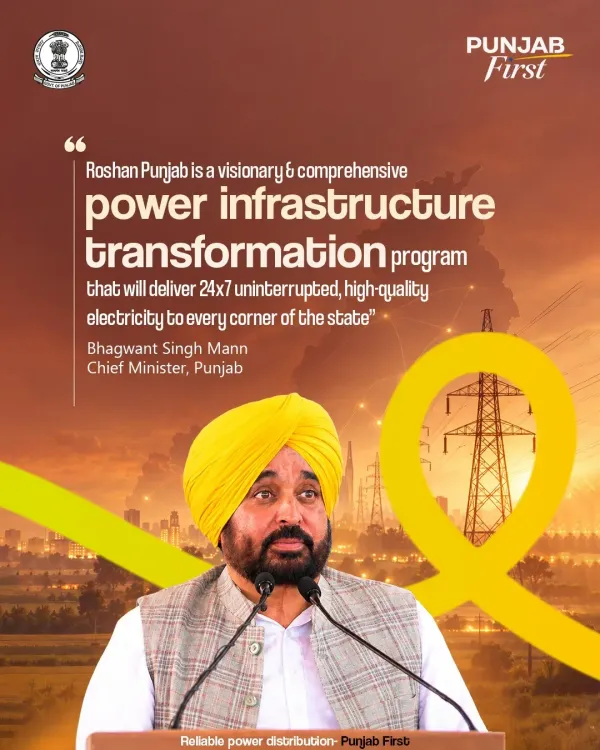
The Punjab government has launched Roshan Punjab, a ₹5,000 crore power infrastructure programme under CM Bhagwant Mann aimed at delivering 24x7 uninterrupted electricity to households, farmers, and industries across the state through comprehensive grid modernisation.
Key Takeaways
Roshan Punjab is Punjab's new flagship power infrastructure transformation programme, announced on 29 September 2026 .
The programme carries a capital investment of ₹5,000 crore , described by the state government as unprecedented for Punjab's power sector.
The core promise is 24x7 uninterrupted, high-quality electricity supply across all of Punjab.
Chief Minister Bhagwant Mann and the AAP government have framed reliable power as a central service-delivery commitment since taking office in 2022 .
Punjab previously participated in the central UDAY scheme (2015) for discom financial restructuring; Roshan Punjab targets the distribution infrastructure layer that UDAY did not fully address.
Key beneficiaries include farming households reliant on irrigation pumps, industrial units , and urban and rural consumers across the state's 22 districts.
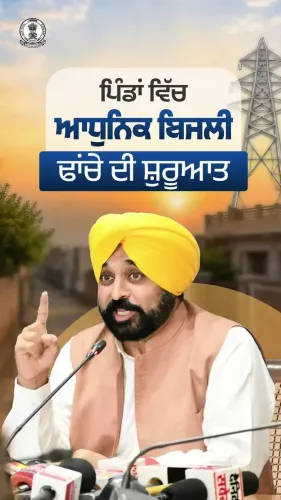
Punjab is making a bold, ₹5,000-crore bet that chronic power cuts are a thing of the past. The Chief Minister's Office of Punjab announced on Tuesday, 29 September 2026 that the state government has launched Roshan Punjab — a grid-modernisation programme designed to deliver 24x7 uninterrupted, high-quality electricity to every corner of the state.
What Roshan Punjab promises — and why the number matters
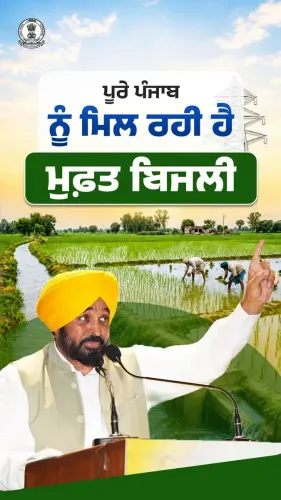
The programme's centrepiece is a capital investment the government describes as 'unprecedented' for Punjab's power sector. At ₹5,000 crore, the outlay signals a shift from patch-and-repair thinking to a wholesale transformation of the state's electricity distribution infrastructure. The stated goal — round-the-clock, uninterrupted supply — is one that Punjab households, farmers dependent on reliable irrigation pumps, and industrial units have chased for decades without success.
Chief Minister Bhagwant Mann, who has led Punjab's Aam Aadmi Party government since March 2022, has framed reliable power as a cornerstone of the government's service-delivery pitch. Roshan Punjab — meaning 'Illuminated Punjab' — carries that political promise in its name.
From UDAY to Roshan Punjab: a long road to the grid
Punjab is no stranger to state-level power schemes. The state participated in the central government's UDAY (Ujjwal DISCOM Assurance Yojana) scheme, launched in 2015, which targeted financial health of power distribution companies and aimed to reduce transmission losses. That framework laid some groundwork, but chronic outages — particularly in summer peak-demand months — persisted for agriculture-heavy and industrial belts alike.
Roshan Punjab now attempts to go further: grid modernisation, network strengthening, and smart infrastructure investment that UDAY's financial restructuring alone could not deliver. The pattern fits a broader national trend, where states periodically announce large capital outlays to tackle distribution-level failures that central schemes soften but rarely solve entirely.
The three constituencies watching this programme most closely
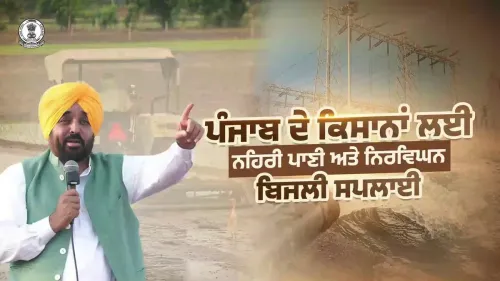
Punjab's farming community — one of the state's most politically powerful constituencies — depends on consistent electricity for tubewells and irrigation, especially during the wheat and paddy sowing seasons. Industrial units across the state's manufacturing belt, and urban and rural households across 22 districts, round out the stakeholders who will measure Roshan Punjab not by its launch but by what they see on their meters. The real test will arrive in phased rollout timelines, equipment procurement, and measurable reductions in outage frequency reported by the state's distribution company over the next 12 to 24 months.
Punjab has named the problem with clarity and written a large cheque. Whether the grid lights up to match the promise is the question every household in the state will answer from their own living room.
Point of View
And a ₹5,000 crore infrastructure commitment is the administration's most concrete answer yet to the gap between that promise and ground reality. The scheme fits a recognisable pattern in Indian state politics: large capital announcements timed to consolidate a government's reform narrative ahead of a policy cycle. What separates transformative programmes from aspirational ones, however, is execution — specifically, whether procurement, contractor accountability, and last-mile distribution upgrades actually reduce measured outage hours. If the state discom publishes transparent outage data in the 12-to-24-month window, Roshan Punjab could become a replicable model; if it stalls in procurement, it risks reinforcing exactly the credibility gap the AAP government set out to close.
NationPress
29 Sept 2026
Frequently Asked Questions
What is Roshan Punjab?
Roshan Punjab is a power infrastructure transformation programme launched by the Punjab government on 29 September 2026, backed by a ₹5,000 crore capital investment to deliver 24x7 uninterrupted electricity across the state.
Who launched the Roshan Punjab scheme?
The scheme was launched by the Chief Minister's Office of Punjab under Chief Minister Bhagwant Mann, who leads the Aam Aadmi Party government in the state.
How much money is being invested in Roshan Punjab?
The Punjab government has announced a capital investment of ₹5,000 crore for the Roshan Punjab programme, which the state describes as unprecedented for its power sector.
Who will benefit from Roshan Punjab?
The programme is aimed at Punjab households, farmers who depend on electricity for irrigation, and industrial units across the state — essentially all electricity consumers in Punjab.
How is Roshan Punjab different from the UDAY scheme?
While the central UDAY scheme (launched in 2015) focused on the financial restructuring of power distribution companies, Roshan Punjab targets physical grid modernisation and network strengthening to reduce outages at the distribution level.