Punjab CM Mann's Govt Lays 14,000 km Pipelines, Boosts Canal Irrigation
Synopsis
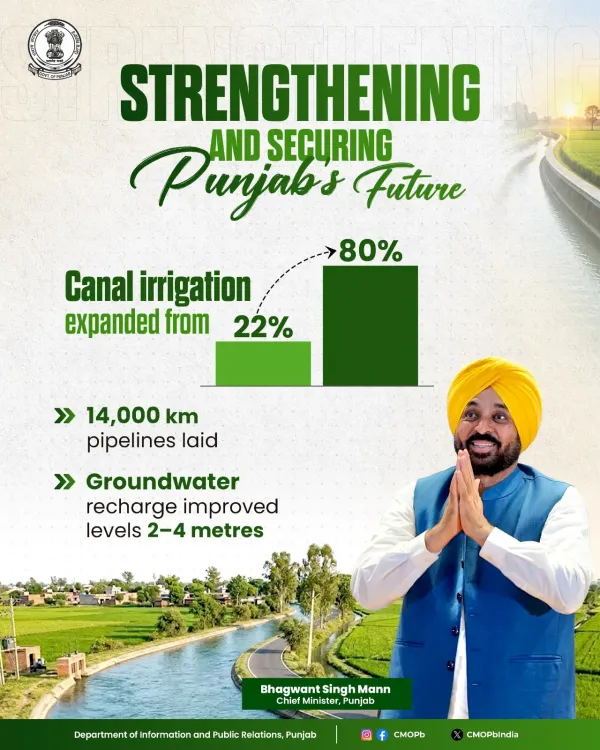
The Chief Minister's Office of Punjab says the Mann government has laid 14,000 km of pipelines to release 21,000 cusecs of water, pushing canal irrigation share from 22% to 80% and raising groundwater levels by two to four metres in several areas.
Key Takeaways
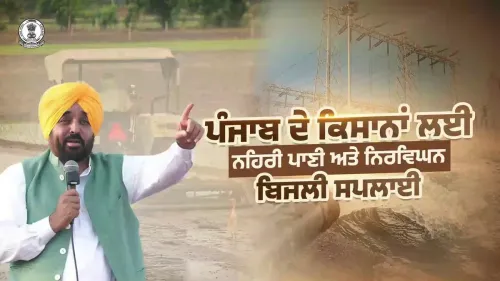
14,000 kilometres of pipelines and watercourses have been laid across Punjab under Chief Minister Bhagwant Mann .
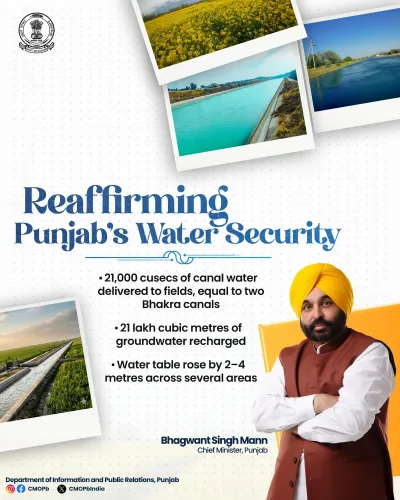
21,000 cusecs of water is being released through the new network to meet farmer irrigation needs.
Canal water's share in total irrigation has risen from 22 per cent to 80 per cent , according to the government.
Groundwater levels have increased by two to four metres in several areas following canal recharge interventions.
Recharge points have been established in canals and rivers to actively replenish aquifers.
The initiative addresses Punjab's long-standing groundwater depletion driven by water-intensive paddy-wheat farming.
The Chief Minister's Office of Punjab announced on Thursday, 25 June 2026 that the state government, under Chief Minister Bhagwant Mann, has laid 14,000 kilometres of pipelines and watercourses to deliver 21,000 cusecs of water to farmers, marking a significant push to overhaul the state's irrigation infrastructure.
Context
The official post states that canal water usage for irrigation has risen from 22 per cent to 80 per cent under the current administration, alongside a groundwater level increase of two to four metres in several areas. Recharge points have also been established in canals and rivers to replenish aquifers. These figures represent the government's own claims regarding progress made since Chief Minister Bhagwant Mann took office in March 2022.
Punjab's agricultural economy has historically depended on a water-intensive paddy-wheat rotation cycle, which over decades accelerated groundwater depletion across the state. The shift toward canal-based irrigation is central to reversing that trend.
Policy Backdrop
Successive state governments in Punjab have promoted greater use of the existing canal network to reduce dependence on tubewells, which have drawn down the water table in many districts. The Aam Aadmi Party government has positioned irrigation infrastructure as a flagship priority, framing canal expansion as both an agricultural and an environmental intervention.
At the national level, the Pradhan Mantri Krishi Sinchayee Yojana, launched in 2015, provides a policy framework for expanding irrigation coverage and improving water-use efficiency across states including Punjab. State-level initiatives such as the pipeline network announced on Thursday operate alongside, and in some cases draw funding from, this central scheme.
Stakeholders and Impact
Punjab's farming community stands as the primary beneficiary of the expanded canal network. By increasing canal water availability to 21,000 cusecs, the government aims to reduce farmers' electricity and diesel costs associated with running tubewells, which have long been a financial burden on smallholders.
The establishment of recharge points in canals and rivers is intended to benefit not just irrigated agriculture but also rural drinking water sources that depend on groundwater. A sustained rise of two to four metres in groundwater levels, if maintained, could have long-term implications for the viability of farming in water-stressed districts.
What's Next
Independent assessments by the Central Ground Water Board of water-table trends across Punjab districts will be closely watched to verify the trajectory of groundwater recovery. Fresh state budget allocations for canal modernisation in the coming fiscal cycle will indicate whether the government plans to scale the programme further.
The scale of the infrastructure rollout — 14,000 kilometres of pipelines — also raises questions about long-term maintenance capacity and whether the gains in canal usage can be sustained without continued capital investment.
Point of View
Using infrastructure metrics to counter the narrative that its tenure has been heavy on promises and light on ground-level change. The jump from 22 per cent to 80 per cent canal usage, if independently verified, would represent one of the most dramatic irrigation shifts any Indian state has recorded in a comparable period. However, the absence of third-party corroboration for the headline figures means the claims remain contested political data points as much as policy achievements. The broader arc here is Punjab's race against aquifer exhaustion — a structural crisis that no single administration can resolve, but one that canal expansion and recharge infrastructure are genuinely designed to address.
NationPress
25 Jun 2026
Frequently Asked Questions
How many kilometres of pipelines has the Punjab government laid for irrigation?
The Punjab government, under Chief Minister Bhagwant Mann , claims to have laid 14,000 kilometres of pipelines and watercourses to supply canal water to farmers.
How much has canal water usage for irrigation increased in Punjab?
According to the Chief Minister's Office, canal water's share in Punjab's irrigation has risen from 22 per cent to 80 per cent under the current government.
Has groundwater level improved in Punjab?
The government states that groundwater levels have increased by two to four metres in several areas, attributed to recharge points established in canals and rivers.
What is the Pradhan Mantri Krishi Sinchayee Yojana and does it apply to Punjab?
The Pradhan Mantri Krishi Sinchayee Yojana is a central scheme launched in 2015 to expand irrigation coverage and water-use efficiency; Punjab is among the states covered under it.
Why is groundwater depletion a problem in Punjab?
Punjab's dominant paddy-wheat crop rotation is highly water-intensive and has relied heavily on tubewells for decades, causing the water table to fall sharply across many districts of the state.