Punjab CM Office highlights Mawan-Dhiyan Satkar Yojana for women
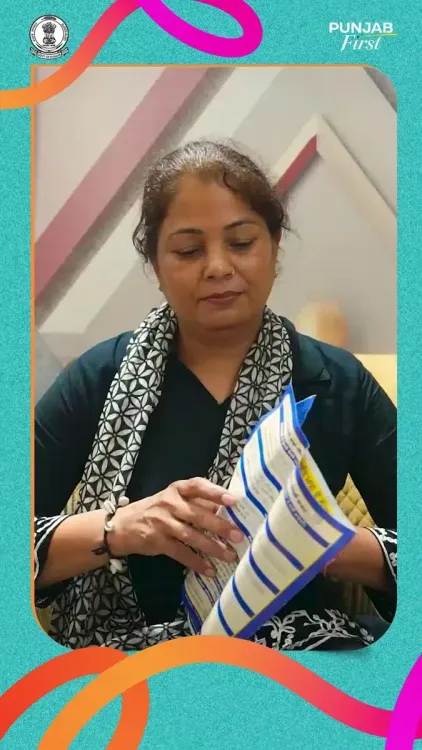
Synopsis
The Chief Minister's Office of Punjab on 16 July 2026 highlighted the Mawan-Dhiyan Satkar Yojana, saying it enables women across all sections of the state to fulfil personal aspirations without depending on others, reaffirming the government's commitment to mothers' and daughters' welfare and dignity.
Key Takeaways
The Chief Minister's Office of Punjab promoted the Mawan-Dhiyan Satkar Yojana on 16 July 2026 .
The scheme is described as enabling women of every section of Punjab society to fulfil small personal aspirations independently.
The government framed the scheme as an expression of its commitment to the welfare and respect of mothers and daughters .
The AAP government under Chief Minister Bhagwant Mann has positioned women-centric welfare as central to its governance since March 2022 .
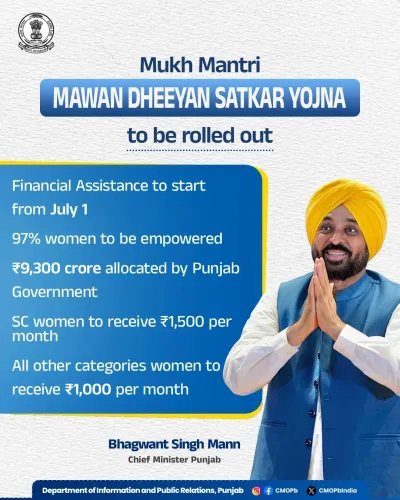
Specific provisions, launch date, and beneficiary statistics for the scheme have not been detailed in verified public records.
State budget documents and quarterly implementation reports are expected to provide further data on the scheme's reach and fund utilisation.
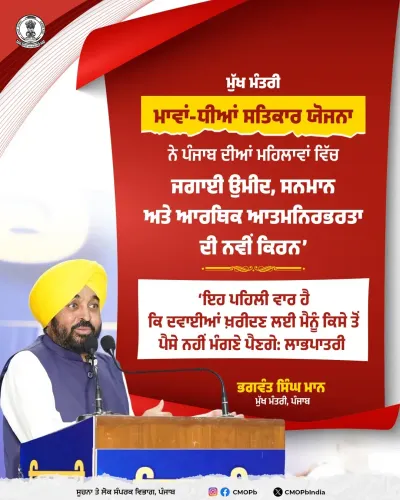
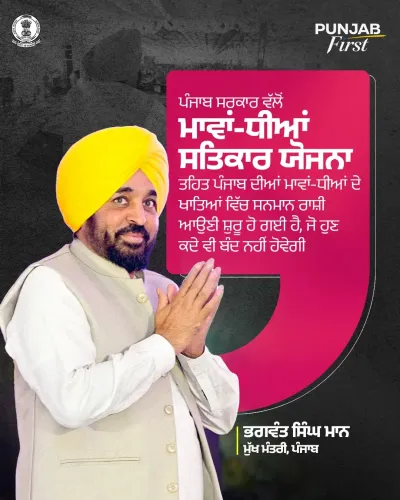
The Chief Minister's Office of Punjab on Thursday, 16 July 2026, highlighted the state government's Mawan-Dhiyan Satkar Yojana (Mothers-Daughters Respect Scheme), stating that women across all sections of Punjab are now fulfilling small personal aspirations that previously required dependence on others.
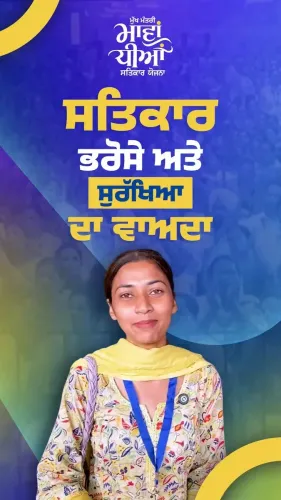
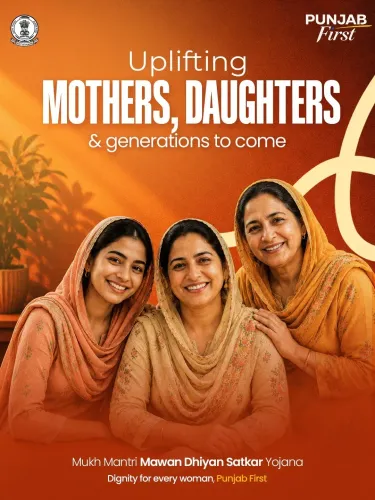
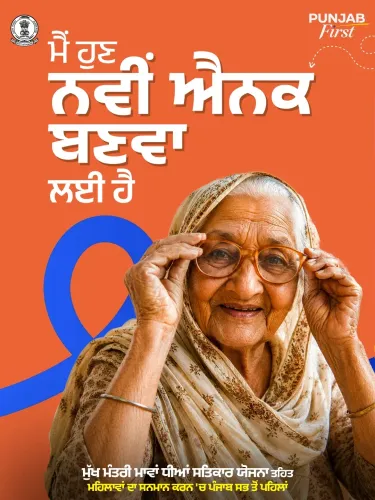
The official post, shared in Punjabi, declared: 'ਮਾਵਾਂ-ਧੀਆਂ ਸਤਿਕਾਰ ਯੋਜਨਾ' ('Mawan-Dhiyan Satkar Yojana') is enabling women of every class in the state to fulfil those small dreams for which they were always dependent on others. The government stated that through this scheme, it has expressed its commitment to the welfare and respect of mothers and daughters.
Context
The Aam Aadmi Party government in Punjab, led by Chief Minister Bhagwant Mann since March 2022, has positioned women-centric welfare as a central pillar of its governance agenda. The Mawan-Dhiyan Satkar Yojana is framed as a direct response to the economic dependence that many women — particularly in rural and semi-urban households — face in meeting everyday personal needs.
The scheme's name, which translates to 'Respect for Mothers and Daughters,' signals an intent to address dignity alongside financial support. The CMO's communication emphasises that beneficiaries span every section of society in the state, suggesting a broad eligibility design rather than a narrowly targeted programme.
Policy Backdrop
Women-focused welfare schemes have been a consistent feature of Indian state governance, building on the foundation laid by national initiatives such as Beti Bachao Beti Padhao, launched in 2015, which sought to improve the child sex ratio and promote girl-child welfare. State governments have since layered their own direct-benefit programmes on top of this national framework.
Across India, state-level schemes targeting mothers and daughters typically involve cash transfers, subsidised goods, or support for education and self-employment — all aimed at reducing economic dependence. Punjab's Mawan-Dhiyan Satkar Yojana appears to follow this broader pattern, though the specific provisions and beneficiary statistics have not been independently detailed in official public records at this time.
Stakeholders and Impact
The primary beneficiaries are women across Punjab — mothers and daughters from varied socioeconomic backgrounds. The CMO's framing of 'small dreams' fulfilled independently points to the scheme addressing everyday financial needs: items or services that women previously had to request from family members, reflecting a structural dependency that welfare transfers seek to disrupt.
Women in rural Punjab and semi-urban areas are likely the most significant beneficiaries, given that economic dependence is most acute in those settings. Broader stakeholders include state departments responsible for implementation and fund disbursement, whose quarterly performance will determine the scheme's real-world reach.
What's Next
Analysts and civil society groups tracking women's welfare in Punjab will look to state budget documents and implementation reports for concrete data on beneficiary numbers, fund utilisation, and the specific nature of support provided under the scheme. The government's continued social media emphasis on this programme suggests it will remain a visible part of the AAP government's public communication ahead of future electoral cycles.
Whether the scheme delivers measurable improvement in women's financial autonomy across Punjab will depend on transparent reporting and independent assessment of on-ground outcomes.
Point of View
Positioning the scheme as a dignity intervention rather than mere financial aid. However, without verified beneficiary numbers or independent assessments, the announcement remains largely aspirational in the public domain. The broader pattern of state governments layering women-specific schemes atop national frameworks reflects a competitive federalism in social welfare, where visibility of delivery is as important as delivery itself.
NationPress
16 Jul 2026
Frequently Asked Questions
What is the Mawan-Dhiyan Satkar Yojana in Punjab?
The Mawan-Dhiyan Satkar Yojana, which translates to 'Mothers-Daughters Respect Scheme,' is a Punjab government welfare initiative aimed at enabling women across all sections of society to meet personal needs and aspirations without depending on others. The scheme reflects the state government's stated commitment to the dignity and welfare of mothers and daughters.
Who announced the Mawan-Dhiyan Satkar Yojana?
The scheme is an initiative of the Punjab state government led by Chief Minister Bhagwant Mann of the Aam Aadmi Party. The Chief Minister's Office of Punjab highlighted the scheme on 16 July 2026 through an official post on X.
Who benefits from the Mawan-Dhiyan Satkar Yojana?
According to the Punjab government, the scheme is designed for women across every section of society in Punjab, with a particular focus on helping mothers and daughters fulfil small personal aspirations that previously required financial dependence on family members.
How does the Mawan-Dhiyan Satkar Yojana relate to national women welfare schemes?
The scheme builds on a broader pattern of state-level women welfare programmes in India, which have grown alongside national initiatives such as Beti Bachao Beti Padhao launched in 2015. State governments across India have introduced their own direct-benefit schemes to reduce economic dependence among women, and Punjab's initiative follows this approach.
What are the specific benefits under the Mawan-Dhiyan Satkar Yojana?
The specific provisions, beneficiary statistics, and launch date of the Mawan-Dhiyan Satkar Yojana have not been detailed in verified official public records as of July 2026. The government's communication focuses on the scheme's goal of enabling women's financial independence and dignity.