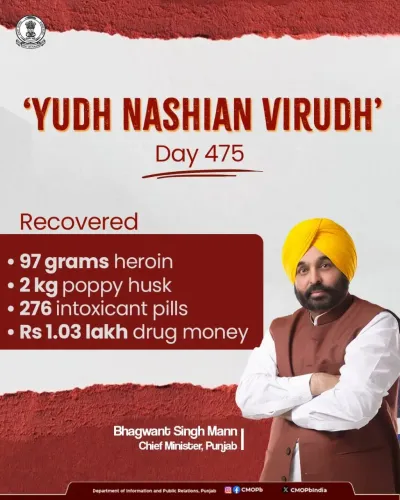
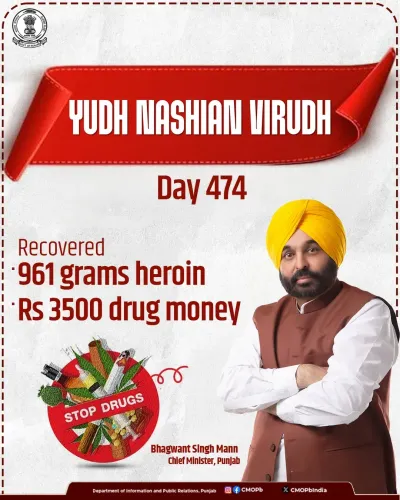
Punjab Police Arrests 87 Drug Smugglers on Day 487 of Yudh Nashian Virudh
Synopsis
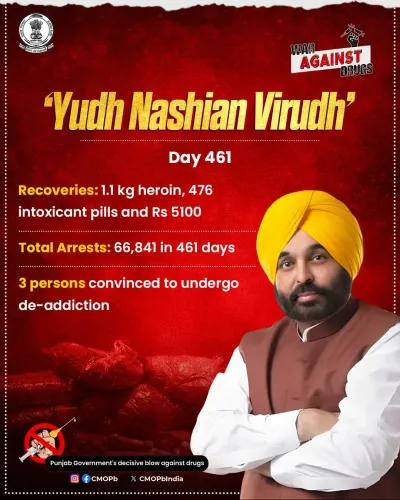
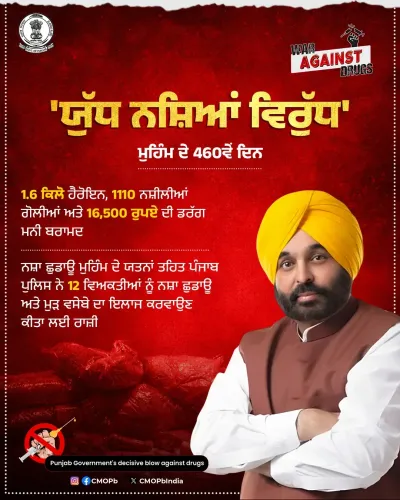
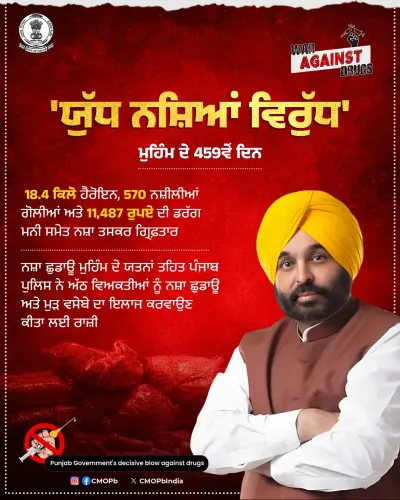
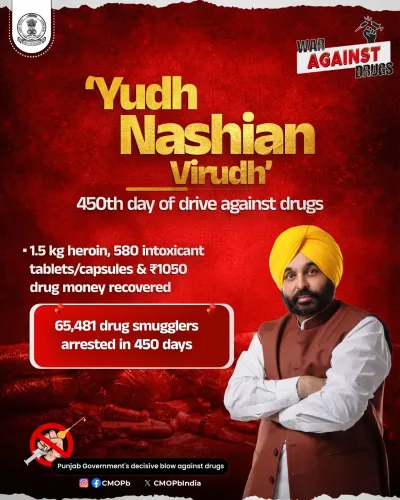
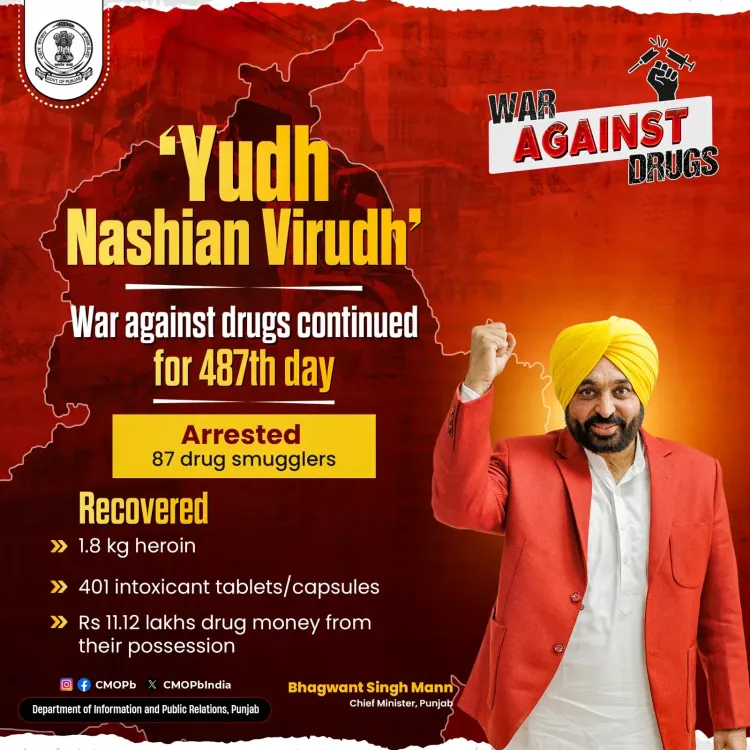
On day 487 of the 'Yudh Nashian Virudh' campaign, Punjab Police arrested 87 drug smugglers, seized 1.8 kg heroin, 401 intoxicant tablets and Rs 11.12 lakh in drug money, and referred nine persons to de-addiction treatment — continuing CM Bhagwant Mann's sustained anti-narcotics drive.
Key Takeaways
87 drug smugglers were arrested by Punjab Police on day 487 of the Yudh Nashian Virudh campaign on 2 July 2026 .
Seizures included 1.8 kg of heroin , 401 intoxicant tablets/capsules , and Rs 11.12 lakh in drug money.
Nine persons were convinced to voluntarily undergo de-addiction and rehabilitation treatment as part of the campaign's outreach component.
The drive was launched under the directions of Chief Minister Bhagwant Mann after the AAP government took office in March 2022 .
Daily public reporting of arrests and seizures is a core accountability mechanism of the campaign.
The dual enforcement-and-rehabilitation model marks a shift from earlier purely punitive anti-narcotics approaches in Punjab.
The Chief Minister's Office of Punjab announced on Thursday, 2 July 2026 that Punjab Police arrested 87 drug smugglers on day 487 of the ongoing anti-narcotics drive Yudh Nashian Virudh ('War Against Drugs'), recovering heroin, intoxicant tablets and drug money in a single-day operation conducted under the directions of Chief Minister Bhagwant Mann.
What Was Seized
In the day-487 operations, police recovered 1.8 kg of heroin, 401 intoxicant tablets and capsules, and Rs 11.12 lakh in drug money from the possession of the arrested individuals. The simultaneous seizure of narcotics and cash points to the enforcement drive targeting not just street-level users but supply-chain actors including financiers and couriers.
Beyond enforcement, the drive's de-addiction component recorded a significant milestone on the same day: nine persons were convinced by Punjab Police personnel to voluntarily undergo de-addiction and rehabilitation treatment, underscoring the dual-track approach of the campaign.
Context: The Yudh Nashian Virudh Campaign
Yudh Nashian Virudh was launched under the directions of Chief Minister Bhagwant Mann after the Aam Aadmi Party government assumed office in March 2022, making the elimination of drug trafficking a stated centrepiece of its governance agenda. The campaign combines daily enforcement raids with a structured outreach programme that links arrested or identified addicts to state-run de-addiction centres.
Punjab has faced a long-documented drug crisis, with cross-border heroin flows from the Pakistan frontier widely cited as a primary supply route. Successive state governments have attempted enforcement-heavy responses since at least the 2013–2017 period, but the current administration has distinguished its approach by publishing daily operational bulletins — a deliberate transparency and accountability mechanism.
Policy Backdrop
The dual mandate of the drive — enforcement and rehabilitation — reflects a shift from purely punitive narcotics policy toward a public-health-informed model. By tracking and publicly reporting the number of persons referred to de-addiction facilities alongside arrest and seizure figures, the Mann government signals that recovery, not just incarceration, is a metric of success.
The campaign builds on earlier state frameworks, including the 'Mission Against Drug Abuse' era, but the daily cadence of public reporting is a newer feature. Analysts have noted that consistent public communication serves both as a deterrent signal to trafficking networks and as a political accountability tool for the ruling party.
Stakeholders and Impact
Punjab's youth are the most directly affected demographic, with addiction rates among young men in border districts historically elevated due to proximity to trafficking corridors. Each person successfully referred to rehabilitation represents a potential exit from the cycle of addiction and criminality.
For Punjab Police, the campaign has become an operational and institutional priority, with daily targets implicitly set by the public reporting format. Civil society groups working in de-addiction have welcomed the rehabilitation component, though they have also called for greater investment in long-term counselling infrastructure beyond initial treatment referrals.
What's Next
With the drive now past its 487th consecutive day, attention will turn to whether the Punjab government supplements enforcement action with legislative measures — including stricter bail provisions for drug-related offences — and expanded funding for de-addiction centre capacity in upcoming Punjab Assembly sessions. The consistency of daily reporting will itself be a closely watched indicator of political will as the campaign extends into its second year beyond the 500-day mark.
Point of View
The campaign's longevity itself becomes a governance narrative, distinguishing this administration from predecessors who launched similar drives that faded quietly. The inclusion of de-addiction referral numbers alongside arrest figures is significant: it signals an attempt to reframe success beyond raw enforcement statistics toward measurable rehabilitation outcomes. Whether this dual-track approach translates into durable reduction in addiction prevalence — rather than cyclical suppression — will determine its lasting policy legacy.
NationPress
2 Jul 2026
Frequently Asked Questions
What is Yudh Nashian Virudh?
'Yudh Nashian Virudh' means 'War Against Drugs' and is an ongoing anti-narcotics campaign launched by the Punjab government under Chief Minister Bhagwant Mann's directions, combining daily police enforcement raids with de-addiction and rehabilitation outreach.
How many drug smugglers were arrested in Punjab on 2 July 2026?
Punjab Police arrested 87 drug smugglers on 2 July 2026, which was day 487 of the Yudh Nashian Virudh campaign.
What drugs were seized by Punjab Police on day 487?
Police recovered 1.8 kg of heroin and 401 intoxicant tablets and capsules, along with Rs 11.12 lakh in drug money, on day 487 of the campaign.
What is Bhagwant Mann doing about drugs in Punjab?
Chief Minister Bhagwant Mann directed the launch of the 'Yudh Nashian Virudh' campaign upon taking office in March 2022, mandating daily police operations against drug smugglers and a parallel programme to refer addicts to de-addiction and rehabilitation centres.
How does Punjab Police's de-addiction programme work?
As part of the Yudh Nashian Virudh campaign, Punjab Police personnel actively counsel identified drug users and convince them to voluntarily enter state de-addiction and rehabilitation facilities; on day 487 alone, nine persons were referred for treatment.