Punjab Police Checks 29,000+ Vehicles in 5-Day Hooter Crackdown
Synopsis
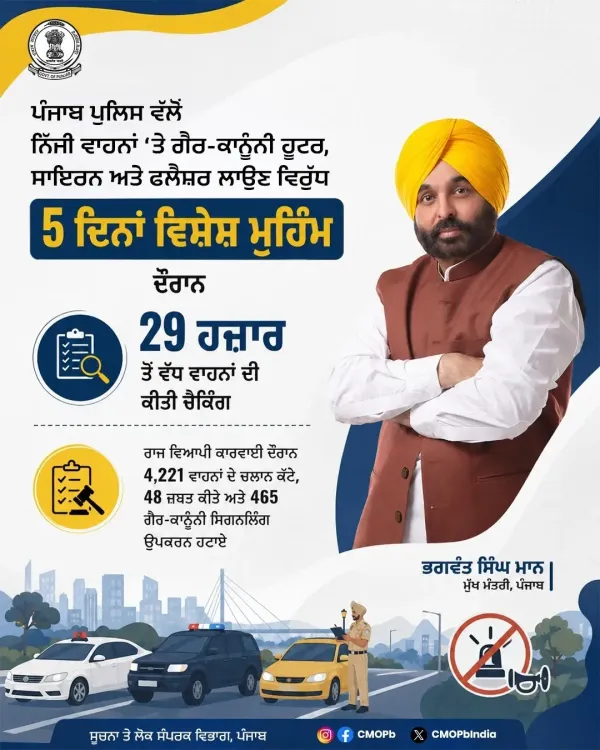
Punjab Police ran a five-day statewide drive from June 2, 2026, against illegal hooters, sirens, and flashers on private vehicles, checking over 29,000 vehicles. The Chief Minister's Office of Punjab announced the operation, one of the state's largest targeted traffic enforcement campaigns in recent years.
Key Takeaways
Punjab Police launched a five-day special statewide drive against illegal use of hooters, sirens, and flashers on private vehicles.
The operation began on June 2, 2026 and covered all districts of Punjab.
More than 29,000 vehicles were checked during the five-day campaign.
The drive is backed by the Motor Vehicles (Amendment) Act, 2019 , which raised penalties for such violations.
The Chief Minister's Office of Punjab publicised the operation, signalling high-level political backing for traffic discipline enforcement.
The number of challans issued and further action against repeat offenders has not yet been announced.
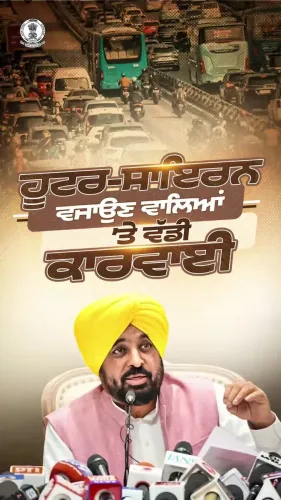
Punjab Police launched a five-day special statewide drive against the illegal use of hooters, sirens, and flashers on private vehicles beginning June 2, 2026, the Chief Minister's Office of Punjab announced on Sunday, June 7, 2026. The intensive operation resulted in the checking of over 29,000 vehicles across the state.
Context
The CMO Punjab post, shared in both Punjabi and English, confirmed the scale of the crackdown: 'ਟ੍ਰੈਫਿਕ ਨਿਯਮਾਂ ਦੀ ਉਲੰਘਣਾ ਕਰਨ ਵਾਲਿਆਂ 'ਤੇ ਕਰੜਾ ਸ਼ਿਕੰਜਾ' ('a tight crackdown on traffic rule violators'). The drive specifically targeted private vehicle owners who illegally mount emergency signalling equipment — hooters, sirens, and flashers — typically reserved for authorised government and emergency vehicles.
The operation commenced on June 2, 2026 and ran for five consecutive days, covering all districts of Punjab. Over 29,000 vehicles were checked during this period, making it one of the largest targeted traffic enforcement drives in the state in recent memory.
Policy Backdrop
The crackdown draws legal authority from the Motor Vehicles (Amendment) Act, 2019, which significantly raised penalties for traffic violations, including the unauthorised use of emergency signalling equipment on private vehicles. Central motor vehicle rules explicitly prohibit the use of multi-toned horns, sirens, and flashing lights on non-emergency private vehicles.
Indian courts, including the Supreme Court, have periodically issued directions to state governments to enforce these provisions strictly, citing concerns around noise pollution, road safety, and the misuse of perceived authority by private vehicle owners. Punjab's drive fits into a broader national pattern of states conducting periodic enforcement campaigns to implement these mandates at the ground level.
Stakeholders and Impact
Private vehicle owners across Punjab are the primary stakeholders affected by this enforcement action. The illegal use of hooters and flashers has long been associated with individuals seeking to project authority or bypass traffic, creating hazards for other road users and eroding public trust in legitimate emergency signalling.
Punjab Police's traffic enforcement units conducted checks across the state, with the sheer volume — more than 29,000 vehicles — indicating a coordinated, multi-district operation. Citizens and road safety advocates have broadly welcomed such drives as a necessary corrective to a widely observed but under-enforced violation.
What's Next
The conclusion of the five-day drive raises questions about follow-through: how many challans were issued, whether repeat offenders face escalated action, and whether the state government plans to institutionalise such enforcement as a recurring exercise. The Chief Minister's Office of Punjab has not yet announced the specific number of challans or penalties levied during the campaign.
Sustained enforcement — rather than periodic drives — is widely regarded by road safety experts as the more effective deterrent. The Punjab government's willingness to publicise this operation through the CMO's official channel signals political backing for continued action on traffic discipline across the state.
Point of View
Not merely a routine policing matter. Crackdowns on hooters and flashers carry a pointed social message — they disproportionately target those who use visible symbols of authority to flout rules, making the action politically resonant. The scale of the operation, over 29,000 vehicles checked in five days, suggests genuine statewide coordination rather than a localised show of force. Whether this translates into sustained enforcement or remains a headline-generating periodic exercise will determine its long-term impact on road safety culture in Punjab.
NationPress
26 Sept 2026
Frequently Asked Questions
What was the Punjab Police hooter crackdown about?
Punjab Police conducted a five-day statewide drive against the illegal use of hooters, sirens, and flashers on private vehicles, checking over 29,000 vehicles from June 2, 2026.
Is it illegal to use a hooter or siren on a private vehicle in India?
Yes, the use of multi-toned horns, sirens, and flashing lights on private vehicles is prohibited under central motor vehicle rules and was further reinforced by the Motor Vehicles (Amendment) Act, 2019, which increased penalties for such violations.
How many vehicles were checked in Punjab's traffic drive in June 2026?
Over 29,000 vehicles were checked during the five-day special enforcement drive that began on June 2, 2026.
Which authority announced the Punjab traffic crackdown?
The Chief Minister's Office of Punjab announced the crackdown on June 7, 2026, through its official account on X.
Will Punjab Police continue the crackdown on hooters and sirens?
As of the announcement, the five-day drive has concluded, but the number of challans issued and plans for further or recurring enforcement have not yet been officially disclosed.