Punjab Police checks 29,000+ vehicles in illegal hooter crackdown
Synopsis
Punjab Police checked more than 29,000 vehicles in a five-day drive against illegal hooters, sirens, and flashers, issuing 4,221 challans, seizing 48 vehicles, and removing 465 illegal devices. The Chief Minister's Office warned enforcement will continue.
Key Takeaways
Punjab Police conducted a five-day enforcement drive against illegal hooters, sirens, and flashers on vehicles.
More than 29,000 vehicles were checked across the state during the campaign.
4,221 challans were issued to violators during the drive.
48 vehicles were seized and 465 illegal devices were physically removed.
Punjab Police warned that action against rule-breakers will continue beyond the five-day campaign.
The drive aligns with a 2013 Supreme Court order restricting hooters and sirens to authorised emergency vehicles.
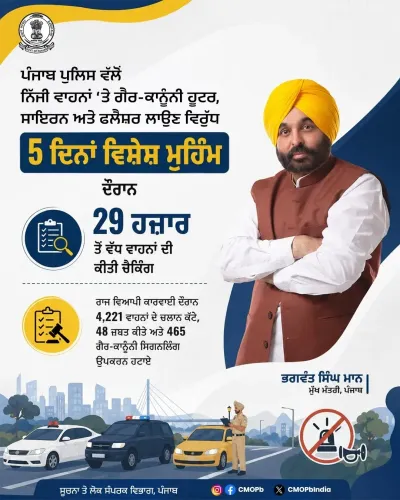
Punjab Police conducted a five-day enforcement drive against illegal hooters, sirens, and flashers, checking more than 29,000 vehicles across the state, the Chief Minister's Office of Punjab announced on Tuesday, June 9, 2026. The campaign resulted in 4,221 challans, 48 vehicle seizures, and the removal of 465 illegal devices.
What happened
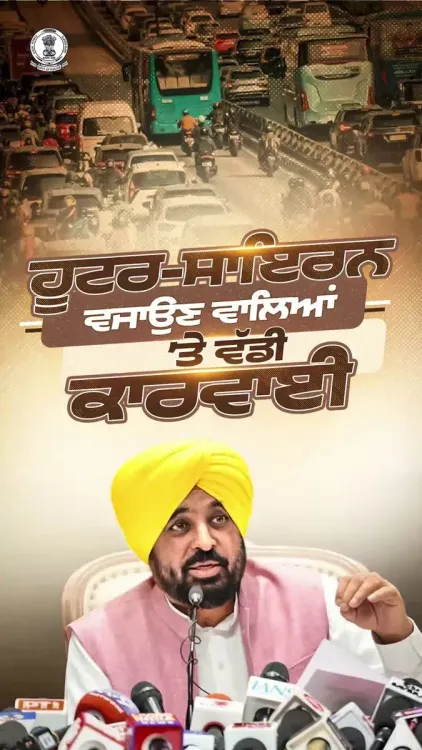
The Chief Minister's Office of Punjab shared the results of the crackdown on X, stating in Punjabi: 'ਪੁਲਿਸ ਨੇ ਚੇਤਾਵਨੀ ਦਿੱਤੀ ਕਿ ਨਿਯਮ ਤੋੜਨ ਵਾਲਿਆਂ ਖ਼ਿਲਾਫ਼ ਕਾਰਵਾਈ ਜਾਰੀ ਰਹੇਗੀ' ('Police warned that action against rule-breakers will continue'). The drive specifically targeted private and commercial vehicles fitted with hooters, sirens, and flashers not authorised under motor-vehicle regulations.
Across the five-day campaign, enforcement teams checked over 29,000 vehicles, issuing challans and seizing vehicles found in violation. A total of 465 illegal accessories were physically removed from offending vehicles on the spot.
Policy backdrop
The use of hooters, sirens, and red beacons on non-authorised vehicles has been restricted under central motor-vehicle law and reinforced by a Supreme Court of India order in 2013, which limited such devices to designated emergency and official vehicles. Despite the judicial direction, unauthorised use persisted widely across Indian states, often associated with projecting social status or bypassing traffic.
Indian states have periodically run short-term enforcement campaigns in response to repeated judicial directions against so-called VIP culture and noise pollution caused by illegal sirens. Punjab's drive fits within this broader national pattern of state-level compliance pushes under Chief Minister Bhagwant Mann's administration, which has publicly positioned itself as targeting privilege and lawlessness on public roads.
Stakeholders and impact
Private vehicle owners found using unauthorised accessories face challans and seizure of their vehicles, as demonstrated by the 48 seizures recorded during this drive. Residents in urban and semi-urban areas stand to benefit from reduced noise pollution and a clearer distinction between genuine emergency signals and those misused by private citizens.
Punjab Police traffic and enforcement units are the primary operational arm of the campaign, coordinating checks across multiple districts. The scale — over 29,000 vehicles checked in five days — signals a state-wide deployment rather than a localised effort.
What's next
The Chief Minister's Office has signalled that enforcement will not be a one-time exercise, with police explicitly warning that action against violators will continue. Observers will watch whether Punjab sustains challan and seizure operations beyond the initial campaign window, and whether neighbouring states adopt coordinated enforcement under uniform motor-vehicle rules.
Point of View
000 vehicles checked and more than 4,200 challans in five days — marks one of the more operationally intensive traffic-enforcement pushes Punjab has publicly reported in recent years. It connects directly to a long-standing judicial mandate from the Supreme Court that states have historically enforced unevenly. For the Bhagwant Mann administration, publicising the numbers through the Chief Minister's Office serves a dual purpose: demonstrating administrative reach and reinforcing an anti-privilege political identity. Whether the campaign translates into sustained behavioural change or fades after the announcement cycle will be the real test of its policy impact.
NationPress
19 Sept 2026
Frequently Asked Questions
What did Punjab Police do in the illegal hooter crackdown?
Punjab Police checked more than 29,000 vehicles over five days, issued 4,221 challans, seized 48 vehicles, and removed 465 illegal hooters, sirens, and flashers.
Are hooters and sirens on private vehicles legal in India?
No. The Supreme Court of India in 2013 restricted the use of hooters, sirens, and red beacons to authorised emergency and official vehicles only. Private vehicles fitted with such devices are in violation of motor-vehicle regulations.
How many challans were issued in the Punjab hooter drive?
Punjab Police issued 4,221 challans during the five-day enforcement campaign against illegal vehicle accessories.
Will Punjab Police continue action against illegal sirens and hooters?
Yes. The Chief Minister's Office stated that police have warned action against rule-breakers will continue beyond the initial five-day campaign.
Which vehicles are allowed to use sirens and hooters in India?
Under central motor-vehicle law and the 2013 Supreme Court order, only designated emergency vehicles such as ambulances, fire engines, and authorised official vehicles are permitted to use sirens and hooters.