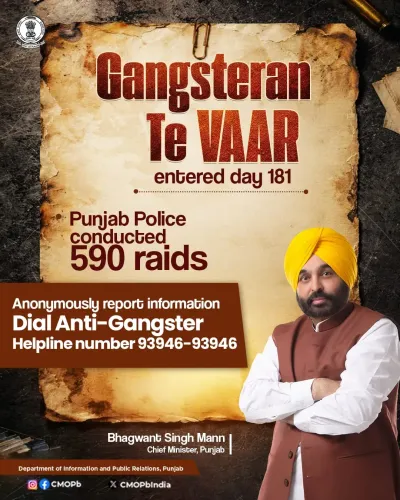
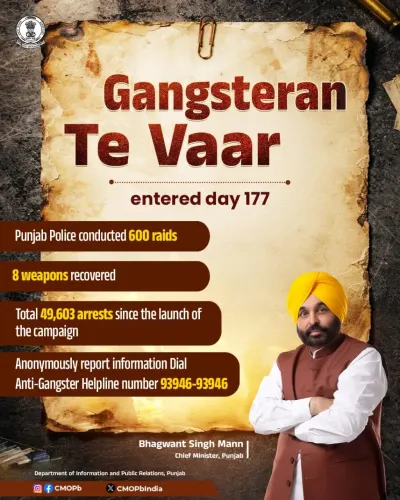
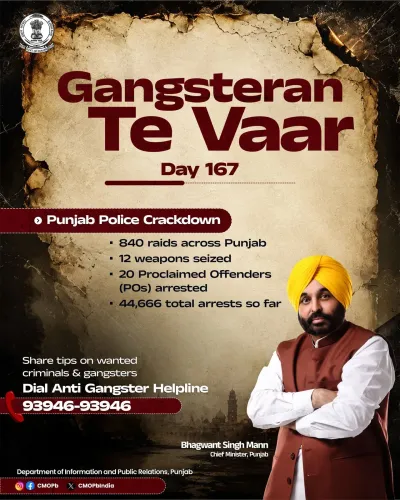
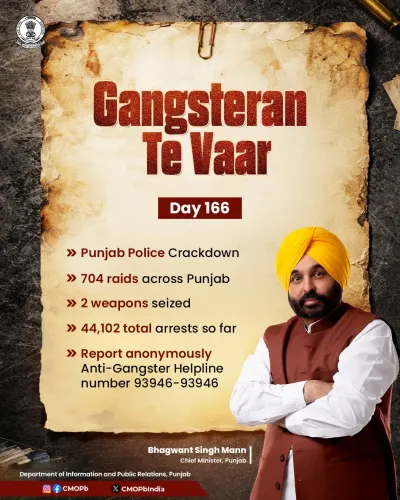
Punjab Police Steps Up Anti-Gang Drive Under 'Gangsteran Te Vaar'
Synopsis
The Chief Minister's Office of Punjab announced on 22 June 2026 that Punjab Police has stepped up intelligence-based operations under the 'Gangsteran Te Vaar' campaign, reinforcing district-level checkpoints as a key tool against organised criminal gangs threatening public safety across the state.
Key Takeaways
The Chief Minister's Office of Punjab announced an intensification of the 'Gangsteran Te Vaar' anti-gang campaign on 22 June 2026 .
Punjab Police has scaled up intelligence-based operations targeting organised criminal groups across the state.
District-level checkpoints have been identified as a central mechanism for curbing criminal activity and ensuring public safety.
The campaign reflects a post-2022 shift toward sustained, preventive, intelligence-driven policing over reactive encounter-based tactics.
Punjab's organised crime networks are historically linked to cross-border narcotics smuggling and inter-gang rivalries.
Future crime statistics from Punjab Police will be the key indicator of the campaign's on-ground impact.
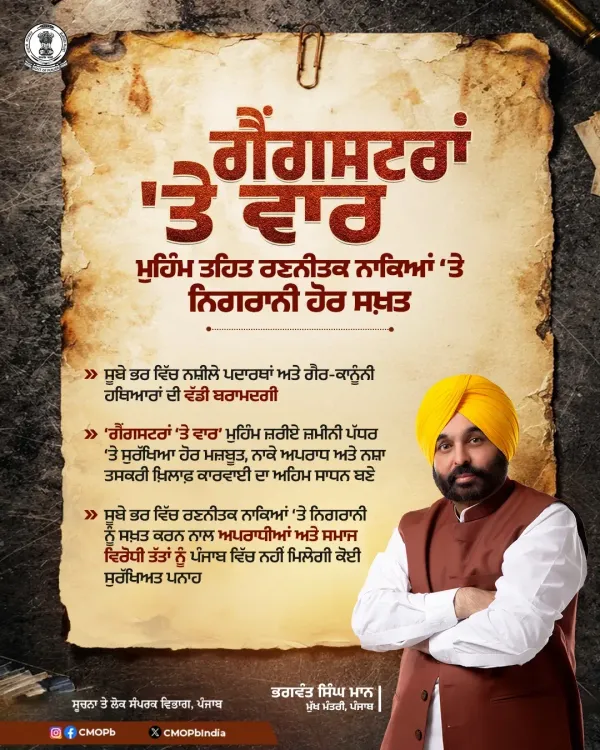
The Chief Minister's Office of Punjab announced on Monday, 22 June 2026 that Punjab Police has intensified its intelligence-based operations under the 'Gangsteran Te Vaar' campaign, reinforcing action against organised criminal groups and expanding preventive policing at the district level.
The official post stated: 'ਗੈਂਗਸਟਰਾਂ 'ਤੇ ਵਾਰ' ਤਹਿਤ ਪੰਜਾਬ ਪੁਲਿਸ ਨੇ ਖੁਫ਼ੀਆ ਜਾਣਕਾਰੀ ਆਧਾਰਿਤ ਕਾਰਵਾਈਆਂ ਨੂੰ ਤੇਜ਼ ਕੀਤਾ ਹੈ' ['Punjab Police has intensified intelligence-based operations under the Gangsteran Te Vaar campaign']. The statement added that checkpoints have emerged as a 'vital mechanism to curb criminal activities and to ensure the safety of the public.'
Context
Punjab has long grappled with organised criminal syndicates whose networks are often intertwined with cross-border narcotics smuggling and inter-gang rivalries. The Gangsteran Te Vaar campaign — which translates broadly to 'Strike on Gangsters' — was launched as part of a coordinated state-level effort to dismantle these networks through sustained, visible policing rather than isolated reactive measures. The current escalation signals a deliberate push to make the campaign's footprint felt at the district level, moving enforcement closer to communities where gang recruitment and movement are most active.Policy Backdrop
Following the 2022 state elections, the Punjab government initiated a series of coordinated anti-gangster and anti-drug drives in response to rising violence linked to organised crime. The shift toward intelligence-driven, preventive strategies — as opposed to purely encounter-based tactics used by earlier administrations — reflects a broader recalibration of how the state approaches internal security. District-level checkpoints are central to this approach, functioning as both a deterrent and a data-collection tool for tracking the movement of known gang operatives.Stakeholders and Impact
Punjab's approximately 3 crore residents are the primary beneficiaries of any sustained reduction in gang-related violence, extortion, and narcotics activity. For Punjab Police, the campaign represents an institutional commitment to intelligence-led policing — a model that requires sustained inter-agency coordination and real-time data sharing across districts. Civil society groups and trade associations in areas historically affected by extortion rackets stand to gain from a more proactive police presence, though the effectiveness of checkpoints in deterring organised crime rather than merely displacing it remains a subject of ongoing scrutiny.What's Next
The broader impact of the Gangsteran Te Vaar campaign will become clearer when Punjab Police releases periodic crime statistics tracking gang-related violence, extortion cases, and arrests. State-level review meetings are expected to assess whether district-level operations are translating into measurable reductions in organised criminal activity. The Chief Minister's Office is likely to continue using such announcements to signal political commitment to law and order ahead of any future administrative or electoral milestones in the state.Point of View
The campaign's long-term credibility will depend on verifiable crime data rather than periodic announcements. Whether this sustained pressure translates into structural disruption of gang networks, or merely temporary displacement of criminal activity, will define the political dividend the ruling dispensation can claim from the initiative.
NationPress
21 Sept 2026
Frequently Asked Questions
What is the Gangsteran Te Vaar campaign in Punjab?
'Gangsteran Te Vaar' — meaning 'Strike on Gangsters' — is a Punjab government campaign that uses intelligence-based operations, district-level checkpoints, and preventive policing to dismantle organised criminal gangs across the state.
What did Punjab Police announce on 22 June 2026?
The Chief Minister's Office of Punjab announced on 22 June 2026 that Punjab Police has intensified intelligence-based operations under the Gangsteran Te Vaar campaign and expanded the use of checkpoints at the district level to curb criminal activity.
Why is Punjab facing an organised crime problem?
Punjab has long faced challenges from organised criminal syndicates linked to cross-border narcotics smuggling and inter-gang rivalries, a problem that successive state governments have attempted to address through a mix of encounter-based and intelligence-driven policing strategies.
How do checkpoints help in fighting gangsters in Punjab?
Checkpoints serve as a preventive policing tool by monitoring the movement of known gang operatives, deterring criminal activity in vulnerable areas, and generating ground-level intelligence that feeds into broader anti-gang operations.
When did Punjab start its anti-gangster drive?
The Punjab government launched coordinated anti-gangster and anti-drug drives after the 2022 state elections as part of a broader internal security overhaul, with the Gangsteran Te Vaar campaign forming a key pillar of that effort.