Punjab Police marks 618 days of Yudh Nashian Virudh with fresh drug haul
Synopsis
Punjab Police completed the 618th day of the Yudh Nashian Virudh anti-drug drive on 10 November 2026, arresting smugglers and seizing 1.6 kg heroin, taking total arrests to 91,737 since the campaign began under CM Bhagwant Mann's government.
Key Takeaways
Day 618 of the Yudh Nashian Virudh anti-drug operation was completed on 10 November 2026 .
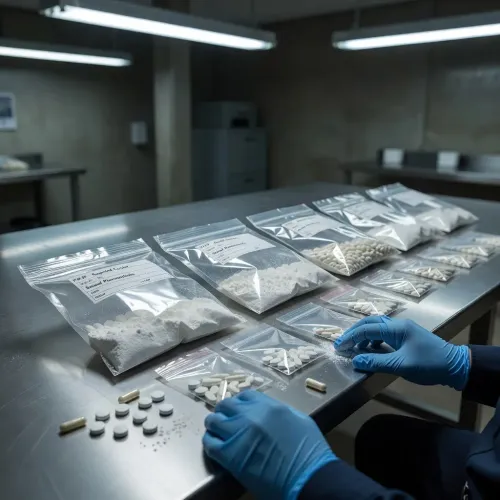
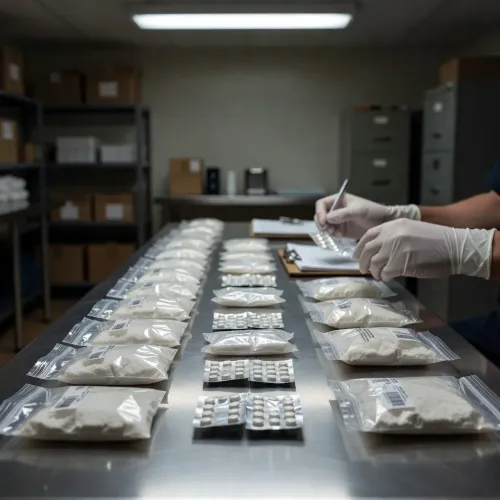
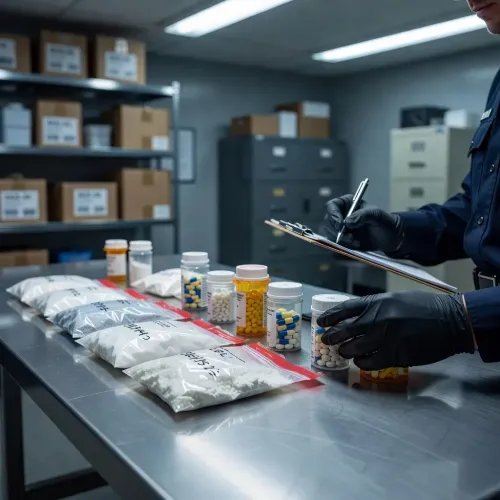
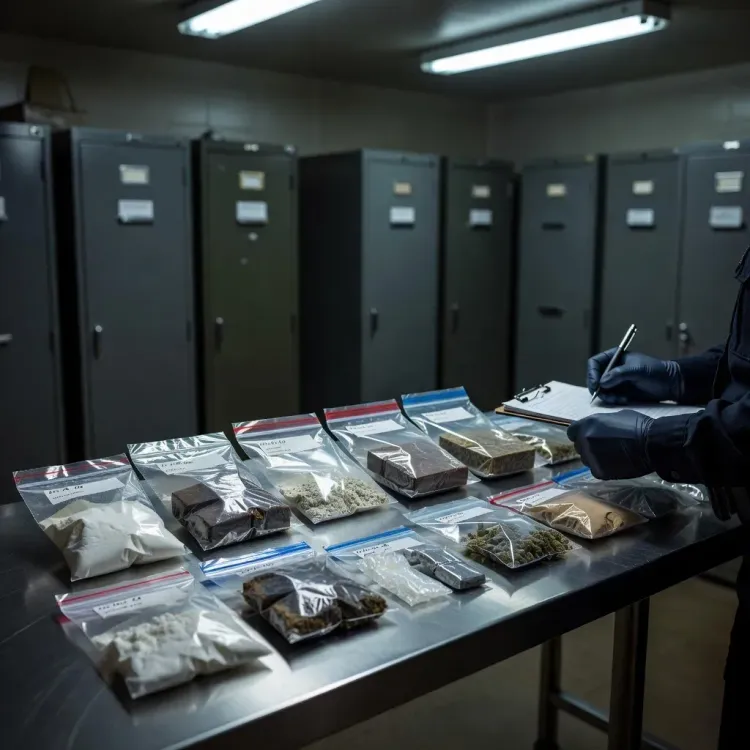
Police seized 1.6 kg of heroin , 35 intoxicant pills , and ₹1,500 in drug money in the latest operations.
Total drug smugglers arrested since the campaign launched has reached 91,737 .
Three individuals were convinced by police to voluntarily enter de-addiction and rehabilitation treatment on Day 618.
The drive runs dual tracks: enforcement arrests on one side, rehabilitation outreach on the other.
The campaign operates under the Bhagwant Mann -led AAP government, which made the drug crisis a centrepiece of its 2022 election mandate.
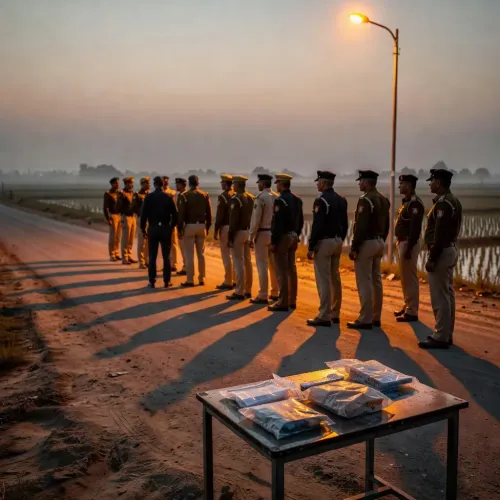
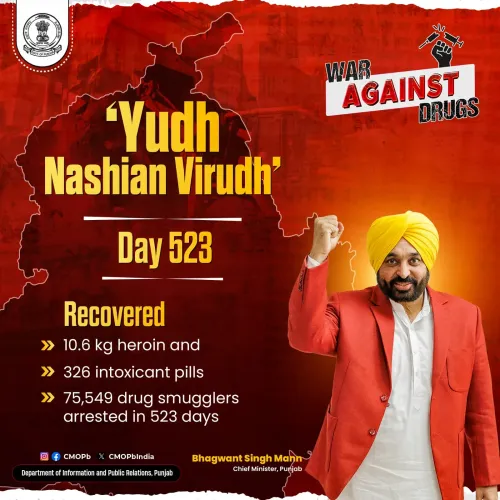
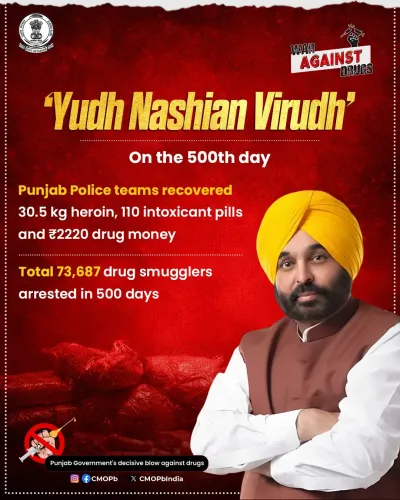
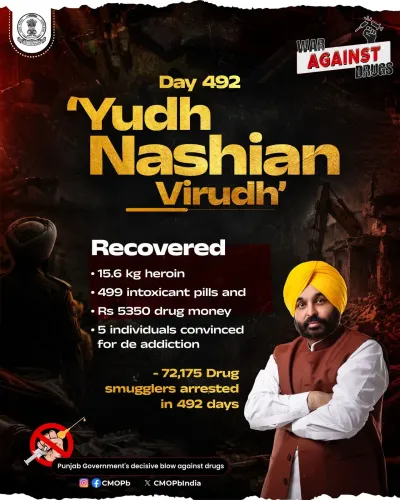
Nearly two years into an unrelenting anti-narcotics sweep, Punjab Police has not let up for a single day. On Tuesday, 10 November 2026, the Chief Minister's Office of Punjab confirmed that the state's flagship crackdown, Yudh Nashian Virudh ('War Against Drugs'), entered its 618th consecutive day — a streak that has now put 91,737 drug smugglers behind bars since the drive began.
In the latest round of operations, police teams arrested drug smugglers and seized 1.6 kg of heroin, 35 intoxicant pills, and ₹1,500 in drug money. Beyond the arrests, three individuals were persuaded by police personnel to voluntarily enter de-addiction and rehabilitation centres — a quieter but arguably just as consequential front in the state's battle against substance abuse.
A campaign that refuses to pause
Yudh Nashian Virudh was launched under Chief Minister Bhagwant Mann's Aam Aadmi Party government, which came to power in March 2022 on a platform that placed the drug crisis at the centre of Punjab's governance emergency. Punjab has long grappled with narcotics trafficking, in part because of its geography — the state shares a border with Pakistan and sits on supply corridors that funnel heroin and synthetic drugs deeper into India. Successive governments have swung between enforcement blitzes and rehabilitation pushes; the current administration has tried to run both tracks simultaneously.
The 618-day unbroken run is deliberate signalling: consistency, not just periodic crackdowns, is the stated doctrine. Daily updates from the CMO keep the operation visible in the public eye and create a rolling accountability mechanism for field units.
De-addiction as the other half of the equation
Arresting suppliers is only part of the equation. The drive's de-addiction component asks police personnel — often the first point of contact with users — to redirect individuals toward treatment rather than prosecution. Three more people consenting to rehabilitation on Day 618 may seem a modest number, but it reflects a structural shift in how Punjab's law enforcement frames its role: not purely punitive, but also rehabilitative.
Punjab's youth, long identified as the demographic most exposed to the state's drug problem, remain the primary stakeholders of both arms of the drive. Any expansion of de-addiction centre capacity or fresh budget allocations for rehabilitation infrastructure will be the next concrete test of how far that commitment extends beyond the daily arrest tally.
Six hundred and eighteen days in, the numbers keep climbing — and so does the pressure to show that the arrests are translating into a measurably safer Punjab.
Point of View
Daily enforcement — a governance model the Bhagwant Mann administration is using as proof of delivery on its core 2022 election promise. The simultaneous de-addiction outreach reflects an acknowledgment that supply-side arrests alone cannot resolve a demand-driven crisis. However, the true measure of the drive's impact will come from independent assessments of recidivism, drug availability at street level, and rehabilitation success rates — data points the daily CMO updates do not yet surface. Until that fuller picture emerges, the cumulative arrest figure functions as both a genuine milestone and a political accountability tool.
NationPress
10 Nov 2026
Frequently Asked Questions
What is Yudh Nashian Virudh?
Yudh Nashian Virudh, meaning 'War Against Drugs,' is a sustained anti-narcotics campaign run by Punjab Police under the Bhagwant Mann government, combining daily arrests of drug smugglers with de-addiction outreach for users.
How many drug smugglers have been arrested in Punjab's anti-drug drive?
As of Day 618 on 10 November 2026, the total number of drug smugglers arrested under Yudh Nashian Virudh has reached 91,737.
What was seized by Punjab Police on Day 618 of the anti-drug drive?
On Day 618, Punjab Police recovered 1.6 kg of heroin, 35 intoxicant pills, and ₹1,500 in drug money from arrested smugglers.
What is the de-addiction component of Punjab's drug crackdown?
Alongside arrests, Punjab Police personnel convince drug-dependent individuals to voluntarily enter de-addiction and rehabilitation centres — three persons agreed to do so on Day 618.
Why is Punjab particularly vulnerable to drug trafficking?
Punjab shares a border with Pakistan and sits along supply corridors used to move heroin and synthetic drugs into India, making it historically susceptible to narcotics trafficking and high rates of substance abuse.