Punjab stubble burning cases hit 7,159; 265 FIRs in Patiala
Synopsis
Punjab assessed ₹12.49 crore in stubble burning penalties this season, yet PPCB data show only ₹4,52,000 recovered statewide. The state has logged 7,159 farm fires, 2,188 FIRs and 2,295 red entries. Ferozepur leads with 918 incidents, while officials face 41 prosecutions but no suspensions.
Key Takeaways
Punjab reported 7,159 stubble burning incidents till 25 November , per PPCB data.
Burning was confirmed at 2,780 of 6,924 inspected locations.
Penalties of ₹12.49 crore were imposed on 2,484 farmers, but only ₹4,52,000 has been recovered.
2,188 FIRs were filed under Section 223 of the BNS , and red entries were made against 2,295 farmers.
Patiala logged 445 cases, 265 FIRs and 689 warning notices.
Ferozepur ( 918 ) tops the list, followed by Sangrur ( 810 ) and Tarn Taran ( 711 ).
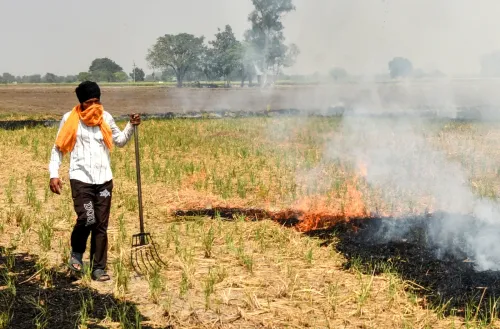
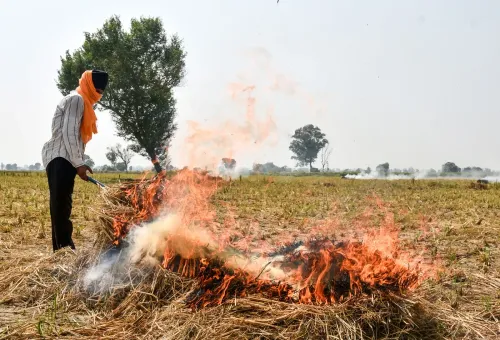
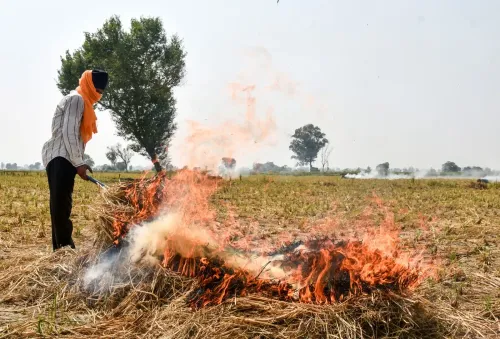
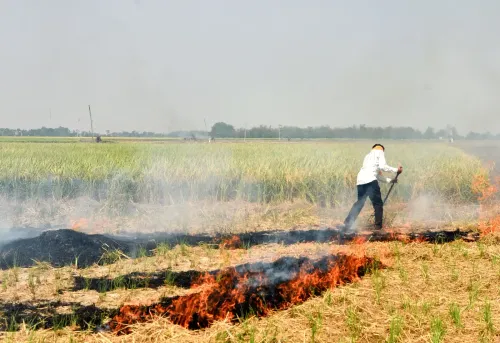
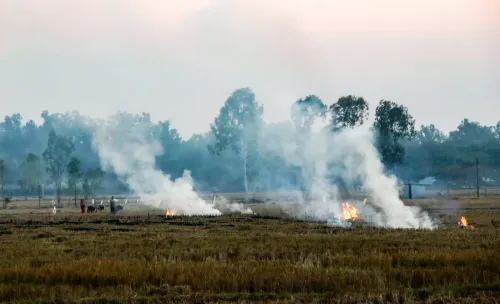
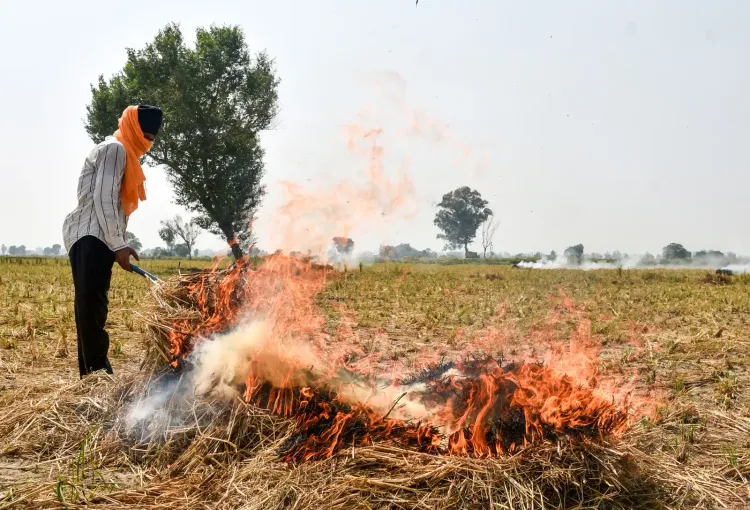
Punjab recorded 7,159 stubble burning incidents till 25 November, according to data released by the Punjab Pollution Control Board (PPCB). This comes despite sustained enforcement efforts by the state administration. Patiala district alone reported 445 cases, with FIRs registered in 265 of them. Ferozepur topped the district-wise list with 918 incidents.
The figures come from the PPCB's CAQMS Monitoring and Enforcement Action Report. They offer a detailed picture of how far field verification, penalties and legal action have actually reached this paddy season.
Key Developments Across the State
Of the 7,159 reported incidents, officials inspected 6,924 locations in the field. Crop residue burning was confirmed at 2,780 of them, which means farm fires were verified at roughly four in ten inspected sites.
Environmental compensation (EC) was imposed on 2,484 farmers. The total penalty assessed was ₹12.49 crore (₹12,49,95,000). According to the data, only ₹4,52,000 of that amount has been recovered so far.
FIRs have been registered in 2,188 cases under Section 223 of the Bharatiya Nyaya Sanhita (BNS), 2023. Red entries have also been made in the revenue records of 2,295 farmers. Such entries can affect a farmer's land records.
Patiala District Snapshot
In Patiala, officials inspected 441 of the 445 reported locations, and burning was confirmed at 267. EC was imposed in 234 cases, with a total penalty of ₹11.65 lakh. Of this, ₹5.10 lakh has been recovered.
The district has registered FIRs in 265 cases and made red entries against 214 farmers. The Patiala administration has also issued 689 warning notices.
Notably, the recovery reported for Patiala district alone (₹5.10 lakh) is higher than the state-level recovery figure of ₹4,52,000 listed in the same report. The report does not explain the gap.
District-Wise Rankings
Ferozepur leads the state with 918 incidents. It is followed by the districts below:
- Sangrur: 810 incidents
- Tarn Taran: 711 incidents
- Bathinda: 650 incidents
- Patiala: 445 incidents
- Moga: 417 incidents
The concentration in these Malwa and Majha belt districts reflects where paddy cultivation, and the residue that follows, is heaviest.
Action Against Officials and Harvest Status
At the state level, prosecution proceedings have been initiated against officials concerned in 41 cases. However, the report records no challans issued to officials and no suspensions.
According to the report, harvesting has been completed across 99.84 per cent of Punjab's total paddy area of 32.87096 lakh hectares. This suggests the main window for residue burning is nearly over.
Why It Matters
Crop residue burning in Punjab is widely linked to the deterioration of air quality across north India each winter. That keeps the state's enforcement numbers under close national scrutiny. The latest data show a widening gap between penalties imposed and penalties collected, along with heavy reliance on FIRs and revenue-record entries as deterrents.
With harvesting almost complete, attention is likely to shift to whether the assessed compensation is actually recovered. Another open question is whether the stricter measures change farmer behaviour before next year's paddy season.
Point of View
An inconsistency that demands clarification. Officials face 41 prosecutions but not a single suspension, so accountability is flowing downward to farmers rather than to the machinery meant to offer them alternatives. Until residue management becomes cheaper than a matchstick, FIRs and red entries will remain punitive optics rather than a solution.
NationPress
26 Nov 2026
Frequently Asked Questions
How many stubble burning cases has Punjab reported this season?
Punjab has reported 7,159 stubble burning incidents till 25 November, according to PPCB data. Burning was confirmed at 2,780 of the 6,924 locations inspected.
Which Punjab district has the most stubble burning cases?
Ferozepur has recorded the highest number of incidents, at 918. It is followed by Sangrur (810), Tarn Taran (711), Bathinda (650), Patiala (445) and Moga (417).
What action has been taken against farmers for stubble burning in Punjab?
Environmental compensation of ₹12.49 crore was imposed on 2,484 farmers, of which ₹4,52,000 has been recovered. In addition, 2,188 FIRs were registered under Section 223 of the BNS, and red entries were made in the revenue records of 2,295 farmers.
How many stubble burning cases were reported in Patiala?
Patiala district reported 445 cases, with burning confirmed at 267 locations. FIRs were filed in 265 cases, red entries were made against 214 farmers, and 689 warning notices were issued.
Has any action been taken against officials over stubble burning?
Prosecution proceedings have been initiated against officials concerned in 41 cases at the state level. However, the PPCB report records no challans issued and no suspensions of officials.