Punjab tops nation in education, 882 govt school students crack NEET
Synopsis
The Chief Minister's Office of Punjab announced on 28 July 2026 that the state has ranked first in education across India and that 882 government-school students have cleared NEET, citing reforms directed by CM Bhagwant Mann and framing the results as progress toward 'Rangla Punjab'.
Key Takeaways
The Chief Minister's Office of Punjab announced on 28 July 2026 that Punjab has secured the first rank in education among all Indian states.
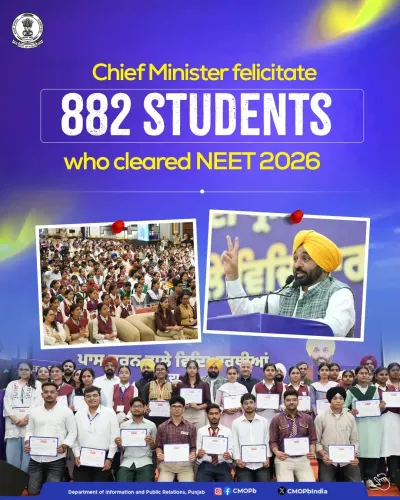
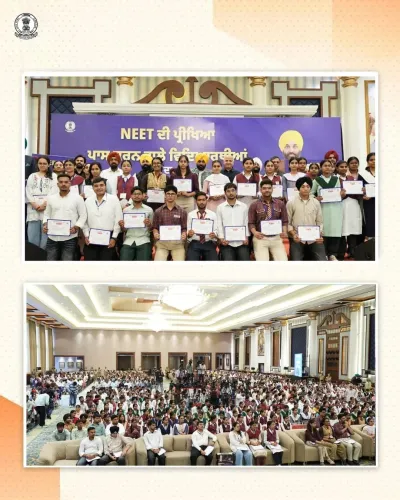
882 students from Punjab's government schools cleared the NEET examination , qualifying for medical college admissions.
The achievement is attributed to education reforms directed by Chief Minister Bhagwant Mann since the AAP government took office in March 2022 .
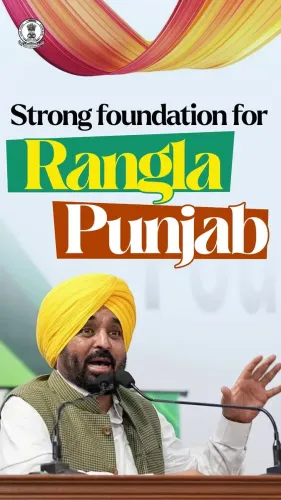
The announcement invokes the 'Rangla Punjab' vision, a phrase used by the Mann administration to describe its development agenda.
Independent verification through central indices such as the Performance Grading Index will be required to confirm the claimed national ranking.
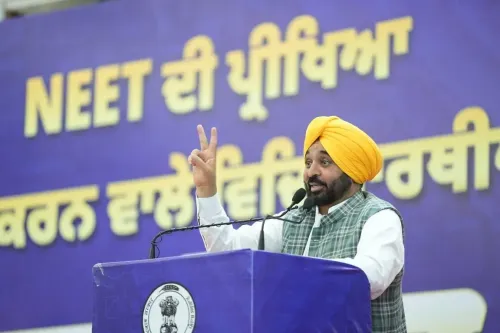
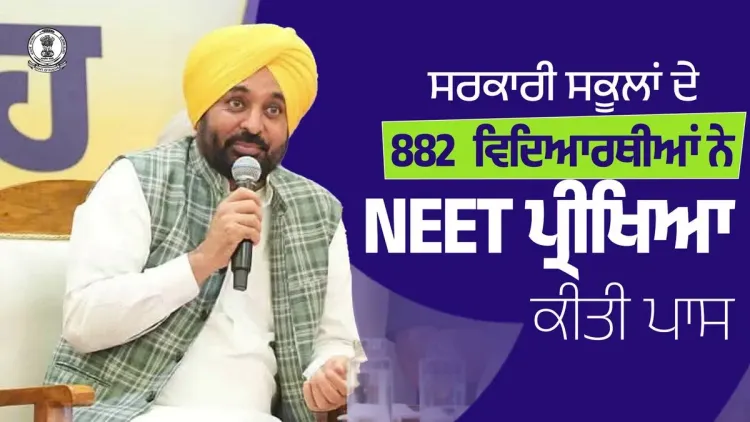
The Chief Minister's Office of Punjab announced on Tuesday, 28 July 2026 that the state has secured the first position in education across India, crediting reforms undertaken under the direction of Chief Minister Bhagwant Mann. The announcement also highlighted that 882 students from Punjab's government schools have cleared the NEET examination, underscoring the state's push to raise outcomes in public schooling.
Context
The CMO's post, written in Punjabi, states: 'ਪੰਜਾਬ ਨੇ ਸਿੱਖਿਆ ਦੇ ਖੇਤਰ ਵਿੱਚ ਦੇਸ਼ ਭਰ ਵਿੱਚ ਪਹਿਲਾ ਸਥਾਨ ਹਾਸਲ ਕੀਤਾ ਹੈ' ('Punjab has secured the first position in the field of education across the country'). It adds that the 882 government-school students who cleared NEET have proved their capability and strengthened the march towards 'Rangla Punjab' — a phrase the Mann administration uses to evoke a prosperous, vibrant Punjab.
The NEET, or National Eligibility cum Entrance Test, is the single centralised gateway to undergraduate medical and dental admissions in India, making it one of the most competitive examinations in the country. Success in NEET from government schools is widely regarded as a meaningful indicator of the quality of state-run science education.
Policy Backdrop
Since taking office in March 2022, the Aam Aadmi Party government led by Bhagwant Mann has positioned public-school reform as a flagship commitment, drawing on a template associated with the party's earlier governance in Delhi. Measures announced after the 2022 Punjab assembly elections included teacher recruitment drives and infrastructure upgrades in state-run schools.
Indian states have increasingly used student performance in national competitive examinations — including NEET and the JEE — as public benchmarks of their school systems. Punjab's announcement fits this broader pattern of state governments publicising measurable gains in education to demonstrate policy impact to voters and policymakers alike.
Stakeholders and Impact
The most direct beneficiaries are the 882 government-school students who have qualified in NEET and now stand eligible for admission to medical colleges across India. For families that depend on state schools — typically from lower-income or rural backgrounds — such outcomes represent significant social mobility.
The announcement also carries political weight for the Mann government, which has staked considerable credibility on education reform ahead of future electoral cycles. A national ranking in education, if corroborated by central indices, would mark a substantial shift for a state that has historically faced challenges in public-school quality and teacher vacancies.
What's Next
Independent confirmation of Punjab's claimed first-place national ranking in education will be key to assessing the full significance of this announcement. Upcoming releases of central education performance indices — such as the Performance Grading Index (PGI) published by the Union Ministry of Education — and state-wise NEET result breakdowns will be closely watched by education researchers and policymakers.
If the ranking and NEET figures are validated by central data, Punjab could emerge as a model for other states seeking to replicate public-school reform at scale, and the results are likely to feature prominently in the AAP government's political messaging in the months ahead.
Point of View
Paired with the concrete figure of 882 government-school NEET qualifiers, is a politically significant announcement that blends verifiable achievement with a broader branding exercise. The AAP government has consistently used education outcomes as its most potent proof-of-governance argument, and this post extends that strategy to a state-level audience. However, the ranking claim remains unverified by central indices, and the gap between announcement and independent corroboration will determine how durable the political dividend proves. If validated, it would mark a genuine structural shift in Punjab's public education system — one with implications for how other states approach school reform.
NationPress
28 Jul 2026
Frequently Asked Questions
Has Punjab really ranked first in education in India?
The Chief Minister's Office of Punjab claimed on 28 July 2026 that Punjab has secured the first position in education across the country, citing reforms under CM Bhagwant Mann. The claim is yet to be independently confirmed by central government indices such as the Performance Grading Index.
How many Punjab government school students cleared NEET?
According to the CMO Punjab's announcement, 882 students from Punjab's government schools cleared the NEET examination, qualifying for undergraduate medical and dental admissions across India.
What is NEET and why does it matter for government school students?
NEET, the National Eligibility cum Entrance Test, is India's single centralised entrance exam for medical and dental college admissions. Government-school students clearing NEET is considered a strong indicator of public education quality, as these students typically come from lower-income or rural families with fewer private coaching resources.
What education reforms has Bhagwant Mann's government introduced in Punjab?
Since taking office in March 2022, the Aam Aadmi Party government under Bhagwant Mann has announced teacher recruitment drives and infrastructure upgrades in state-run schools, modelled in part on the party's education initiatives in Delhi.
What is 'Rangla Punjab' mentioned in the CMO's post?
'Rangla Punjab' is a phrase used by the Bhagwant Mann administration to describe its vision of a prosperous and vibrant Punjab, frequently invoked in government communications to frame policy achievements as steps toward broader state development.