Puri: Cabinet clears Green Energy Corridor Phase-III with BESS
Synopsis
The Union Cabinet has approved Green Energy Corridor Phase-III, integrating Battery Energy Storage Systems with intra-state transmission networks to support India's target of 900 GW non-fossil energy capacity by 2035 — the most ambitious renewable grid expansion in the corridor scheme's history.
Key Takeaways
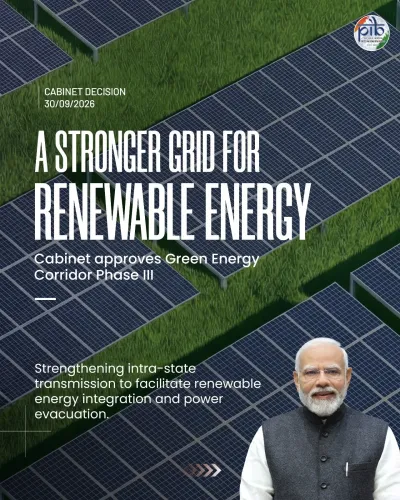
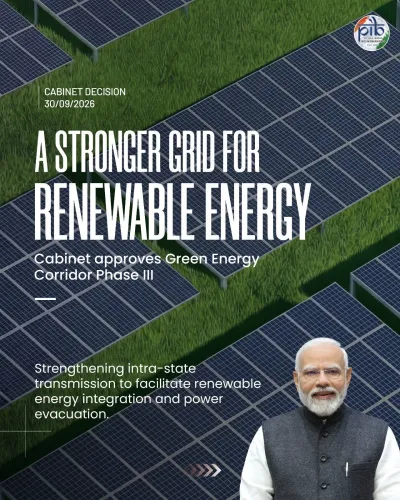
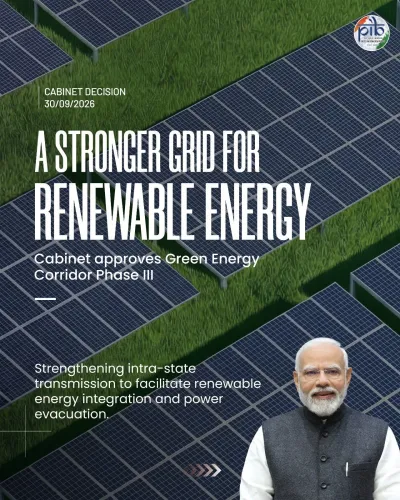
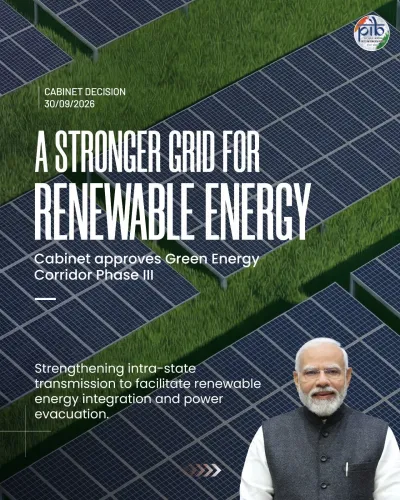
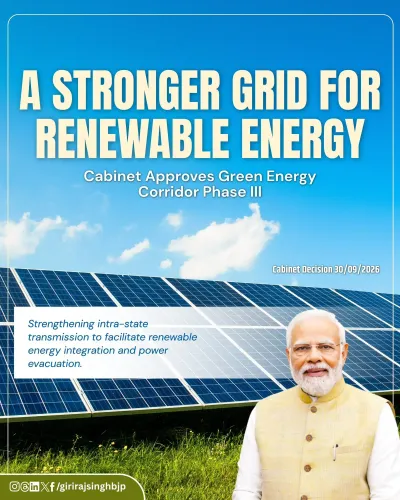
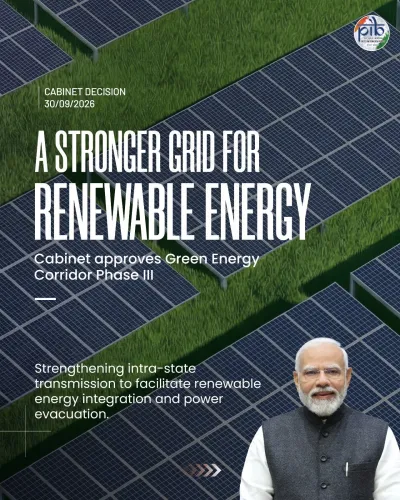
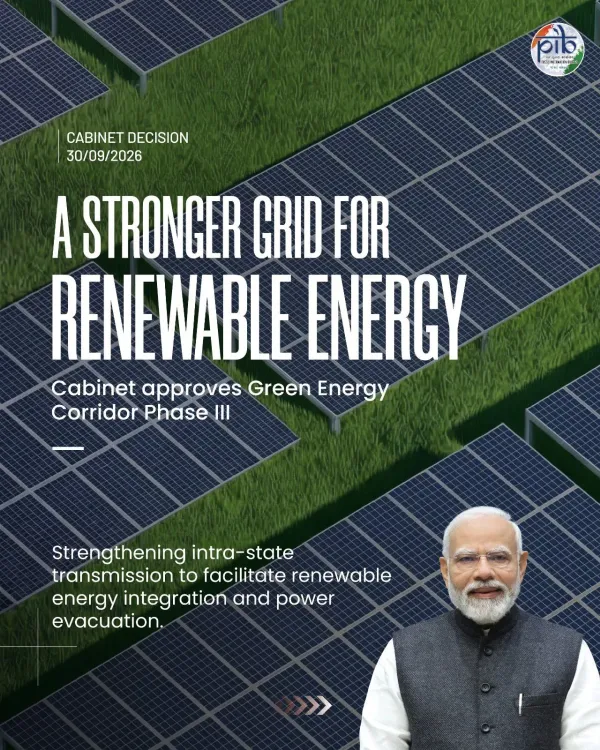
The Union Cabinet , chaired by PM Narendra Modi , approved the Green Energy Corridor Phase-III scheme on 30 September 2026 .
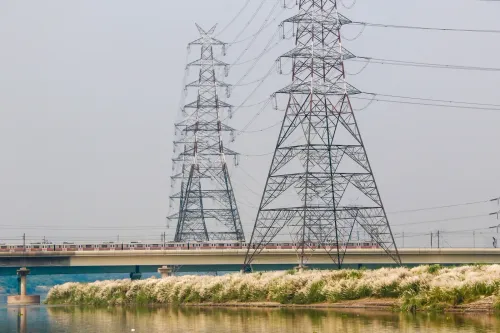
The scheme builds intra-state transmission networks integrated with Battery Energy Storage Systems (BESS) to evacuate and stabilise renewable power.
The stated target is 900 GW of non-fossil energy capacity by 2035 .
Green Energy Corridor Phase-I was approved in 2015 and focused on inter-state high-voltage lines from states like Rajasthan and Gujarat ; Phase-III shifts focus to last-mile intra-state connectivity and storage.
State discoms and renewable generators are the primary beneficiaries, with reduced curtailment and improved grid dispatchability.
Ministry notifications on funding shares, state timelines, and BESS tendering are awaited as the next implementation steps.
India's clean-energy grid just got a major structural upgrade. Union Petroleum Minister Hardeep Singh Puri announced on Wednesday, 30 September 2026 that the Union Cabinet, chaired by Prime Minister Narendra Modi, has approved the Green Energy Corridor Phase-III scheme — a plan to build intra-state transmission networks integrated with Battery Energy Storage Systems (BESS) to carry renewable power from generation sites to the grid.
From inter-state highways to last-mile grid: what Phase-III does differently
Puri's post, written in Hindi, framed the approval as 'bharat ke clean energy future ki disha mein bada kadam' — 'a big step toward India's clean energy future.' The scheme's stated ambition is sharp and specific: a target of 900 GW of non-fossil energy capacity by 2035. The Cabinet decision mandates the development of dedicated intra-state transmission corridors paired with grid-scale battery storage, addressing the two chronic pain points of India's renewable expansion — moving power out of generation clusters and smoothing the variability of solar and wind output.
This is where Phase-III breaks new ground. Green Energy Corridor Phase-I, approved back in 2015, focused on inter-state, high-voltage transmission lines to evacuate renewable power from states like Rajasthan and Gujarat. That was the highway. Phase-III is the last-mile connectivity — the intra-state arteries and the storage buffers that make those arteries actually reliable. Adding BESS directly into the transmission scheme signals that India is no longer treating storage as an afterthought bolted on after the fact.
The 900 GW target and India's escalating renewable ambition
India's renewable capacity targets have moved in one direction: up. At COP26 in Glasgow in 2021, Prime Minister Modi committed to 500 GW of non-fossil fuel capacity by 2030. The 900 GW by 2035 figure cited in this Cabinet approval represents a significant step-up in that trajectory — nearly doubling the earlier benchmark over a five-year extension. Achieving it will require not just more solar panels and wind turbines, but the transmission backbone and storage depth to make that power dispatchable. Phase-III is designed to provide exactly that.
State electricity distribution companies (discoms) and private renewable generators are the primary stakeholders who will feel the scheme's impact most immediately. Stronger intra-state networks reduce curtailment — the wasteful practice of switching off renewable plants because the grid cannot absorb their output. BESS integration means surplus solar power generated at noon can be dispatched during evening peak demand. That is the operational logic behind the policy.
What comes next: funding splits, state timelines, and BESS tenders
The Cabinet decision is the starting gun. The details that will determine whether Phase-III delivers on its ambition — centre-state funding ratios, individual state implementation schedules, and the tendering process for BESS procurement — are expected to follow in Ministry notifications. Periodic progress reports tracking cumulative non-fossil capacity will serve as the scoreboard against which the 900 GW by 2035 goal is measured.
India has now built three successive phases of dedicated renewable transmission corridors, each one pushing deeper into the grid's architecture. The direction is unmistakable. The question Phase-III must answer is whether execution can match the scale of the ambition it inherits.
Point of View
The government is acknowledging that intermittency, not just megawatts, is the defining challenge of the energy transition. The 900 GW by 2035 target, if it reflects an official Cabinet-level commitment, signals a significant upward revision of India's earlier COP26 pledge of 500 GW by 2030. How the centre and states divide implementation costs and responsibilities will be the real test of whether this approval translates into steel in the ground.
NationPress
30 Sept 2026
Frequently Asked Questions
What is Green Energy Corridor Phase-III?
Green Energy Corridor Phase-III is a Union Cabinet-approved scheme to develop intra-state transmission networks integrated with Battery Energy Storage Systems (BESS), enabling better evacuation and management of renewable power across Indian states.
What is India's non-fossil energy target under this scheme?
The scheme is aligned with a target of 900 GW of non-fossil energy capacity by 2035, as cited in the Cabinet approval announced on 30 September 2026.
How is Phase-III different from earlier Green Energy Corridor phases?
While Phase-I (approved in 2015) built inter-state high-voltage transmission lines from renewable-rich states like Rajasthan and Gujarat, Phase-III focuses on intra-state last-mile connectivity and adds Battery Energy Storage Systems to manage variability in solar and wind generation.
What is a Battery Energy Storage System (BESS) and why does it matter for renewable energy?
A BESS is a grid-scale technology that stores surplus electricity — for example, solar power generated at noon — and releases it during peak demand periods, reducing curtailment and making renewable power more reliable and dispatchable.
Who benefits from the Green Energy Corridor Phase-III approval?
State electricity distribution companies (discoms) and private renewable energy generators are the primary beneficiaries, as stronger transmission networks and storage reduce wasted output and improve grid stability.