Puri flags offshore drilling start as energy self-reliance milestone
Synopsis
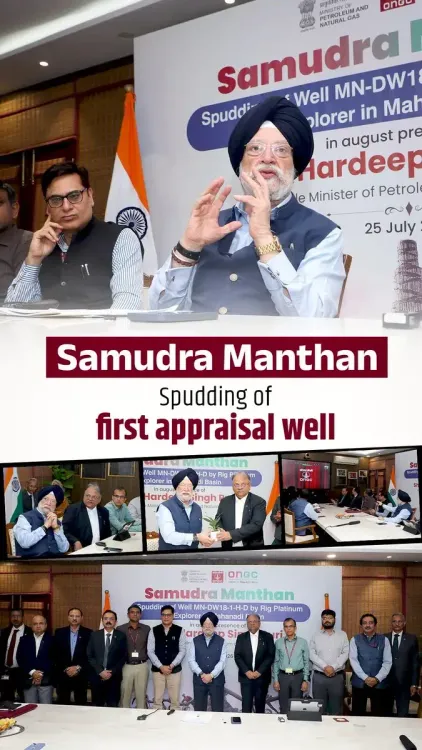
Union Petroleum Minister Hardeep Singh Puri on 25 July 2026 celebrated the spudding of the first appraisal well in the Mahanadi offshore basin under the 'Samudra Manthan' programme, calling it a historic step toward energy self-reliance backed by a decade of upstream policy reforms including HELP and OALP.
Key Takeaways
Union Petroleum Minister Hardeep Singh Puri on 25 July 2026 announced the spudding of the first appraisal well in the Mahanadi offshore basin under the 'Samudra Manthan' programme.
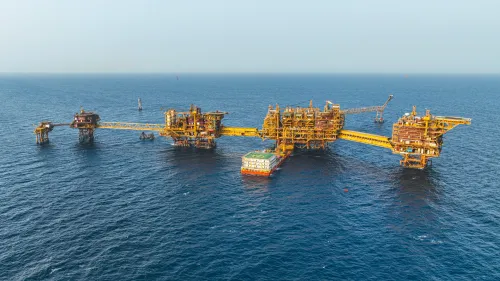
ONGC is leading the drilling operations in the basin, located off the coast of Odisha in India's eastern offshore.
The government has opened approximately 99 per cent of India's previously restricted offshore acreage for exploration since 2016 .
Key upstream reforms cited include the Hydrocarbon Exploration and Licensing Policy (HELP) and the Open Acreage Licensing Policy (OALP) , both introduced in 2016 .
India currently imports more than 80 per cent of its crude oil, making domestic discoveries critical to energy security goals.
The spudding event was held in New Delhi and framed by Puri as part of the broader 'Viksit Bharat' (Developed India) vision.
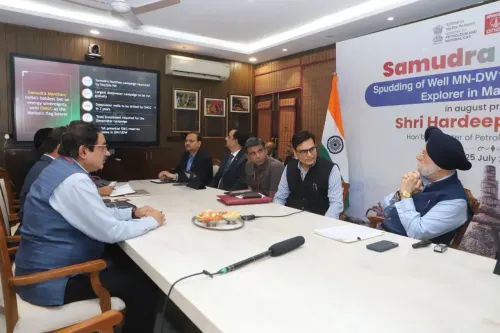
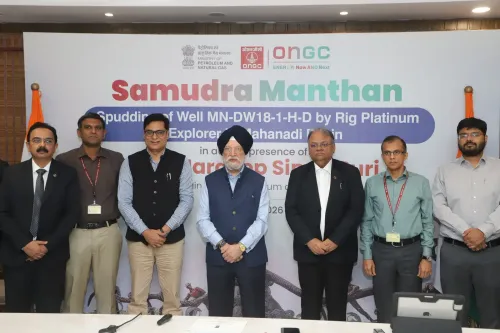
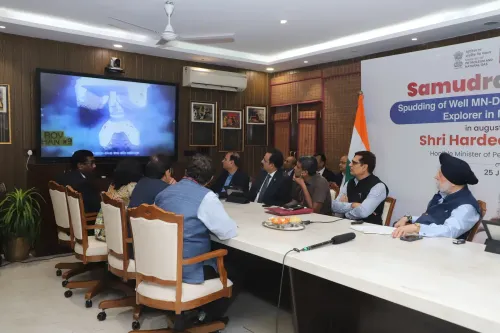
Union Petroleum Minister Hardeep Singh Puri on Saturday, 25 July 2026 hailed the commencement of drilling operations at the first appraisal well in the Mahanadi offshore basin as a historic step toward energy self-reliance, crediting the move to a decade of upstream policy reforms under Prime Minister Narendra Modi. The spudding, conducted under the 'Samudra Manthan' programme, was marked at an event in New Delhi attended by officials of state-run explorer ONGC.
Context
Puri's post, written in Hindi, described the development as 'ऊर्जा सुरक्षा की दिशा में भारत का एक और ऐतिहासिक कदम' — 'another historic step for India in the direction of energy security.' He said every metre drilled would bring the country closer to reducing import dependence, strengthening self-reliance, and realising the vision of a 'Viksit Bharat' (Developed India). The well in question is the first appraisal well to be spudded in the basin under the current offshore exploration push, with ONGC leading operations.
The Mahanadi offshore basin, located off the coast of Odisha in India's eastern offshore, is among the sedimentary basins that were opened for exploration following regulatory changes introduced between 2016 and 2018. India currently imports more than 80 per cent of its crude oil requirements, making domestic upstream discoveries a strategic priority.
Policy Backdrop
Puri specifically cited four pillars of reform that he said transformed the exploration and production (E&P) sector over the past decade. The Hydrocarbon Exploration and Licensing Policy (HELP), notified in March 2016, replaced the earlier production-sharing contract regime with a simpler revenue-sharing model, reducing government intervention in operational decisions. The Open Acreage Licensing Policy (OALP), launched in July 2016, enabled companies to nominate and bid for exploration blocks on a continuous basis rather than waiting for government-initiated rounds.
Complementing these was a transparent revenue-sharing framework and, critically, the opening of approximately 99 per cent of India's offshore acreage — previously restricted — for exploration. Puri described these steps as collectively giving India's energy sector 'a new direction.' The 'Samudra Manthan' event in Delhi served as the ceremonial occasion to mark the spudding milestone.
Stakeholders and Impact
ONGC, India's largest public-sector upstream company, is the primary operator for the Mahanadi offshore drilling. A successful appraisal campaign in the basin could add to India's proven reserve base and reduce the country's exposure to volatile global crude prices. Private and foreign E&P investors who have participated in OALP bidding rounds also stand to benefit from the regulatory environment that the government says now governs nearly all of India's sedimentary acreage.
Broader stakeholders include domestic refiners and consumers, for whom reduced import dependence would mean lower vulnerability to supply disruptions and currency outflows. India's crude import bill runs into hundreds of billions of dollars annually, making even incremental domestic production gains economically significant.
What's Next
The commercial outcome of the appraisal well will be closely watched by the upstream industry. A discovery of commercial scale in the Mahanadi basin would validate the policy reforms and could trigger follow-on development investment. The government is also expected to continue successive OALP bidding rounds to further expand the active exploration portfolio. Puri's framing of the event as 'the beginning of a new chapter' signals that the ministry intends to use such milestones to sustain momentum on the broader energy-security agenda ahead of India's long-term goal of cutting import dependence.
Point of View
Reinforcing the 'Atmanirbhar Bharat' energy storyline ahead of any electoral cycle. The citation of HELP, OALP, and the opening of 99 per cent of offshore acreage is a well-worn policy inventory that the ministry has consistently deployed to signal credibility on energy security. Whether the Mahanadi basin delivers commercial volumes will ultimately determine whether this milestone becomes a genuine inflection point or remains a ceremonial marker. The framing of every metre drilled as a step toward 'Viksit Bharat' also ties upstream hydrocarbons explicitly to the government's broader 2047 development vision.
NationPress
25 Jul 2026
Frequently Asked Questions
What is the Samudra Manthan programme?
'Samudra Manthan' is a government initiative under which the spudding of appraisal wells in India's offshore basins is being conducted to accelerate hydrocarbon exploration, with the Mahanadi offshore basin being the latest focus area.
Where is the Mahanadi offshore basin located?
The Mahanadi offshore basin is a sedimentary basin situated off the coast of Odisha in India's eastern offshore region, and is among the areas opened for exploration under recent upstream policy reforms.
What is HELP and how does it differ from the old policy?
The Hydrocarbon Exploration and Licensing Policy (HELP) , notified in March 2016 , replaced the earlier production-sharing contract regime with a simpler revenue-sharing model, giving companies more operational freedom and reducing government take during the exploration phase.
What is India's crude oil import dependence?
India imports more than 80 per cent of its crude oil requirements, making domestic upstream exploration a strategic priority to reduce the country's exposure to global price volatility and foreign exchange outflows.
Who is drilling the Mahanadi offshore appraisal well?
ONGC (Oil and Natural Gas Corporation), India's largest state-run upstream explorer, is the primary operator conducting drilling operations in the Mahanadi offshore basin under the Samudra Manthan programme.