Puri Hails Cabinet Nod to Semicon 2.0, Mobile PLI Scheme
Synopsis
The Union Cabinet, chaired by PM Modi, approved the ₹1,27,500 crore Semicon 2.0 semiconductor initiative and a ₹62,500 crore mobile manufacturing scheme on 15 July 2026. Petroleum Minister Hardeep Singh Puri hailed the decisions as proof that India is becoming the world's trusted technology and manufacturing hub.
Key Takeaways
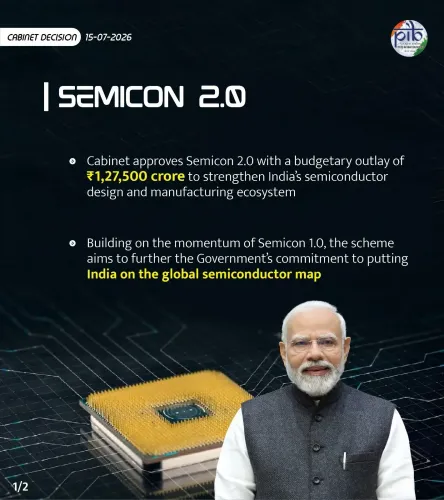
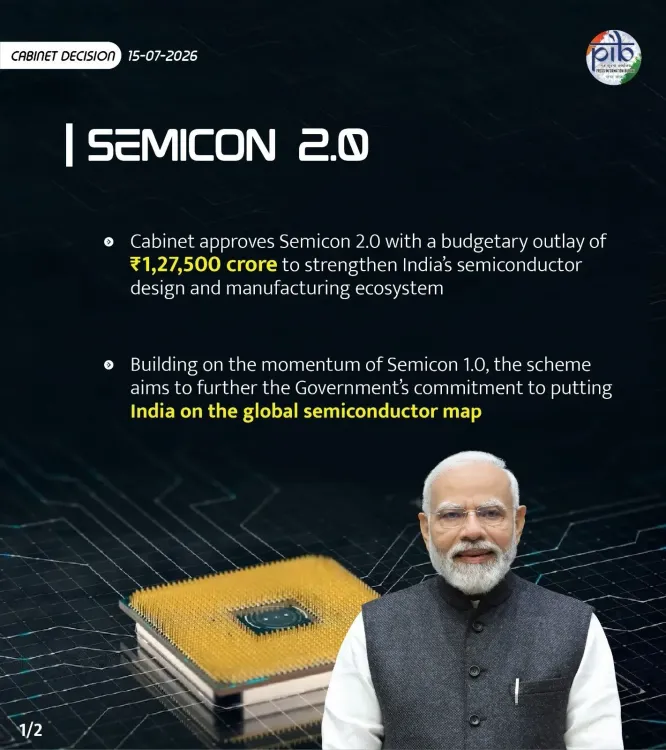
The Union Cabinet on 15 July 2026 approved Semicon 2.0 with an outlay of ₹1,27,500 crore to accelerate semiconductor design and manufacturing in India.
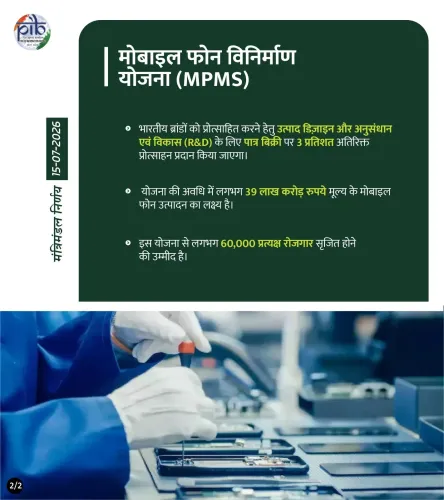
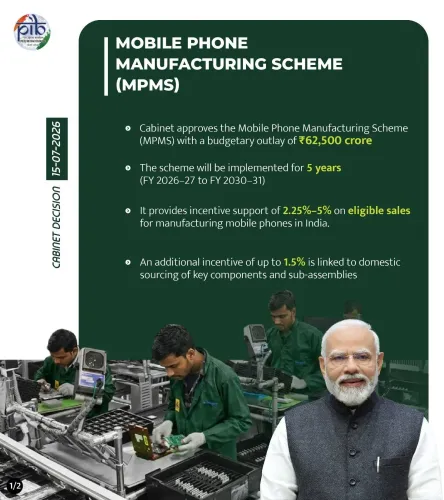
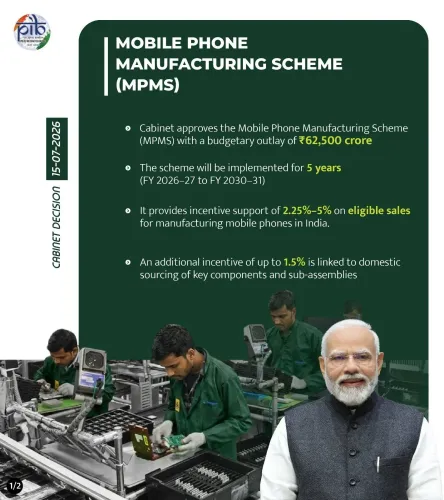
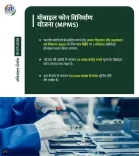
A separate ₹62,500 crore mobile phone manufacturing scheme was also approved, extending India's PLI strategy in electronics.
The two schemes together represent a combined government commitment of nearly ₹1,90,000 crore in technology-led manufacturing.
The decisions build on the India Semiconductor Mission launched in 2021 and successive PLI rounds for mobile phones dating to 2020.
Union Minister Hardeep Singh Puri described the approvals as part of PM Modi's vision to make India a trusted global technology and manufacturing hub.
Key beneficiaries include semiconductor firms, mobile phone manufacturers, and allied electronics supply-chain players operating in India.
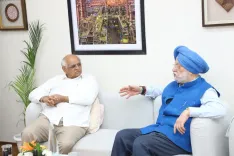
Union Petroleum Minister Hardeep Singh Puri on Wednesday, 15 July 2026, welcomed two landmark decisions by the Union Cabinet, chaired by Prime Minister Narendra Modi, approving a ₹1,27,500 crore semiconductor initiative dubbed Semicon 2.0 and a ₹62,500 crore mobile phone manufacturing scheme, positioning India as a global technology and electronics production hub.
Posting in Hindi on X, Puri declared: 'नया भारत अब केवल दुनिया का बाज़ार नहीं, बल्कि दुनिया का भरोसेमंद टेक्नोलॉजी और मैन्युफैक्चरिंग हब बन रहा है' ('New India is no longer merely a market for the world, but is becoming the world's trusted technology and manufacturing hub'). He credited the decisions to the leadership of PM Modi and described them as advancing that vision in a decisive step.
Context
The Cabinet's twin approvals mark a significant escalation in India's ambition to move up the global electronics value chain. Semicon 2.0, with its outlay of ₹1,27,500 crore, is framed as an expansion of the country's earlier semiconductor push, while the ₹62,500 crore mobile manufacturing scheme builds on successive rounds of production-linked incentives introduced since 2020. Together, the two schemes represent a combined government commitment of nearly ₹1,90,000 crore in technology-led manufacturing.
Policy Backdrop
India's semiconductor drive began in earnest in 2021 when the Union Cabinet approved the India Semiconductor Mission with an initial outlay of approximately ₹76,000 crore, aimed at seeding domestic fabrication and design capabilities. Simultaneously, the first Production Linked Incentive (PLI) scheme for mobile phones — launched in 2020 with an outlay exceeding ₹40,000 crore — attracted global handset brands to expand local assembly and, gradually, component manufacturing. Subsequent PLI extensions between 2021 and 2023 deepened electronics supply chains further. Semicon 2.0 and the new mobile manufacturing scheme are the latest and largest steps in this continuum, signalling that New Delhi views technology self-reliance as a strategic priority rather than a one-off policy experiment.
Stakeholders and Impact
The decisions are expected to benefit a wide range of players: global and domestic semiconductor design firms, chip assembly and testing companies, and mobile phone manufacturers already operating or planning to enter the Indian market. For electronics manufacturers, the enhanced incentive pool reduces the cost disadvantage of producing in India relative to established hubs in China, Vietnam, and Taiwan. Analysts have long argued that without a domestic chip supply, India's electronics ambitions remain structurally incomplete; Semicon 2.0's scale is intended to address that gap directly. Workers in allied sectors — packaging, logistics, and components — are also expected to benefit as manufacturing clusters expand.
What's Next
The immediate focus will shift to implementation: identifying project partners, finalising land and infrastructure for fabrication units, and disbursing incentives under the new mobile scheme. Progress on semiconductor fabrication and assembly projects already in the pipeline under the earlier India Semiconductor Mission will be closely watched as a bellwether for how quickly Semicon 2.0 can translate approvals into operational capacity. The next Union Budget will also be scrutinised for follow-on allocations that signal the government's resolve to sustain this investment cycle. If execution matches the scale of the Cabinet's ambition, India could meaningfully alter its position in global technology supply chains within the decade.
Point of View
90,000 crore dwarfs earlier rounds, suggesting New Delhi has concluded that incremental incentives are insufficient to close the gap with established Asian manufacturing rivals. Hardeep Singh Puri's amplification of the announcement — notable given his portfolio is petroleum, not electronics — reflects the BJP's broader effort to project every Cabinet decision as part of a coherent national transformation narrative. The real test will be whether implementation velocity matches the scale of the financial commitment, a challenge that has historically separated India's policy intent from outcomes in manufacturing.
NationPress
15 Jul 2026
Frequently Asked Questions
What is Semicon 2.0 and how much has the Cabinet approved for it?
Semicon 2.0 is India's expanded semiconductor design and manufacturing initiative, approved by the Union Cabinet on 15 July 2026 with an outlay of ₹1,27,500 crore. It builds on the earlier India Semiconductor Mission launched in 2021 and aims to make India a major global chip production centre.
What is the new mobile phone manufacturing scheme approved by the Cabinet?
The Cabinet approved a ₹62,500 crore mobile phone manufacturing scheme on 15 July 2026 to boost domestic electronics production. It is the latest in a series of Production Linked Incentive schemes for mobile phones that India has rolled out since 2020.
What did Hardeep Singh Puri say about the Cabinet decisions?
Petroleum Minister Hardeep Singh Puri posted on X welcoming the decisions, stating that 'New India is no longer merely a market for the world, but is becoming the world's trusted technology and manufacturing hub.' He credited PM Modi's leadership for driving the approvals.
How do these approvals relate to India's earlier semiconductor policy?
India launched the India Semiconductor Mission in 2021 with an outlay of roughly ₹76,000 crore. Semicon 2.0, at ₹1,27,500 crore, is a significant expansion of that effort and reflects the government's intent to accelerate domestic chip fabrication and design capabilities.
Who benefits from India's Semicon 2.0 and mobile manufacturing scheme?
The primary beneficiaries include semiconductor design and fabrication companies, chip assembly and testing firms, and mobile phone manufacturers. Workers in packaging, logistics, and electronics components sectors are also expected to gain as manufacturing clusters expand under these schemes.