Puri Hails MyGov's 12 Years of Citizen Engagement

Synopsis
Union Petroleum Minister Hardeep Singh Puri marked MyGov's 12th anniversary on 27 July 2026, highlighting 6.3+ crore registered Saathis and 56+ lakh citizen suggestions, calling the platform central to India's Viksit Bharat vision and participatory governance push.
Key Takeaways
Hardeep Singh Puri congratulated the MyGov team on 12 years of citizen engagement on 27 July 2026 .
The platform reports 6.3+ crore MyGov Saathis and 56+ lakh citizen suggestions submitted since launch.
329+ lakh quiz participations , 265+ lakh pledges , and 50+ lakh app downloads are among the self-reported milestones.
MyGov was launched in July 2014 as part of the Modi government's push for participatory, technology-driven governance.
The platform is positioned as a key instrument in the Viksit Bharat vision of a developed India by 2047 .
Multilingual and localised outreach has been cited as central to the platform's inclusive design across India's diverse regions.
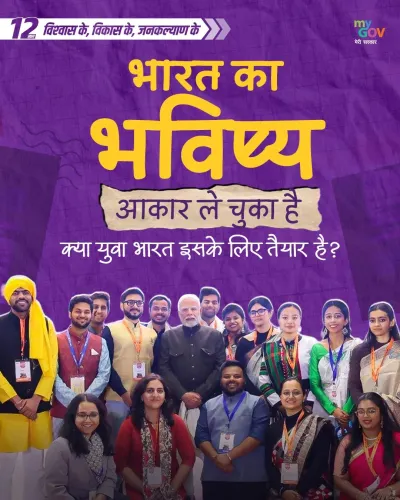
Union Petroleum Minister Hardeep Singh Puri on Monday, 27 July 2026, congratulated the MyGov team on completing 12 years of operation, calling the government's official citizen engagement platform a 'powerful platform for citizen engagement' that has brought 'participatory governance directly to the fingertips of the citizens.'
Context
Puri's post, shared under the hashtags #MyGovAt12 and #12YearsOfMyGov, cited a string of self-reported platform metrics: 6.3+ crore MyGov Saathis, 329+ lakh quiz participations, 265+ lakh pledges, 56+ lakh citizen suggestions, 50+ lakh app downloads, and 1.2+ crore social media followers. These figures, as reported by the platform itself, are intended to illustrate the scale of public participation the portal has attracted since its inception.
The minister described MyGov as having become 'the pivot of ideas and voices to help build a stronger, more inclusive, and Viksit Bharat,' referencing the central government's flagship vision of a developed India by 2047. He also highlighted the platform's 'localised reach and multilingual participation' as a key instrument for bridging voices across every corner of the country.
Policy Backdrop
MyGov was launched in July 2014, shortly after Prime Minister Narendra Modi took office, as a portal to crowdsource citizen ideas and feedback on policy. The initiative was conceived as a digital-era instrument for participatory governance, allowing citizens to submit suggestions, participate in consultations, and engage with government campaigns.
It formed part of the broader Digital India programme announced in 2015, which aimed to expand e-governance and the digital delivery of public services. Over the subsequent decade, MyGov has been used to run quizzes, pledge campaigns, and idea challenges aligned with major government schemes and national events.
The platform's growth has coincided with a sustained central government push to use digital tools as a channel for projecting inclusive development and decentralising idea collection while maintaining central coordination across multiple national portals.
Stakeholders and Impact
The primary beneficiaries of MyGov's model are ordinary Indian citizens, particularly those in regional and linguistically diverse communities, for whom the platform's multilingual interface is designed to lower participation barriers. The portal's reach across India's varied linguistic landscape has been cited by the government as evidence of its inclusive design.
For the ruling BJP-led government, MyGov also serves as a visible demonstration of its commitment to technology-driven governance — a recurring theme in its communications since 2014. Senior ministers such as Puri frequently amplify platform milestones on social media as part of a coordinated effort to highlight the government's digital governance record.
What's Next
The future trajectory of MyGov may hinge on how effectively citizen-submitted data and suggestions are integrated into actual policy drafts and legislative consultations. Analysts watching the platform have noted that the next phase of evolution could involve deeper linkages with state-level citizen portals, potentially expanding the feedback loop beyond the central government's immediate policy domain.
As India approaches the 2047 Viksit Bharat horizon, the government is likely to continue positioning platforms such as MyGov as evidence of a participatory development model — one in which citizen voice, at least nominally, shapes national priorities.
Point of View
Lakhs of suggestions — is designed to signal mass democratic participation, though the gap between registration numbers and meaningful policy influence remains a standing question for governance analysts. How MyGov evolves from a feedback aggregator into a demonstrably policy-shaping instrument will define its credibility as a genuine participatory tool rather than a communication exercise.
NationPress
28 Jul 2026
Frequently Asked Questions
What is MyGov India and what does it do?
MyGov is the official citizen engagement platform of the Government of India, launched in July 2014, which allows citizens to submit ideas, participate in policy consultations, take quizzes, and sign pledges on national issues.
How many users does MyGov have in 2026?
According to self-reported figures cited by Union Minister Hardeep Singh Puri, MyGov has over 6.3 crore registered Saathis and 1.2 crore social media followers as of July 2026.
Why did Hardeep Singh Puri post about MyGov?
Puri posted to congratulate the MyGov team on completing 12 years of operation and to highlight the platform's role in advancing participatory governance under Prime Minister Narendra Modi's leadership.
What is Viksit Bharat and how does MyGov relate to it?
Viksit Bharat is the central government's vision for India to become a fully developed nation by 2047. MyGov is positioned as a citizen engagement tool that channels public ideas and voices toward achieving this goal.
When was MyGov launched in India?
MyGov was launched in July 2014, shortly after Prime Minister Narendra Modi assumed office, as part of a broader push for digital and participatory governance.