Puri hears young CSS officers pitch India's energy future
Synopsis
Union Petroleum Minister Hardeep Singh Puri hosted three young Central Secretariat Service officers who pitched ideas on E&P reforms, gas sector restructuring and non-fuel revenue for OMCs, with senior officials and energy PSU heads in attendance.
Key Takeaways
Three CSS officers at the Ministry of Petroleum presented independent policy ideas to senior ministry officials and PSU heads on 18 November 2026 .
Presentation themes: E&P Sector Reforms: The Next Wave , Reforming India's Domestic Natural Gas Sector , and Increasing Non-Fuel Revenue for Oil Marketing Companies .
Audience included leadership of BPCL, GAIL, HPCL, IndianOil, ONGC, Oil India, Petronet LNG and other major energy PSUs.
Minister Puri linked the event to PM Modi's governance culture of empowering junior officers to contribute to policy.
The session aligns with India's Viksit Bharat vision and the goal of achieving energy self-sufficiency by 2047.
The E&P reform thread builds on the Hydrocarbon Exploration and Licensing Policy (HELP) introduced in 2016 .
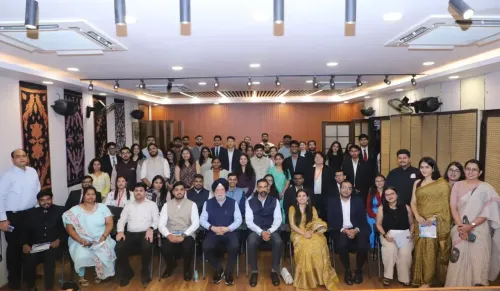
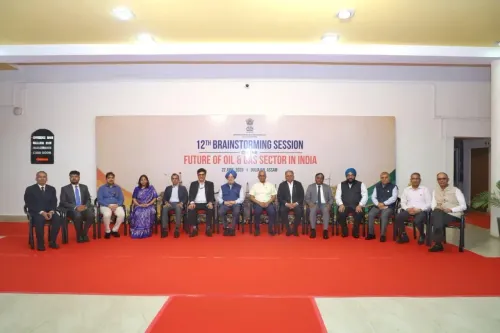
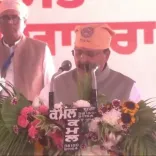
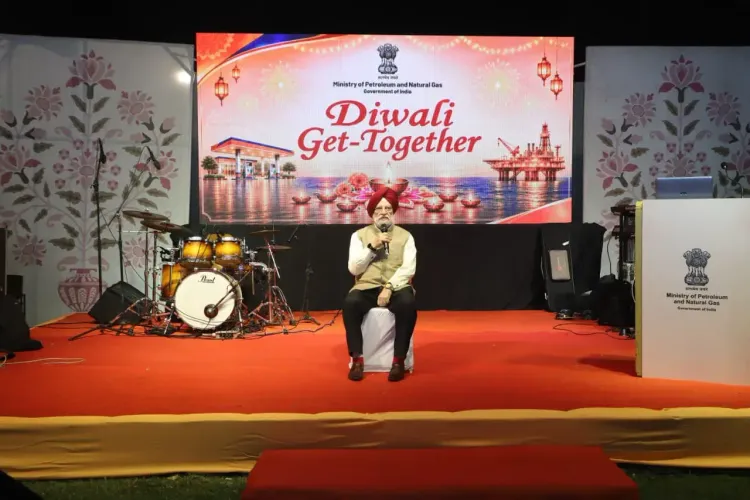
Three young officers of the Central Secretariat Service, posted at the Ministry of Petroleum and Natural Gas, stepped up to present bold ideas on India's energy future — and Union Petroleum Minister Hardeep Singh Puri was in the room, listening closely. The session, held on Wednesday, 18 November 2026, brought together senior ministry officials and heads of major energy public-sector undertakings as the audience.
Three themes, three officers, one room of decision-makers
The presentations spanned three consequential areas: E&P Sector Reforms: The Next Wave, Reforming India's Domestic Natural Gas Sector, and Increasing Non-Fuel Revenue for Oil Marketing Companies. Each theme sits at the intersection of ongoing policy debates — from upstream exploration to downstream revenue diversification — making the choice of topics anything but academic.
The audience was formidable. Seated alongside ministry brass were leaders of energy giants including BPCL, Engineers India, GAIL, HPCL, IGL, IndianOil, NRL, ONGC, ONGC Videsh, Oil India and Petronet LNG — companies that collectively shape how India produces, refines and distributes its hydrocarbons.
From HELP reforms to Viksit Bharat: the policy arc behind the evening
The E&P reform conversation has roots going back to 2016, when the government replaced the New Exploration Licensing Policy with the Hydrocarbon Exploration and Licensing Policy (HELP), shifting to revenue-sharing and opening the sector to greater competition. A decade on, officers pitching 'the next wave' signals that the ministry sees unfinished business in upstream liberalisation.
The gas sector presentation is equally timely. India's domestic natural gas market has long grappled with pricing complexity and infrastructure gaps, and any structural reform here would directly affect industrial consumers, city gas networks and the country's emissions trajectory. Non-fuel revenue diversification for oil marketing companies — think convenience retail, lubricants, renewables — has gained urgency as the global energy transition pressures traditional fuel margins.
Minister Puri's personal note — and what it signals about governance culture
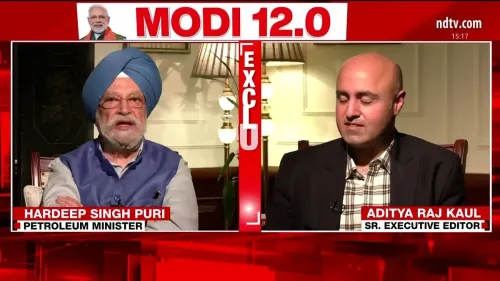
Puri did not stop at applauding the ideas. He drew a straight line to leadership philosophy, noting that under Prime Minister Narendra Modi, 'a culture is taking shape where young officers feel encouraged and empowered to come forward, share their ideas and contribute to nation-building.' He also turned reflective, recalling his own early career moments when senior colleagues' appreciation became fuel for greater effort.
That personal aside carries a governance message: the ministry is signalling that ideation is not the preserve of joint-secretary-level deliberations. The event connects to the broader Viksit Bharat framework — India's national ambition to become a developed economy by 2047 — and the specific goal of energy self-sufficiency that sits at its core.
Upcoming events such as India Energy Week and parliamentary discussions on hydrocarbon legislation may be where some of the ideas aired on Wednesday evening find their next hearing.
Fresh thinking from the ranks of government, presented directly to the people who run India's energy companies — that is not a routine evening at the ministry.
Point of View
Particularly in a sector it considers central to national security. By staging the session before PSU captains — not just ministry insiders — the ministry creates a soft accountability loop: ideas aired publicly are harder to shelve quietly. The three topics chosen are not soft targets; E&P liberalisation, gas pricing reform and OMC revenue diversification are each politically and commercially contested, suggesting the government may be testing stakeholder appetite before making moves. If Puri's public enthusiasm translates into formal consultation channels, it could accelerate the next round of hydrocarbon-sector reform ahead of India Energy Week.
NationPress
18 Nov 2026
Frequently Asked Questions
What did the young officers present to Hardeep Puri at the petroleum ministry?
Three Central Secretariat Service officers presented on three themes: E&P Sector Reforms: The Next Wave, Reforming India's Domestic Natural Gas Sector, and Increasing Non-Fuel Revenue for Oil Marketing Companies, before senior ministry officials and PSU heads.
What is the Central Secretariat Service?
The Central Secretariat Service is a civil service cadre that provides secretariat officers to various central government ministries, including the Ministry of Petroleum and Natural Gas.
What is Viksit Bharat and how does it relate to energy policy?
Viksit Bharat is India's national vision to become a developed economy by 2047. Energy self-sufficiency — through upstream reforms, gas sector modernisation and diversified OMC revenues — is a core pillar of achieving that goal.
What was the Hydrocarbon Exploration and Licensing Policy (HELP)?
Introduced in 2016, HELP replaced the earlier New Exploration Licensing Policy to shift to a revenue-sharing model and open India's upstream oil and gas sector to broader competition, forming the base from which further E&P reforms are now being discussed.
Why are non-fuel revenues important for oil marketing companies like BPCL, HPCL and IndianOil?
As the global energy transition pressures traditional fuel margins, oil marketing companies are increasingly looking to diversify income through convenience retail, lubricants and renewable energy ventures, making non-fuel revenue a strategic priority highlighted at the ministry session.