Puri at PAFI Forum: India's energy security held firm amid global chaos
Synopsis
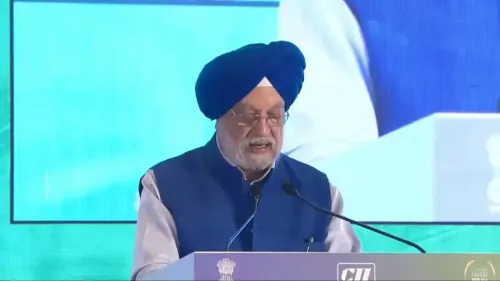
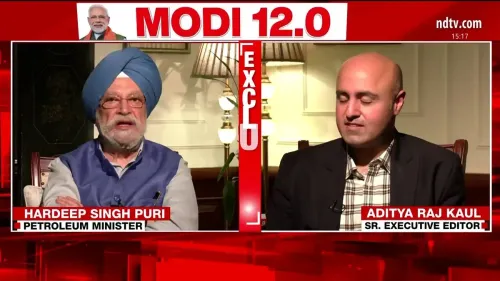
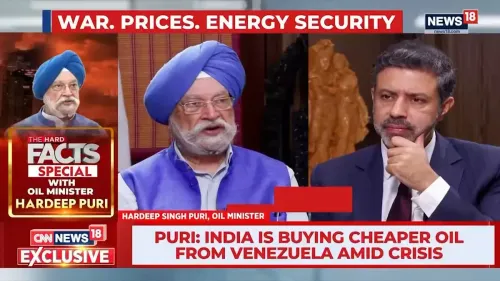
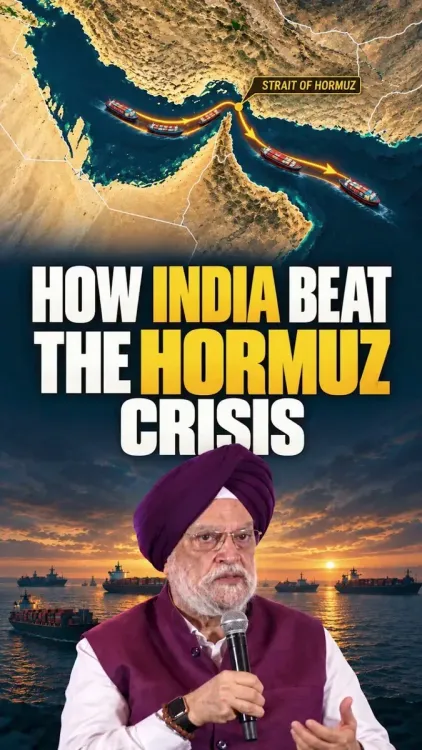
Union Petroleum Minister Hardeep Singh Puri addressed the PAFI India 13th Annual Forum 2026 on September 25, arguing that India's early, far-sighted energy security decisions under PM Modi — spanning strategic reserves and supplier diversification — have insulated Indian consumers from global price and supply shocks.
Key Takeaways
Minister Hardeep Singh Puri spoke at the 13th Annual Forum 2026 by PAFI India on September 25, 2026 , on the theme 'India 3.0: Engaging for Growth in a Disrupted World'.
Puri credited PM Narendra Modi 's 'far-sighted decisions' for strengthening India's energy security ahead of global disruptions.
India's strategy combined Strategic Petroleum Reserves , discounted Russian crude purchases post-2022, and long-term contracts with the US, UAE and others.
India's crude import dependence remains above 80 percent , making supply and price insulation a high-stakes national priority.
The next phase of underground strategic petroleum reserve caverns and new bilateral supply agreements are key items to watch.
While geopolitical conflicts kept the world's energy markets in a state of near-permanent anxiety, Union Petroleum Minister Hardeep Singh Puri said on Friday, September 25, 2026, that India had seen the turbulence coming — and had quietly built its defences long before the shocks arrived.
What Puri told the PAFI Forum
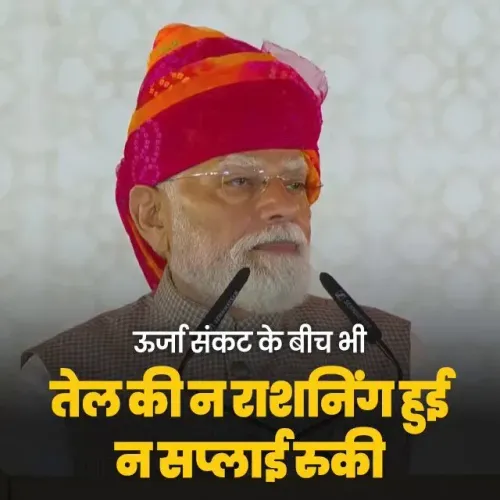
Speaking at the 13th Annual Forum 2026 organised by the Petroleum and Natural Gas industry body PAFI India, Minister Puri addressed a session titled 'India 3.0: Engaging for Growth in a Disrupted World' — a frame that captures exactly where the country sees itself: a major economy no longer merely reacting to external forces, but actively engineering its own insulation from them. He credited Prime Minister Narendra Modi with taking 'far-sighted decisions' to strengthen energy security and build resilience against global supply disruptions, protecting Indian energy consumers from price and energy shocks.
India's crude import strategy since 2022
The claim has a documented policy trail. After the Russia-Ukraine conflict erupted in 2022, India moved swiftly to diversify its crude sourcing — picking up discounted Russian barrels while simultaneously deepening long-term supply contracts with the United States, UAE and other producers. The government coordinated limited releases from its Strategic Petroleum Reserves, the underground cavern network commissioned in the 2010s, to cushion domestic price pressures at critical moments.
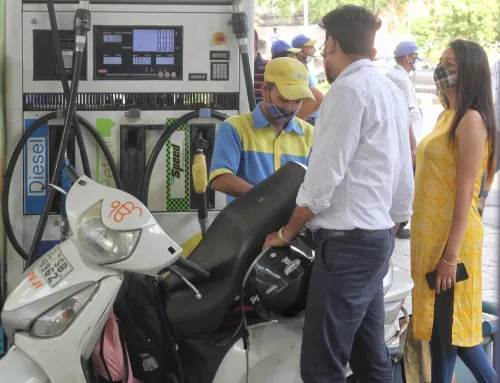
That twin-track approach — buy smart on global markets, hold a backstop at home — is now a recognisable feature of India's energy doctrine. With crude import dependence still exceeding 80 percent of total consumption, the stakes of getting it wrong remain enormous.
Strategic Petroleum Reserves: the quiet anchor
India's strategic reserve infrastructure, built across underground rock caverns, was designed precisely for scenarios like the ones the world has lived through since 2022 — sudden supply disruptions, sanctions-driven rerouting, and price spikes that can ripple through an import-dependent economy within weeks. The government has approved further phases of the programme, with progress on the next generation of storage caverns a key indicator that industry and Parliament will watch.
The forum appearance signals that the Ministry intends to press this resilience narrative into the policy conversation at home and among international energy partners. Energy security — once a quiet infrastructure file — has become a front-line economic argument.
The bigger picture: India 3.0 and the global disruption era
The session title 'India 3.0' is itself a statement of posture: a country that has graduated from reactive import dependency toward a more confident, multipolar energy engagement — signing deals across the Gulf, the Americas, and with sanctioned producers, while scaling domestic renewables in parallel. Minister Puri's message to the assembled professionals was that this multi-vector strategy is not improvisation. It was planned, it was early, and it is working.
The proof will lie in what comes next: new long-term supply agreements, parliamentary scrutiny of the petroleum ministry's storage and refining budget, and whether India's consumers actually emerge from the next global shock with bills that hold steady. The architecture is in place. The test is always the next disruption.
Point of View
A narrative useful both domestically and in bilateral energy diplomacy. With import dependence still above 80 percent, however, the resilience story remains work-in-progress rather than mission accomplished. Parliamentary scrutiny of reserve expansion budgets will be the real test of how deep the commitment runs.
NationPress
25 Sept 2026
Frequently Asked Questions
What did Hardeep Singh Puri say at the PAFI India forum in 2026?
He said India had taken far-sighted decisions under PM Modi to strengthen energy security and build resilience against global supply and price disruptions, protecting Indian energy consumers from shocks caused by ongoing geopolitical conflicts.
What is India's Strategic Petroleum Reserve and how does it work?
India's Strategic Petroleum Reserve consists of underground crude oil storage caverns commissioned in the 2010s. The government releases crude from these reserves during supply disruptions or price spikes to cushion the domestic market, with further expansion phases approved.
How did India manage its crude oil supply after the Russia-Ukraine conflict in 2022?
India increased purchases of discounted Russian crude while maintaining long-term supply contracts with the US, UAE and other producers, and coordinated limited strategic reserve releases to ease domestic price pressures.
How dependent is India on crude oil imports?
India imports more than 80 percent of its total crude oil consumption, making supplier diversification, strategic reserves, and long-term contracts critical pillars of its energy security policy.