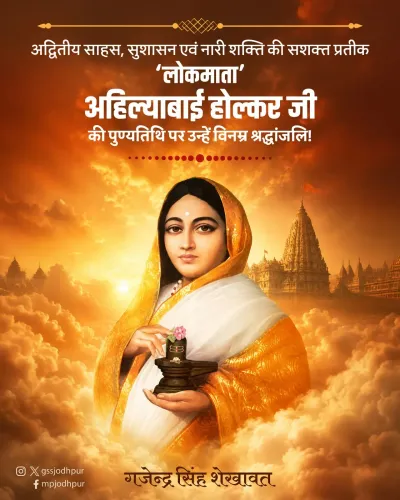
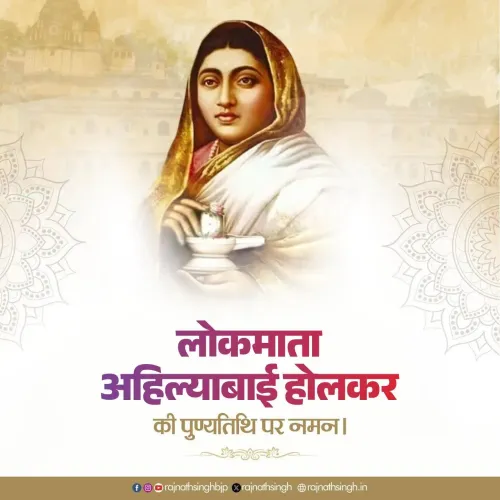
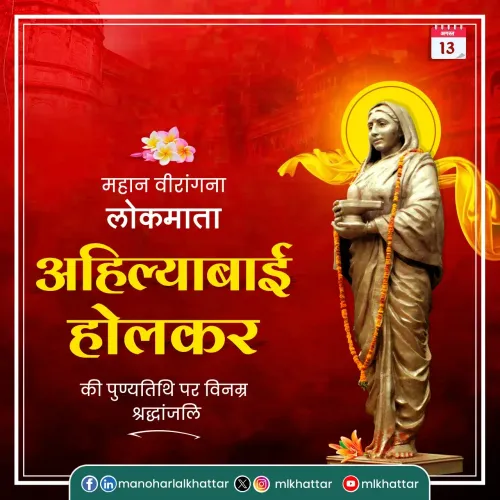
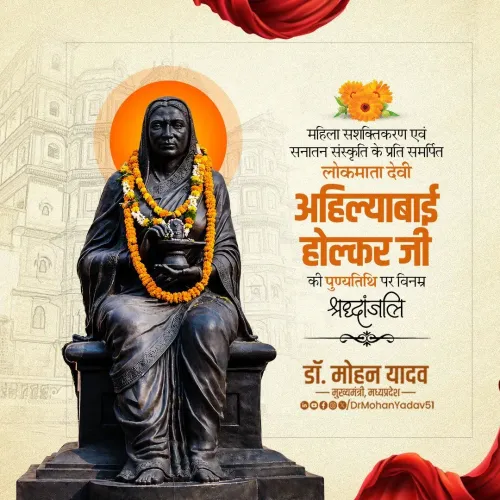
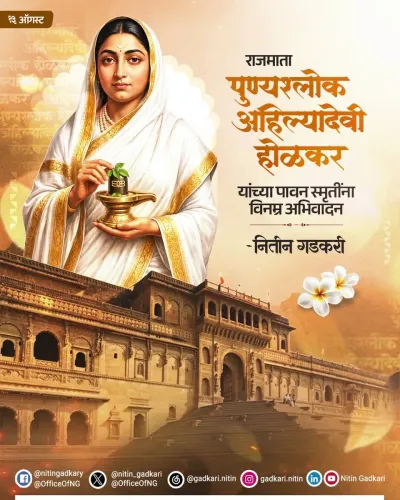
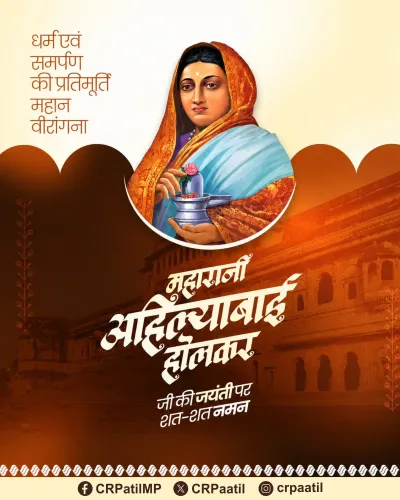
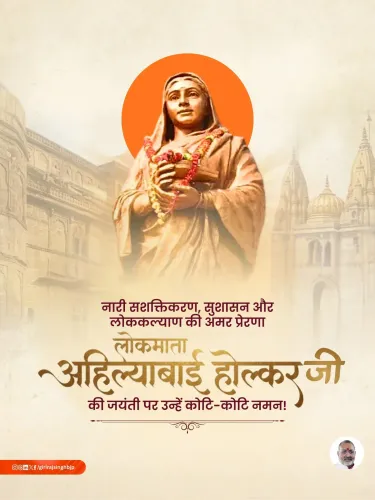
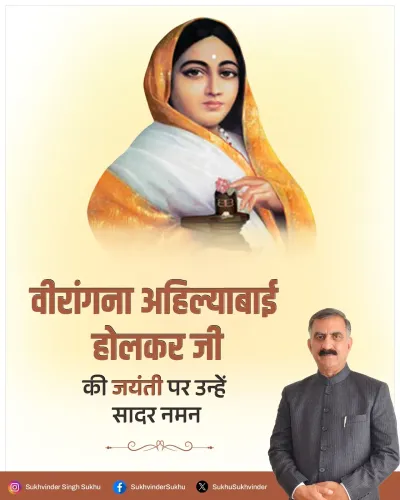
Puri pays tribute to Ahilyabai Holkar on her Punyatithi
Synopsis
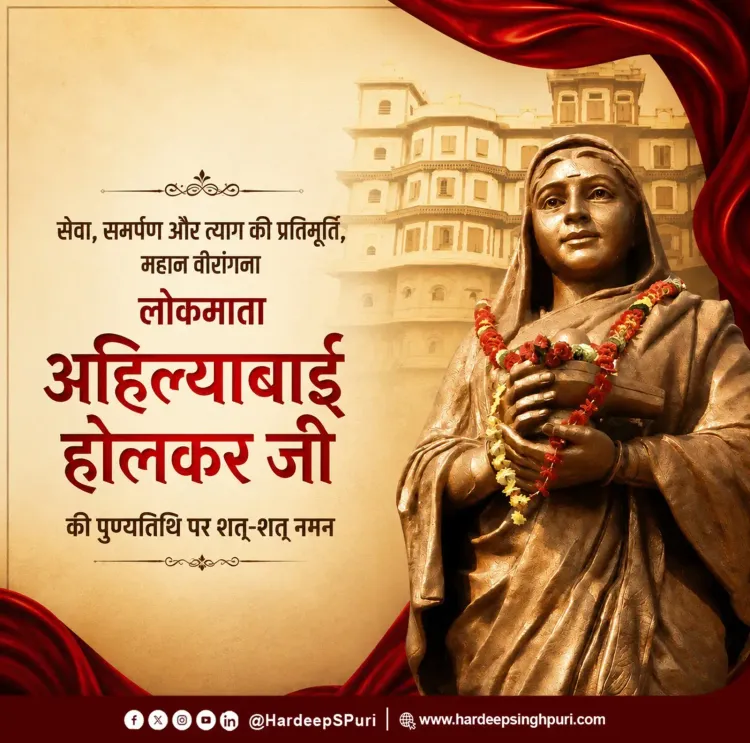
Union Petroleum Minister Hardeep Singh Puri honoured Ahilyabai Holkar on her Punyatithi on 13 August 2026, saluting the 18th-century Malwa ruler as a visionary administrator, social reformer, and enduring symbol of women's leadership and good governance in India.
Key Takeaways
Hardeep Singh Puri paid tribute to Ahilyabai Holkar on her Punyatithi on 13 August 2026 .
Puri described her as 'one of India's finest rulers' and a champion of education, justice, and public welfare.
Ahilyabai ruled the Malwa kingdom from 1767 to 1795 and is revered as Lokmata — 'mother of the people.' She is credited with restoring temples and ghats across India, from Varanasi to Somnath , and building public infrastructure including roads and wells.
Her Punyatithi is a regular fixture in the Indian political calendar, drawing tributes across party lines for her themes of women's leadership and civilisational governance.
She made justice a policy, service a devotion, and good governance a culture — and more than two centuries after her death, India's leaders still look to Ahilyabai Holkar for a template. On 13 August 2026, Union Petroleum Minister Hardeep Singh Puri offered his tribute to the 18th-century Malwa queen on her Punyatithi, calling her 'one of India's finest rulers.'
Posting in both Hindi and English, Puri described Ahilyabai as nari shakti ki pratimoorti — 'the embodiment of women's power' — and saluted her as a visionary administrator, compassionate social reformer, and champion of education. 'Her wisdom, humility and unwavering dedication to public welfare continues to inspire generations,' he wrote.
The queen who rebuilt India's sacred geography
Ahilyabai Holkar ruled the Malwa kingdom from 1767 until her death in 1795, stepping into power after the death of her husband. What followed was nearly three decades of governance that historians still cite as a model: she administered swift, accessible justice, kept her treasury lean and her subjects' welfare central, and personally oversaw the restoration of temples and ghats across the subcontinent — from Varanasi to Dwarka to Somnath — that had fallen into ruin. She built roads, rest houses, and wells at a time when such public infrastructure was a sovereign's direct responsibility.Why her Punyatithi draws tributes across the political spectrum
Ahilyabai's death anniversary has become a fixed point in the Indian political calendar. Her story threads together themes that resonate across ideological lines: women's leadership in a pre-colonial era, the idea that the state exists to serve its people, and the cultural stewardship of a shared Hindu heritage. For the BJP government, she is a particularly powerful symbol — a woman ruler who championed temple restoration and is venerated as Lokmata, 'mother of the people.' Puri's tribute fits a broader pattern of the ruling dispensation reclaiming pre-colonial figures as touchstones of civilisational governance. Her legacy, Puri noted, lies in having made public welfare not a programme but a sanskar — an ingrained value. That framing, linking ancient rulership to contemporary governance ideals, is precisely why her Punyatithi rarely passes without notice in New Delhi.Point of View
Women-empowerment narrative. Ahilyabai is especially useful in this framing: her temple-restoration work maps onto the party's civilisational agenda, while her gender and administrative record deflect charges of exclusion. Annual Punyatithi tributes from senior ministers keep these icons alive in public consciousness between election cycles, quietly building a historical legitimacy argument for present-day policy choices.
NationPress
13 Aug 2026
Frequently Asked Questions
Who was Ahilyabai Holkar?
Ahilyabai Holkar was an 18th-century queen who ruled the Malwa kingdom from 1767 to 1795. She is celebrated for her just administration, temple restorations across India, and extensive public welfare works, and is revered with the title Lokmata — 'mother of the people.'
What is Ahilyabai Holkar's Punyatithi?
Punyatithi is the death anniversary of a revered figure, observed as a day of tribute and remembrance. Ahilyabai Holkar's Punyatithi falls in August and is widely observed by political leaders, cultural organisations, and citizens across India.
Why did Hardeep Singh Puri pay tribute to Ahilyabai Holkar?
Union Petroleum Minister Hardeep Singh Puri posted a tribute on 13 August 2026, her Punyatithi, calling her one of India's finest rulers and honouring her legacy as a visionary administrator, social reformer, and champion of women's leadership.
What is Ahilyabai Holkar known for?
She is known for administering swift and accessible justice, restoring major temples and ghats at Varanasi, Dwarka, and Somnath, building roads and public rest houses, and governing with a philosophy that placed her subjects' welfare at the centre of statecraft.
Why is Ahilyabai Holkar called Lokmata?
Ahilyabai Holkar earned the title Lokmata — meaning 'mother of the people' — because of her deep compassion for ordinary citizens, her accessible justice system, and her lifelong dedication to public welfare and cultural preservation.