Puri recalls 1984 riots: parents sheltered by Hindu friends
Synopsis
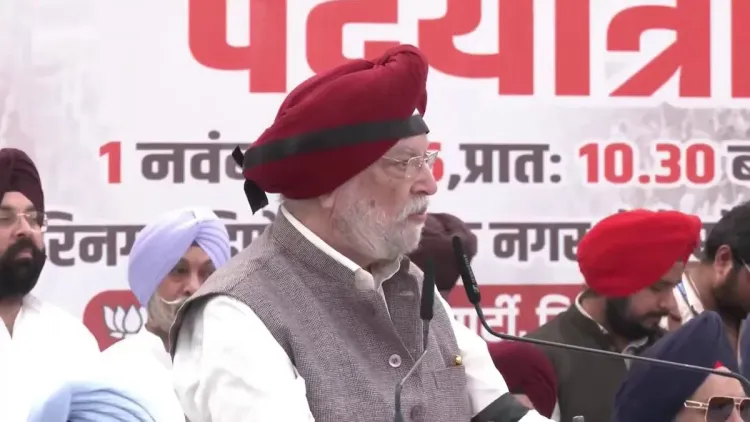
On the anniversary of the 1984 anti-Sikh riots, Union Minister Hardeep Singh Puri shared how his parents were sheltered by Hindu friends in Delhi during the violence, calling the massacre a wound on all of India and stressing justice, humanity, and national unity.
Key Takeaways
Union Petroleum Minister Hardeep Singh Puri posted a personal testimony on 1 November 2026 , recalling the 1984 anti-Sikh riots .
His parents were in Delhi during the violence and were sheltered by Hindu friends — an act he described as an example of humanity and brotherhood.
Puri called the 1984 massacre 'a wound on the entire history of the nation that can never be forgotten,' framing it as a shared national tragedy, not a single community's grief.
The Nanavati Commission , set up in 2000 , investigated the riots and the role of individuals and authorities; questions of accountability remain active.
Puri identified three lessons from 1984: protecting humanity, delivering justice to victims, and preserving national unity.
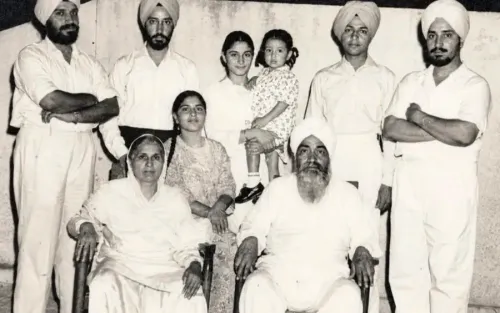
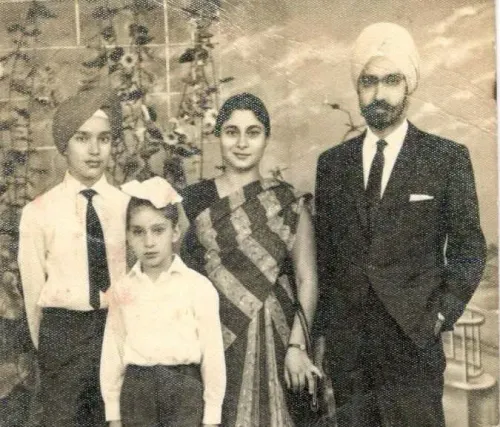
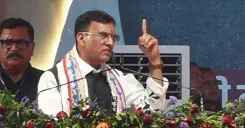
Forty-two years after the fires of November 1984, Union Petroleum Minister Hardeep Singh Puri has put his family's experience on record — a personal testimony that cuts through political abstraction and lands with the full weight of lived memory. In a post shared on 1 November 2026, Puri recalled how his parents, then in Delhi, were given refuge by Hindu friends during the violence that followed the assassination of Prime Minister Indira Gandhi — an act of quiet courage he holds as proof that humanity did not entirely abandon the streets of the capital that week.
Writing in Hindi, the Minister said: 'During that tragedy of 1984, my parents were in Delhi, and some of my Hindu friends sheltered them in their homes, setting an example of humanity and brotherhood.' The detail is small in scale and enormous in meaning — a private debt that Puri has chosen to acknowledge publicly, at exactly the anniversary moment when the nation's memory is sharpest.
A wound that belongs to the whole country, not one community
Puri did not stop at the personal. He called the 1984 anti-Sikh riots not merely a tragedy for one community but 'a wound on the entire history of the nation that can never be forgotten.' That framing matters: it refuses to let the violence be cordoned off as somebody else's grief. It places the massacre in the common conscience of every Indian, regardless of faith.
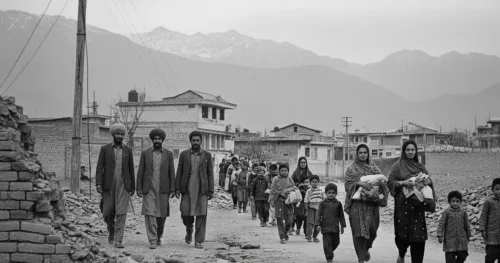
The violence that erupted across Delhi and other cities in the days after 31 October 1984 killed thousands of Sikhs. The Nanavati Commission, constituted in 2000, was tasked with investigating the events and examining the role of individuals and authorities — a process that has kept questions of accountability alive for more than two decades. Survivors and victim families continue to await the full arc of justice the system has promised and only partially delivered.
Three lessons Puri draws from the darkest chapter
The Minister closed with what he described as the most important lessons from that painful history: protecting humanity, delivering justice to victims, and preserving national unity. The three-point framework is precise, not rhetorical. Each element speaks to a different failure of 1984 — the breakdown of state protection, the long delay in accountability, and the communal fracturing that followed — and implicitly sets a standard against which present-day governance can be measured.
Statements like Puri's — where a sitting minister volunteers a deeply personal memory to anchor a national moral argument — are rare in Indian political culture. They carry a different weight than party resolutions or parliamentary speeches. The home, the parents, the friends who opened their doors: these are the details that make history impossible to look away from.
As India crosses another anniversary of 1984, the demand from survivors and civil society remains unchanged — justice, memory, and the assurance that the state will never again turn its eyes away from its own citizens. Puri's post does not resolve that demand. But it refuses, loudly, to let the silence hold.
Point of View
He shifts the 1984 conversation away from purely institutional blame toward a broader moral reckoning. The three-part framework he offers — humanity, justice, unity — implicitly benchmarks the current government's record on pending riot-related legal proceedings and communal policy. In an era of fractured public trust around historical violence, a minister's willingness to own his community's suffering publicly, while holding out brotherhood as the counter-narrative, carries distinct political and symbolic weight.
NationPress
1 Nov 2026
Frequently Asked Questions
What did Hardeep Singh Puri say about the 1984 anti-Sikh riots?
Puri said his parents were sheltered by Hindu friends in Delhi during the 1984 violence, calling the massacre a wound on the nation's entire history and stressing the need for justice, humanity, and national unity.
What were the 1984 anti-Sikh riots?
The 1984 anti-Sikh riots were a wave of violent attacks against Sikhs, concentrated in Delhi and other cities, that erupted after the assassination of Prime Minister Indira Gandhi on 31 October 1984, killing thousands.
What is the Nanavati Commission?
The Nanavati Commission was constituted in 2000 by the Indian government to investigate the 1984 anti-Sikh riots and examine the role of individuals and authorities in the violence.
Why do politicians make statements about 1984 every November?
The late October to early November period marks the anniversary of the 1984 anti-Sikh riots, prompting annual commemorations, survivor demands for justice, and public statements from political figures across party lines.
Who is Hardeep Singh Puri?
Hardeep Singh Puri is India's Union Minister of Petroleum and Natural Gas, a senior BJP leader, and a former career diplomat who has served in several high-profile international postings.