Rahul Gandhi Demands MPSC Reform, Student Relief in Maharashtra

Synopsis
Congress leader Rahul Gandhi publicly recalled student grievances raised at his Pune 'Chhatron ki Goonj' event — paper leaks, DBT fraud, crumbling hostels — and disclosed his demand to CM Devendra Fadnavis for urgent MPSC and exam-system reforms.
Key Takeaways
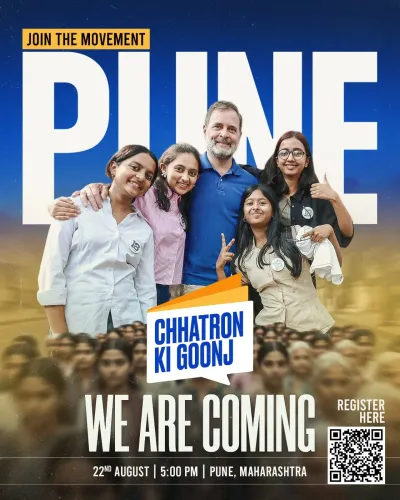
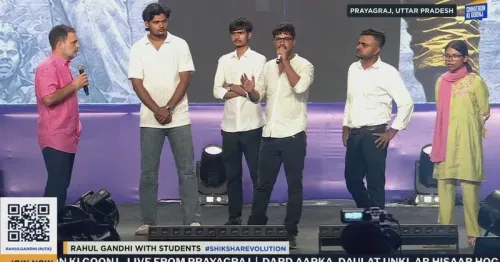
Rahul Gandhi held a 'Chhatron ki Goonj' event in Pune where Maharashtra students raised six major concerns.
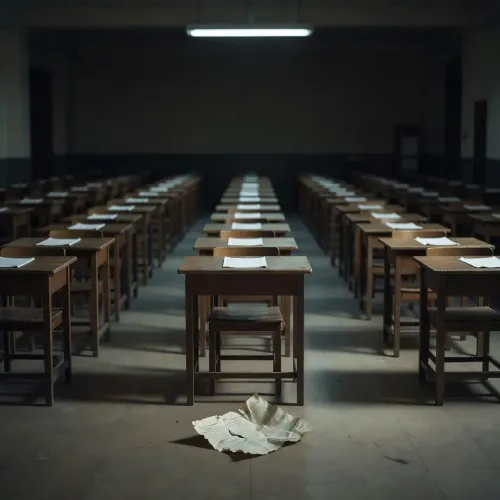
Students cited paper leaks , stalled recruitments, unaffordable education, hostel failures, food quality, and DBT fraud .
Gandhi stated he had personally urged CM Devendra Fadnavis to reform the MPSC and the examination system.
Making the conversation public converts a bilateral demand into a political accountability moment.
The opposition's focus on exam fraud and student welfare aligns with a broader Congress strategy targeting competitive-exam aspirants across states.
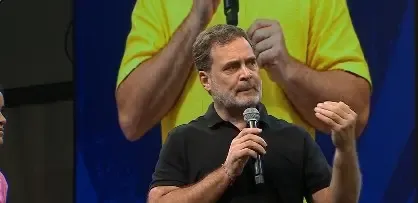
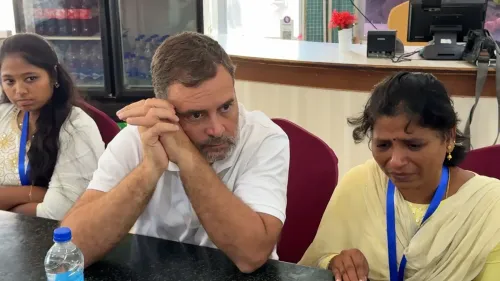
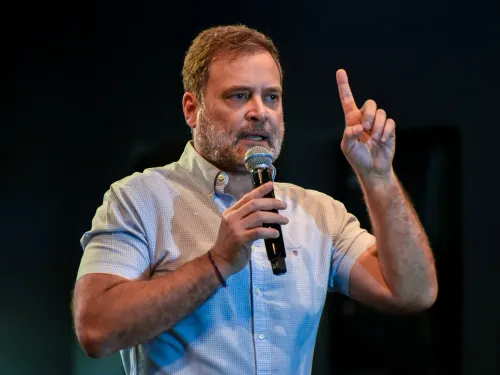
Student voices from Pune have reached the floor of national politics — and Congress leader Rahul Gandhi is making sure they stay there. On Saturday, October 3, 2026, Gandhi posted a pointed follow-up to his earlier 'Chhatron ki Goonj' (छात्रों की गूँज, 'Echo of Students') event in Pune, listing a cascade of grievances Maharashtra's students had placed before him — and making public his demand to Chief Minister Devendra Fadnavis to act on them.
What students told Gandhi at 'Chhatron ki Goonj' in Pune
The list was long and specific. At the Pune event, students flagged paper leaks, stalled government recruitments, unaffordable education costs, crumbling hostel infrastructure, poor-quality food, and alleged fraud in Direct Benefit Transfer (DBT) disbursements. Gandhi recounted all six concerns in his post, framing them as a systemic failure rather than isolated complaints.
The phrase 'poison-like food' (ज़हर जैसा खाना) used by students to describe hostel meals is a striking detail — the kind of on-the-ground language that tends to cut through political noise. Gandhi chose to quote it directly, amplifying the students' own register rather than softening it into bureaucratic language.
Gandhi's public demand to CM Fadnavis on MPSC
Gandhi stated that he had already raised these concerns directly with Chief Minister Devendra Fadnavis, specifically calling for reforms to the Maharashtra Public Service Commission (MPSC) and the broader examination system. The MPSC is the gateway for lakhs of aspirants seeking state government jobs — its integrity and functioning directly shape the employment prospects of Maharashtra's competitive exam students.
By making the exchange public, Gandhi is turning a bilateral conversation with the CM into an accountability moment. The post, though cut off mid-sentence in the tweet, signals that a fuller demand or letter may accompany it — a format the opposition has used repeatedly to pressure state administrations.
Opposition pressure on Maharashtra's exam and jobs crisis
Paper leaks and stalled recruitments are not Maharashtra-specific — they have emerged as a pan-India political fault line in recent years. The disruption of competitive examinations has galvanised student communities across states, and the Congress has sought to position itself as the primary political voice for exam aspirants. Gandhi's Pune outreach fits that larger strategic frame.
DBT fraud allegations are particularly sharp because the scheme is intended as a direct, corruption-resistant welfare channel. If students are reporting fraud within DBT itself, it strikes at one of the government's stated anti-corruption mechanisms — making it politically potent terrain for the opposition to occupy.
With the MPSC under scrutiny and Maharashtra's student community watching, Gandhi has placed both the state government and the exam machinery on public notice. The question now is whether Fadnavis responds — and how.
Point of View
Including DBT fraud) suggests structured outreach, not ad hoc politics. If the Fadnavis government does not respond visibly on MPSC, Gandhi holds the narrative; if it does, Congress can claim credit for forcing action — a low-risk, high-visibility play for the Leader of the Opposition.
NationPress
3 Oct 2026
Frequently Asked Questions
What is 'Chhatron ki Goonj' and where was it held?
'Chhatron ki Goonj' means 'Echo of Students' — it was a public outreach event held by Rahul Gandhi in Pune, Maharashtra, where students could directly voice their concerns to him.
What problems did Maharashtra students raise with Rahul Gandhi?
Students raised six issues: paper leaks in competitive exams, stalled government recruitments, high education costs, poor hostel conditions, bad food quality, and alleged fraud in Direct Benefit Transfer (DBT) payments.
What did Rahul Gandhi demand from CM Devendra Fadnavis?
Gandhi stated he urged CM Fadnavis to reform the Maharashtra Public Service Commission (MPSC) and overhaul the broader examination system to address the students' grievances.
What is the MPSC and why does it matter to Maharashtra students?
The Maharashtra Public Service Commission (MPSC) conducts state-level competitive examinations for government jobs. Its functioning directly determines employment opportunities for thousands of aspirants in Maharashtra.
Why is DBT fraud politically significant in this context?
Direct Benefit Transfer (DBT) is the government's flagship scheme to deliver welfare directly to beneficiaries and cut out middlemen. Allegations of fraud within DBT undermine its core anti-corruption promise, making it a potent issue for the opposition.