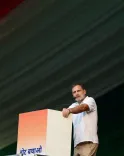
Rahul Gandhi Greets 13 States and UTs on Foundation Day
Synopsis
Congress leader Rahul Gandhi marked 1 November 2026 by extending foundation day wishes to 13 states and union territories, including Andhra Pradesh, Kerala, Karnataka and Chhattisgarh — regions whose formation anniversaries trace back to the landmark States Reorganisation Act of 1956.
Key Takeaways
Rahul Gandhi posted foundation day greetings for 13 states and union territories on 1 November 2026 .
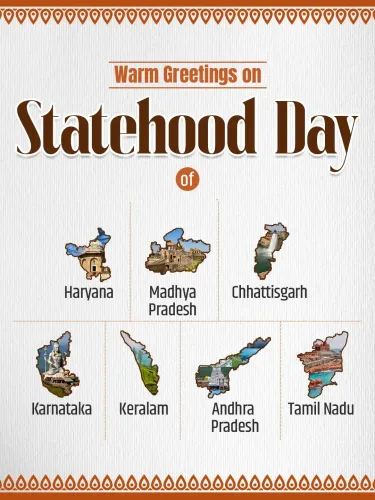
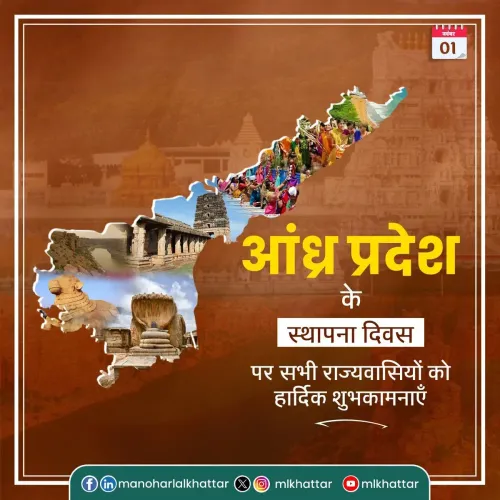
Andhra Pradesh, Kerala, Karnataka and Madhya Pradesh were formed on 1 November 1956 under the States Reorganisation Act .
Haryana was carved out of Punjab on 1 November 1966 ; Chhattisgarh was bifurcated from Madhya Pradesh on 1 November 2000 .
Gandhi's message highlighted 'rich cultures, languages and traditions' of the listed regions.
The Indian National Congress currently governs Karnataka , making the greetings politically significant beyond ceremony.
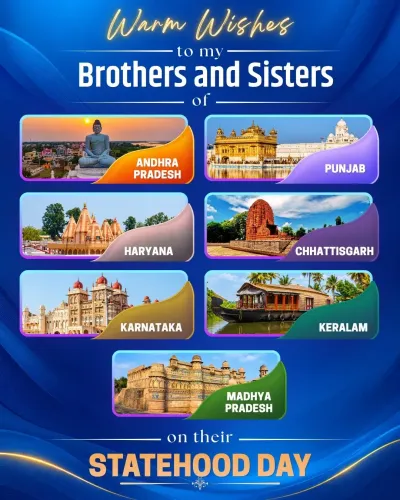
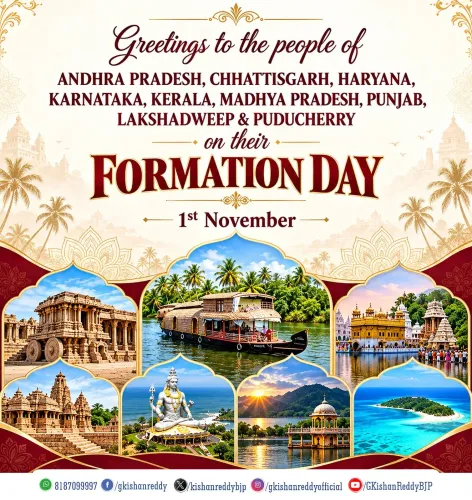
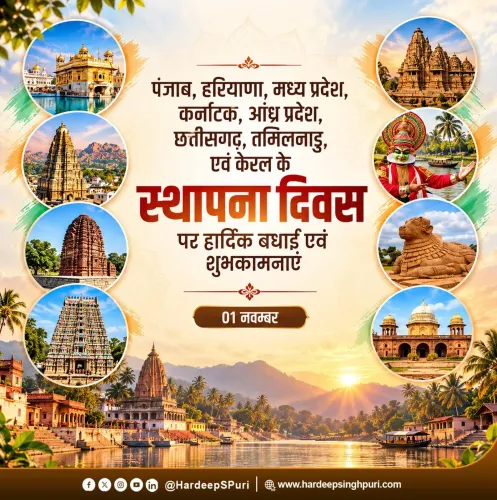
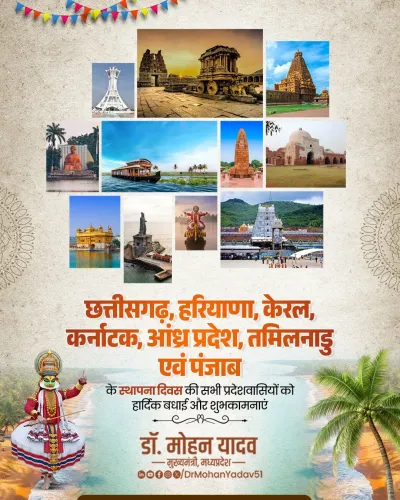
Thirteen states and union territories woke up to a greeting from the Leader of the Opposition on Sunday — Congress leader Rahul Gandhi extended foundation day wishes to the people of Andhra Pradesh, Andaman and Nicobar Islands, Chhattisgarh, Chandigarh, Delhi, Haryana, Karnataka, Kerala, Madhya Pradesh, Punjab, Puducherry, Tamil Nadu and Lakshadweep on 1 November 2026, marking one of the most symbolically loaded dates on India's political calendar.
Gandhi's message celebrated the 'rich cultures, languages and traditions' of the regions — a nod to the multilingual, multi-ethnic compact that 1 November represents across the country's federal map.
Why 1 November carries such weight on the Indian calendar
The date is not coincidental. 1 November 1956 was the day the States Reorganisation Act reshaped the Indian republic along largely linguistic lines, giving birth to Andhra Pradesh, Kerala, Karnataka (then Mysore) and Madhya Pradesh in a single stroke. Haryana followed on 1 November 1966, carved out of Punjab to give Hindi-speaking communities their own state. Chhattisgarh joined the list on 1 November 2000, bifurcated from Madhya Pradesh as part of a later wave of statehood demands.
Taken together, the states and union territories in Gandhi's message are home to hundreds of millions of Indians, spanning the Deccan plateau, the Malabar coast, the Hindi heartland, the northeast archipelago, and the island territories of the Arabian Sea and Bay of Bengal.
A ritual of federalism — and its political undertow
Greetings of this kind are a fixture of Indian political life on 1 November, issued across party lines by leaders at the national and state level. Yet for Gandhi, whose party's electoral fortunes are intertwined with several of these states — particularly Karnataka, where the Indian National Congress is in government, and Telangana (a successor state to Andhra Pradesh) — the message lands with more than ceremonial weight.
The emphasis on 'rich cultures, languages and traditions' also echoes a recurring Congress talking point: that India's diversity is a constitutional asset, not an administrative inconvenience — a framing that has gained sharper edges amid ongoing debates over delimitation, Hindi imposition, and the distribution of central funds to southern states.
Point of View
But Gandhi's choice to name all 13 entities individually — rather than issuing a blanket greeting — signals a deliberate outreach to regional identities. The stress on cultural and linguistic diversity fits a broader Congress strategy of positioning the party as the defender of federal balance at a time when southern states feel financially shortchanged in devolution debates. With Karnataka under Congress rule and assembly cycles approaching in other listed states, the post occupies a careful space between constitutional sentiment and electoral preparation.
NationPress
1 Nov 2026
Frequently Asked Questions
Why is 1 November celebrated as foundation day for so many Indian states?
1 November 1956 was the date the States Reorganisation Act came into force, redrawing India's internal boundaries largely along linguistic lines and creating states such as Kerala, Karnataka, Andhra Pradesh and Madhya Pradesh simultaneously.
Which states celebrate their formation day on 1 November?
Andhra Pradesh, Kerala, Karnataka and Madhya Pradesh mark their formation on 1 November 1956 ; Haryana on 1 November 1966 ; and Chhattisgarh on 1 November 2000 .
What did Rahul Gandhi say on foundation day 2026?
Rahul Gandhi extended 'best wishes' to the people of 13 states and union territories , celebrating their 'rich cultures, languages and traditions' in a post on 1 November 2026 .
When was Chhattisgarh formed and from which state?
Chhattisgarh was formed on 1 November 2000 by bifurcating the then-state of Madhya Pradesh , becoming one of three new states created that year.
Why does Congress place emphasis on linguistic and cultural diversity in its messaging?
Congress has consistently framed India's linguistic and cultural plurality as a constitutional strength, particularly in the context of ongoing debates over delimitation and resource-sharing between the central government and southern states.