Rahul Gandhi Holds Modi Govt Accountable for Student Deaths

Synopsis
Rahul Gandhi named students who died under India's high-stakes exam system, demanding accountability from PM Modi and Education Minister Dharmendra Pradhan. The post intensifies opposition pressure ahead of the monsoon session of Parliament, as debates over NEET reform and student welfare remain unresolved.
Key Takeaways
Congress leader Rahul Gandhi posted on June 26, 2026 , sharing a list of students who died and attributing their deaths to a 'broken system.' Gandhi directly questioned whether PM Narendra Modi held Education Minister Dharmendra Pradhan accountable while publicly praising him on his birthday.
The post continues a pattern of opposition demands for ministerial accountability over student deaths linked to high-stakes national exams such as NEET and JEE .
The National Education Policy 2020 promised to reduce exam stress, but critics say implementation has not prevented recurring tragedies.
The monsoon session of Parliament is expected to see fresh opposition pressure on the government over examination reform and student welfare.
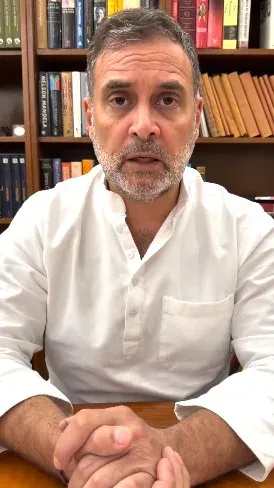
Congress leader and Leader of the Opposition Rahul Gandhi on Friday, June 26, 2026, shared a list of students who died, calling them victims of a 'broken system' and demanding accountability from the Narendra Modi government and Union Education Minister Dharmendra Pradhan.
Context
In his post, Gandhi wrote: 'Each name on this list was a child with a dream, a family, a future — all destroyed by a broken system and a government that refuses to learn or take accountability.' He urged the public to 'remember these students. Every one of them.' He pointedly asked whether Prime Minister Modi, who recently praised Dharmendra Pradhan on his birthday, had taken stock of the tragedies unfolding under the minister's watch.
The post is part of an established pattern in which Gandhi has used social media to put a human face on systemic failures in India's education and examination ecosystem, directly naming ministers he holds responsible.
Policy Backdrop
The National Education Policy 2020 promised a fundamental shift away from rote learning and high-stakes single exams, with explicit provisions to reduce student stress and promote holistic development. However, opposition parties have argued that implementation has lagged, with national entrance exams such as NEET and JEE continuing to generate intense pressure on lakhs of aspirants every year.
Following the 2024 NEET irregularities — which triggered widespread protests and parliamentary debate — the government committed to strengthened exam security, new mental-health guidelines for students, and technology-driven reforms to exam conduct. Critics contend those commitments have not translated into structural change on the ground.
Stakeholders and Impact
The students named in Gandhi's post represent families from across the country who invest years of effort and significant financial resources — often through private coaching centres — in pursuit of seats in medical and engineering colleges. The coaching-centre ecosystem, concentrated in cities such as Kota, Rajasthan, has long been scrutinised for its role in amplifying examination pressure on young aspirants.
Congress and other opposition parties have repeatedly linked student deaths and suicides to the high-stakes nature of national entrance exams and perceived gaps in regulatory oversight. The government has countered by pointing to NEP implementation milestones and new student-counselling mechanisms, but the debate over institutional accountability remains unresolved.
What's Next
With the monsoon session of Parliament approaching, Gandhi's post signals that student welfare and examination reform are likely to be raised forcefully on the floor of the Lok Sabha. All eyes will be on whether the Ministry of Education responds with concrete policy announcements — particularly any structural changes to exam-conduct norms — ahead of the next NEET and JEE cycle. The political pressure on Dharmendra Pradhan is set to intensify as opposition benches seek answers on what has changed since the 2024 controversy.
Point of View
He forces a moral contrast that is difficult for the government to deflect with policy statistics alone. The move fits a broader Congress strategy of holding named ministers — rather than faceless systems — responsible for governance failures, a tactic that has proven effective in mobilising youth and middle-class sentiment. With NEET controversies still fresh in public memory from 2024, the opposition is betting that the education accountability narrative will resonate well into the next exam cycle. Whether the government responds substantively or stays silent will itself become a political data point in the monsoon session.
NationPress
26 Jun 2026
Frequently Asked Questions
Why is Rahul Gandhi criticising Dharmendra Pradhan over student deaths?
Rahul Gandhi holds Union Education Minister Dharmendra Pradhan accountable for the deaths of students he says have been failed by a broken examination and education system. Gandhi questioned whether PM Modi , who praised Pradhan on his birthday, has sought answers from his minister over these tragedies.
What is the NEET controversy in India?
The NEET (National Eligibility cum Entrance Test) controversy refers to allegations of paper leaks, irregularities, and systemic failures in India's national medical entrance exam, which came to a head in 2024 and triggered nationwide protests and parliamentary debate over exam integrity and student welfare.
How many students die by suicide due to exam pressure in India?
Exact figures vary by year and source, but student suicides linked to examination pressure — particularly in coaching hubs such as Kota, Rajasthan — have been a persistent concern raised in Parliament and by civil society. The specific list referenced in Gandhi's June 2026 post has not been independently verified by NationPress.
What does the National Education Policy 2020 say about exam stress?
The National Education Policy 2020 explicitly aimed to reduce reliance on high-stakes single exams, promote multidisciplinary learning, and address student mental health. Critics argue that implementation has been slow and that flagship exams like NEET continue to exert extreme pressure on aspirants.
Will education reform be discussed in the monsoon session of Parliament?
It is widely expected that the opposition, led by Rahul Gandhi as Leader of the Opposition in Lok Sabha, will raise student welfare and examination reform in the upcoming monsoon session of Parliament , particularly in light of continuing concerns over NEET and JEE conduct.