Rahul Gandhi Meets Lok Sabha Speaker, Demands Parliament Debate on Student Beatings
Synopsis
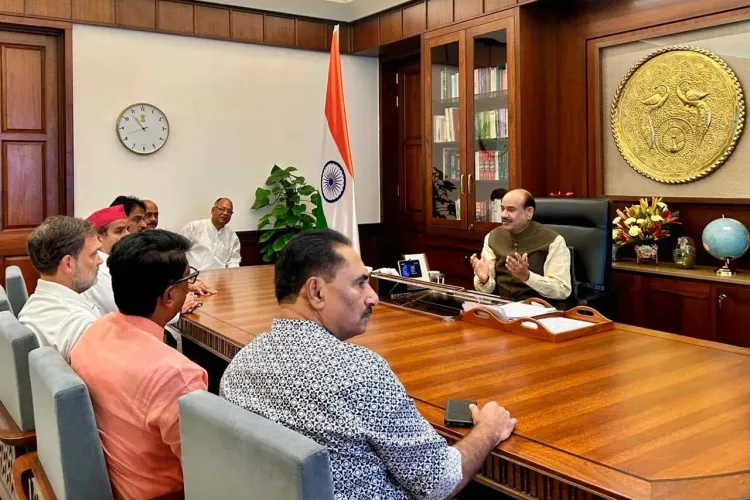
Congress leader Rahul Gandhi led an Opposition delegation to the Lok Sabha Speaker on 21 July 2026, demanding a full parliamentary debate on the alleged beating of student protesters and the government's accountability for an ongoing examination crisis.
Key Takeaways
Rahul Gandhi , Leader of the Opposition, met the Lok Sabha Speaker on 21 July 2026 with Opposition MPs to demand a parliamentary debate.
The Opposition demands discussion on alleged police brutality against students on 20 July 2026 and the government's handling of the examination crisis.
Gandhi stated students 'were beaten for asking legitimate questions about their own future.' The demand connects to a broader pattern of examination integrity controversies in India since 2024 , linked to paper-leak allegations.
The Opposition has pledged to pursue the issue both on the streets and in Parliament until the government is held accountable.
Whether the Speaker schedules a debate will be the key procedural test in the coming days.
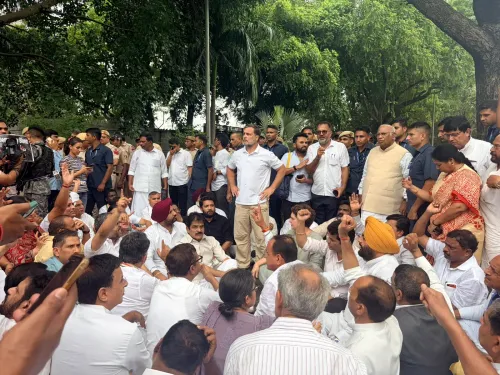
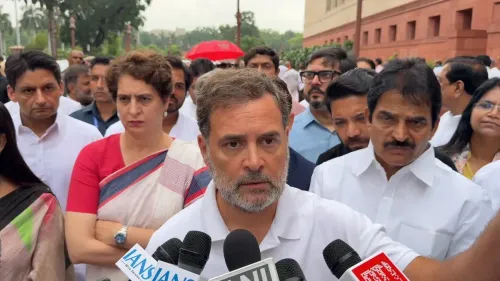
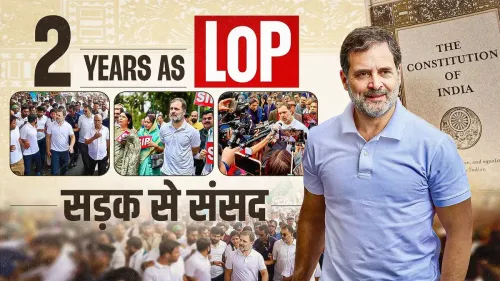
Congress leader Rahul Gandhi met Lok Sabha Speaker on Tuesday, 21 July 2026, alongside Opposition MPs, demanding a detailed parliamentary discussion on the alleged police brutality against students and the government's handling of an ongoing examination crisis. Gandhi said students were beaten for raising legitimate questions about their own futures, and declared the Opposition would not allow the matter to be suppressed.
Context
Gandhi's delegation to the Speaker follows reports of a crackdown on student protesters the previous day, 20 July 2026, which Opposition parties say was disproportionate and unjustified. In his post, Gandhi stated plainly: 'Students were beaten for asking legitimate questions about their own future.' The visit signals the Opposition's intent to convert street agitation into a floor-of-the-House confrontation with the ruling dispensation.
The Indian National Congress, heading the INDIA bloc, has consistently positioned itself as the primary parliamentary voice for student and youth grievances. Gandhi, as Leader of the Opposition in Lok Sabha and MP from Rae Bareli, carries the formal authority to demand time from the Speaker for such a debate.
Policy Backdrop
The immediate trigger is what the Opposition describes as an 'examination crisis' — a phrase that echoes a pattern of controversy over testing integrity in India dating back to 2024, when multiple paper-leak allegations surfaced against central examination bodies. The National Education Policy 2020 had promised systemic reform of examinations, but implementation has been repeatedly questioned amid allegations of irregularities in competitive tests for government jobs and higher education admissions.
Opposition parties have used each such episode to demand accountability from the government and structural reform of examination bodies. Student agitations over recruitment and testing fairness have periodically spilled from campuses onto streets and into legislative disruptions, forming a recurring cycle that links education governance with political contestation in Parliament.
Stakeholders and Impact
At the centre of this episode are the students themselves — aspirants whose careers hinge on the integrity of competitive examinations. Their protest, and the alleged response to it, has drawn in Opposition MPs, civil society voices, and now the highest constitutional office of the lower house. Gandhi's post drew a direct line between the street and the legislature: 'The Opposition will not let this be buried. We will ensure that the students' voice will be heard on the streets, and in Parliament.'
The ruling government faces pressure on two fronts: explaining the conduct of security forces during the student demonstration, and addressing systemic questions about examination management. How the Lok Sabha Speaker responds to the Opposition's demand for debate time will determine whether the issue receives formal parliamentary scrutiny or is deflected through procedural means.
What's Next
The critical question is whether the Speaker schedules a dedicated discussion within the current or next Lok Sabha session. If granted, it would compel government ministers to defend both the police action and the administration of the examination system on the record. The Opposition has signalled it will pursue parallel pressure — through street mobilisation and parliamentary procedure — until a formal response is forthcoming.
Any government announcement of an inquiry committee or reform of the examination body in the coming days would be seen as a direct response to this political pressure. For now, the Opposition's move to the Speaker's office marks an escalation from protest to institutional demand.
Point of View
Where procedural denial itself becomes a political charge. The framing of 'examination crisis' deliberately ties a specific protest incident to a longer, unresolved governance failure around testing integrity, broadening the political surface area beyond a single day's events. By pairing street mobilisation with institutional pressure on the Speaker, the Opposition is signalling it will not allow the issue to fade between sessions. The government's response — or silence — on scheduling a debate will itself become a data point in the Opposition's accountability narrative heading into the next electoral cycle.
NationPress
21 Jul 2026
Frequently Asked Questions
Why did Rahul Gandhi meet the Lok Sabha Speaker on 21 July 2026?
Rahul Gandhi met the Lok Sabha Speaker alongside Opposition MPs to formally demand a parliamentary debate on the alleged beating of student protesters on 20 July 2026 and the government's accountability for the examination crisis.
What is the examination crisis Rahul Gandhi is referring to?
The examination crisis refers to a series of controversies over the integrity of competitive examinations in India, including paper-leak allegations that surfaced from 2024 onward, which have fuelled student protests and Opposition demands for reform.
What did Rahul Gandhi say about the student protests?
Gandhi said students 'were beaten for asking legitimate questions about their own future' and declared the Opposition would ensure their voice is heard both on the streets and in Parliament.
Can the Opposition force a debate in Lok Sabha?
The Opposition can formally request debate time from the Lok Sabha Speaker, but the Speaker has discretion over scheduling. As Leader of the Opposition, Rahul Gandhi carries significant procedural weight in making such demands.
What happens next after the Opposition's demand to the Lok Sabha Speaker?
The key development to watch is whether the Speaker schedules a dedicated discussion in the current or an upcoming Lok Sabha session, and whether the government announces any inquiry or examination body reform in response to the political pressure.