Rahul Gandhi Says Modi Govt Must Go, Vows to Voice India
Synopsis
Congress leader Rahul Gandhi on 22 July 2026 declared that students, police, and the entire country are demanding the Modi government's removal, and pledged to be the voice of every Indian as Leader of the Opposition — no matter the cost.
Key Takeaways
Congress leader Rahul Gandhi posted on X on 22 July 2026 calling for the Modi government to go.
Gandhi invoked students and police personnel alongside ordinary citizens as voices demanding a change in government.
He reaffirmed his duty as Leader of the Opposition in Lok Sabha to represent every Indian, saying 'no price is too high.' The post follows an established Congress strategy of framing popular discontent as a national anti-incumbency consensus.
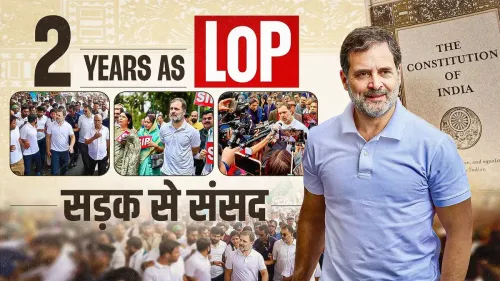
The 2024 general elections gave Congress renewed parliamentary standing, with Gandhi formally recognised as LoP — a role vacant for nearly a decade.
Upcoming Parliament sessions in 2026 and state assembly elections are expected to be key theatres for this opposition campaign.
Congress leader and Leader of the Opposition in Lok Sabha Rahul Gandhi on Wednesday, 22 July 2026 declared that students, police personnel, and the entire country are demanding the end of the Modi government, and reaffirmed his commitment to being the voice of every Indian regardless of personal cost.
In a Hindi-language post on X, Gandhi wrote: 'आज हर छात्र कह रहा है, पुलिसवाले कह रहे हैं, पूरा देश कह रहा है - मोदी सरकार को जाना पड़ेगा' — 'Today every student is saying it, policemen are saying it, the entire country is saying it — the Modi government will have to go.' He added that as Leader of the Opposition, his responsibility is to become the voice of every Indian, and 'no price is too high for that.'
Context
Rahul Gandhi was formally recognised as Leader of the Opposition in Lok Sabha following the 2024 general elections, a position that had remained vacant for nearly a decade. The role carries constitutional significance, giving the principal opposition party formal standing in parliamentary proceedings and key appointments. Gandhi has since used the platform to mount sustained challenges to the Narendra Modi-led BJP government on governance, economic, and civil-liberties issues.
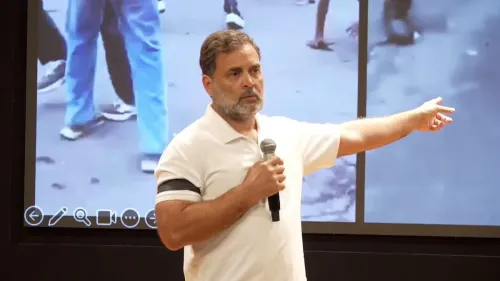
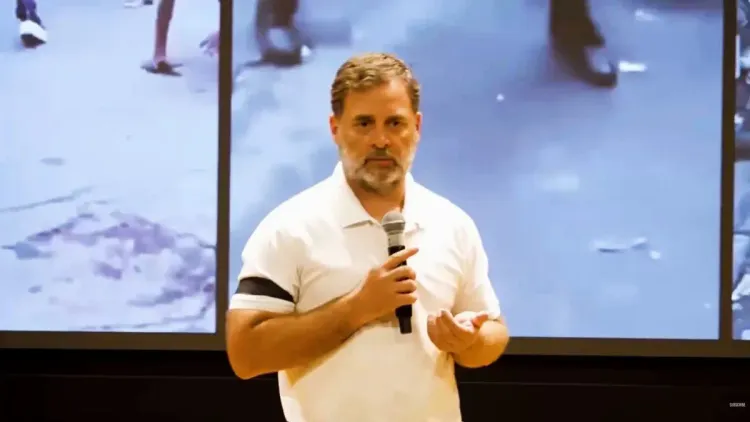
The 22 July post is accompanied by a video — the contents of which are not independently confirmed — and is framed as a direct appeal invoking the language of popular mobilisation. By naming students and police personnel alongside ordinary citizens, Gandhi sought to project cross-sectional discontent with the ruling establishment.
Policy Backdrop
Opposition leaders in India have periodically framed popular grievances as a national consensus against the incumbent government. Earlier episodes include agitations around farm-law reforms and citizenship legislation, where the opposition attempted to consolidate anti-incumbency sentiment into a broader political narrative. Gandhi's language on 22 July 2026 follows this established pattern, deploying the rhetoric of a 'people's verdict' ahead of what are expected to be consequential electoral cycles.
The Indian National Congress improved its Lok Sabha tally in the 2024 elections, giving the party renewed confidence to lead opposition coordination. Gandhi's post signals that the Congress intends to sustain pressure on the government through both parliamentary and public platforms during the ongoing monsoon session and beyond.
Stakeholders and Impact
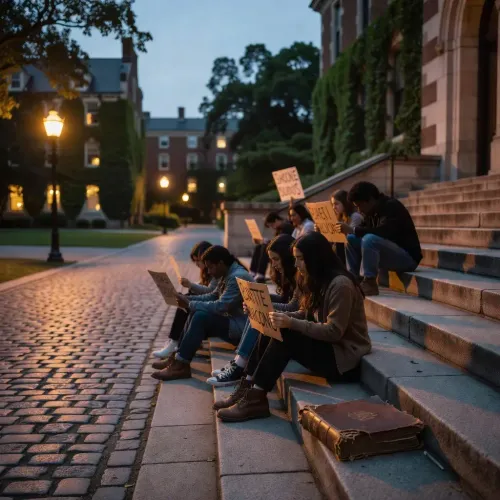
Students and police personnel are explicitly invoked in Gandhi's statement — two constituencies whose grievances, when publicly aired, carry particular political weight. Student protests over employment, examination irregularities, or campus rights have historically acted as catalysts for wider anti-government mobilisation in India. The mention of police personnel is notable, as security forces are rarely cited by opposition leaders as participants in popular dissent.
For the BJP and the NDA government, the statement represents a sharpening of opposition rhetoric as the political calendar moves toward state assembly elections and eventually the 2029 general election. The government has not, as of publication, issued a formal response to this specific post.
What's Next
The monsoon session of Parliament and the winter session of 2026 will be key arenas where Gandhi is expected to press these arguments in the Lok Sabha chamber. Any state assembly elections scheduled before 2029 will also test whether the anti-incumbency narrative he is building translates into electoral outcomes. The Congress's ability to sustain coalition discipline among opposition parties will be as critical as its public messaging in determining the impact of statements such as this one.
Point of View
A role restored to Congress after a decade, Gandhi is using every public platform to build an anti-incumbency coalition ahead of the electoral cycle. The explicit personal framing — 'no price is too high' — is designed to project sacrifice and legitimacy simultaneously, reinforcing his positioning as a tribune of the people rather than a conventional party politician. Whether this rhetoric translates into organised political pressure will depend on Congress's ability to sustain opposition unity through the monsoon and winter sessions of Parliament.
NationPress
22 Jul 2026
Frequently Asked Questions
What did Rahul Gandhi say about the Modi government on 22 July 2026?
Rahul Gandhi posted on X on 22 July 2026 that students, police personnel, and the entire country are saying the Modi government will have to go, and pledged as Leader of the Opposition to be the voice of every Indian.
Why did Rahul Gandhi mention police in his statement?
Gandhi cited police personnel alongside students and ordinary citizens to suggest that discontent with the Modi government spans institutional and social lines, though the specific basis for this claim has not been independently verified.
What is Rahul Gandhi's role as Leader of the Opposition?
Rahul Gandhi was formally recognised as Leader of the Opposition in Lok Sabha after the 2024 general elections — a constitutionally significant position that gives the principal opposition party formal standing in parliamentary proceedings and key appointments.
How does this statement fit Congress's political strategy?
The statement follows a recurring Congress approach of framing popular grievances as a national consensus against the incumbent, similar to earlier campaigns around farm laws and citizenship legislation, aimed at consolidating anti-incumbency sentiment ahead of future elections.
What are the next political events to watch after this statement?
The monsoon and winter sessions of Parliament in 2026 and any state assembly elections before 2029 are the key arenas where the impact of Gandhi's anti-government campaign will become clearer.