Rahul Gandhi warns Modi, Shah of 'harsh justice' over police crackdowns
Synopsis
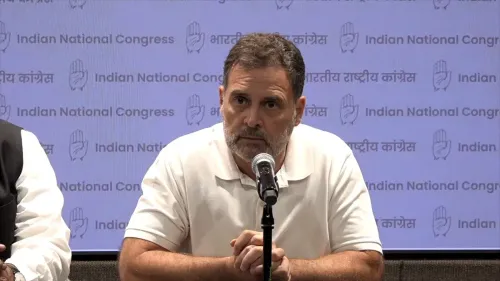
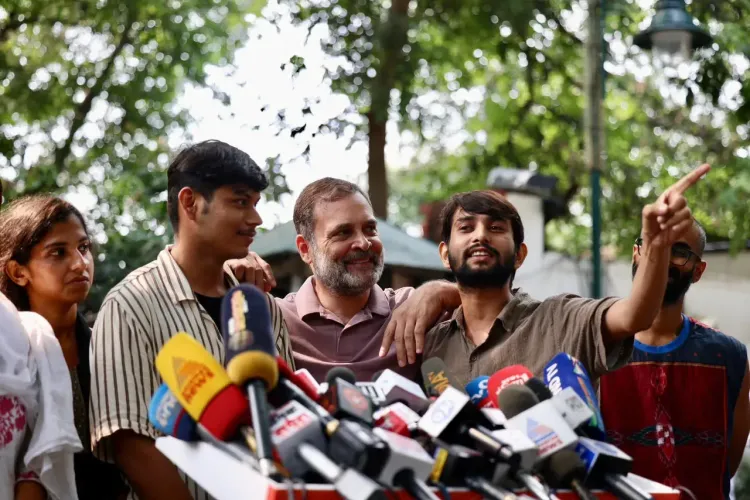
Congress leader Rahul Gandhi publicly warned Prime Minister Narendra Modi, Home Minister Amit Shah, and others that those who suppressed democratic voices will face 'harsh justice,' and called on students who endured police violence or unlawful detention to submit their full records.
Key Takeaways
Rahul Gandhi warned on 14 October 2026 that those suppressing democracy — naming Modi, Shah , and others — will face 'harsh justice.' He explicitly named a chain of command from the Prime Minister down to unnamed constables, framing accountability as non-selective.
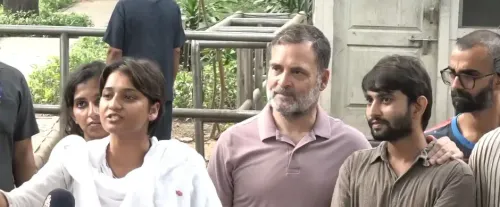
Gandhi called on every student and young person who faced police violence or illegal detention to submit their complete records via a shared link.
The move echoes a pattern dating to the 2019-2020 anti-CAA protests , when incidents at Jamia Millia Islamia and JNU drew wide criticism.
As Leader of the Opposition and MP from Rae Bareli , Gandhi's record-collection drive could serve as the basis for parliamentary questions, litigation, or electoral mobilisation.
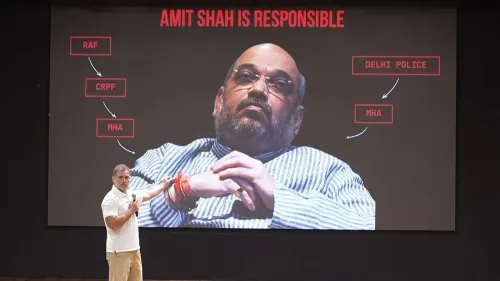
A warning shot aimed at the very top of the Indian government landed on Wednesday, October 14, 2026, when Congress leader Rahul Gandhi declared that those who have suppressed democratic voices — naming Prime Minister Narendra Modi, Union Home Minister Amit Shah, and Gyanesh Kumar — will face 'harsh justice.' He also called on every student and young person who has endured police violence or unlawful detention to submit their full records.
In his post, Gandhi wrote: 'वो दिन आ रहा है जब हमारे लोकतंत्र की आवाज़ को दबाने वालों को कठोर न्याय का सामना करना पड़ेगा।' ('The day is coming when those who have suppressed the voice of our democracy will face harsh justice.') He named not only senior cabinet figures but also, strikingly, 'any constable' — signalling that accountability, in his framing, must run from the top of the chain of command down to street-level enforcement.
The call for a detention record — and what it signals
Gandhi's second demand is operational, not merely rhetorical. He shared a link and asked that every student and young person who faced police violence or illegal detention submit their complete record. The move mirrors a pattern seen in opposition politics globally: building a documented database of grievances to anchor future legal or parliamentary action. Whether the records feed into a public-interest litigation, a parliamentary question, or a campaign dossier remains to be seen — but the intent to institutionalise the grievance is explicit.
The backdrop is not new. Allegations of excessive force against student protesters have dogged the government since the 2019-2020 anti-CAA agitation, when incidents at Jamia Millia Islamia and Jawaharlal Nehru University drew national and international attention. Congress and allied opposition parties argued then — and continue to argue — that central agencies and state police were weaponised to silence dissent on campuses.
Naming names: the political weight of the list
The deliberate naming of Modi and Shah alongside a junior official and an unnamed constable is a calculated rhetorical device. It collapses the hierarchy — framing the Prime Minister and the Home Minister as equally culpable with ground-level enforcers. For Gandhi, Leader of the Opposition in the Lok Sabha and MP from Rae Bareli, this is consistent with a long-running effort to hold the BJP's top leadership personally responsible for law-enforcement conduct, rather than treating incidents as isolated failures.
Shah, as Union Home Minister, holds direct oversight of central police organisations and coordinates with state governments on internal security — making him a natural political target in any narrative about police accountability. The inclusion of the name Gyanesh Kumar, whose exact role NationPress could not independently verify from available public record, suggests Gandhi is referencing a specific recent episode rather than speaking in abstractions.
What comes next in the accountability push
Opposition accountability campaigns of this kind typically build toward one of three outcomes: a parliamentary adjournment motion or privilege notice, a Supreme Court or High Court petition backed by documented cases, or a public report timed to electoral mobilisation. Gandhi's explicit call for individual records suggests the groundwork for at least one of these is already being laid. With student and youth mobilisation historically among the most volatile political forces in India, the timing — and the language of 'the day is coming' — carries unmistakable electoral undertones.
The government has not yet formally responded to this specific post. But if the record-collection exercise yields a significant number of documented cases, the political pressure on the Home Ministry to answer in Parliament could sharpen considerably.
When a Leader of the Opposition starts building a case file — name by name, constable by constable — the government ignores the paperwork at its own peril.
Point of View
Not a spontaneous outburst — the combination of top-level naming and a crowd-sourced evidence drive signals that Congress is attempting to shift the police-accountability debate from rhetoric to documentation. By collapsing the hierarchy from Prime Minister to street-level constable, he forces the government to either defend the entire enforcement chain or publicly distance itself from specific incidents. This fits a broader opposition strategy of building legally actionable grievance records ahead of electoral cycles, where student and youth mobilisation has historically served as a critical force multiplier.
NationPress
15 Oct 2026
Frequently Asked Questions
What did Rahul Gandhi say about Modi and Amit Shah in his October 2026 post?
Gandhi warned that those who suppressed democratic voices — naming Prime Minister Narendra Modi, Home Minister Amit Shah, Gyanesh Kumar, and 'any constable' — would face 'harsh justice.'
Why is Rahul Gandhi asking students to submit detention records?
Gandhi called on every student who faced police violence or illegal detention to submit their full records, apparently to build a documented database that could support parliamentary action or legal proceedings.
What is the background to Congress allegations of police violence against students?
Allegations of excessive police force against student protesters became prominent during the 2019-2020 anti-CAA agitation, particularly at Jamia Millia Islamia and JNU, and Congress has continued to raise these concerns since.
What is Rahul Gandhi's current position in Parliament?
Rahul Gandhi is the Leader of the Opposition in the Lok Sabha and an Indian National Congress MP representing Rae Bareli.
Who is Amit Shah and why is he named in Gandhi's post?
Amit Shah is India's Union Home Minister, responsible for internal security and coordination with police organisations, making him a central political target in debates over police conduct during protests.