Rahul Gandhi on why opposition won't boycott elections
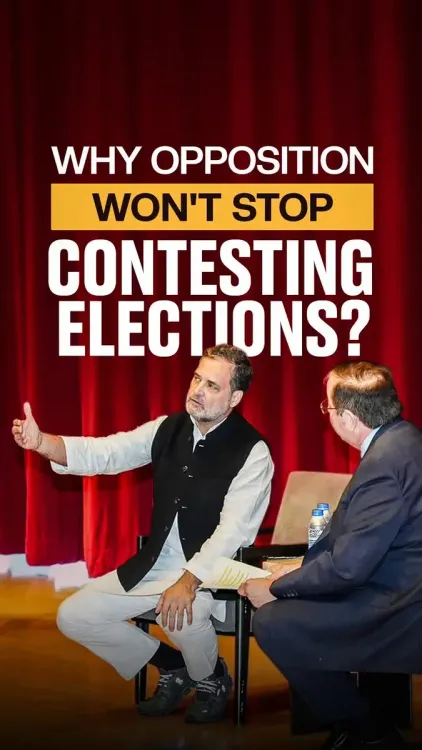
Synopsis
Congress leader Rahul Gandhi has directly addressed the recurring question of why the opposition does not boycott elections it deems rigged, arguing that abandoning the electoral process would shatter public faith in democracy — an outcome he says the BJP actively desires.
Key Takeaways
Rahul Gandhi, Leader of the Opposition in Lok Sabha and Congress MP from Rae Bareli, posted on X on 19 November 2026 defending the opposition's decision to keep contesting elections.
Gandhi argued that an election boycott would destroy the public's trust in Indian democracy — and that this is precisely what the BJP seeks.
He framed the opposition's continued participation as an act of democratic protection, not tacit endorsement of the system's flaws.
Indian opposition parties have raised concerns over EVM integrity and Election Commission autonomy consistently since 2014 without resorting to a boycott.
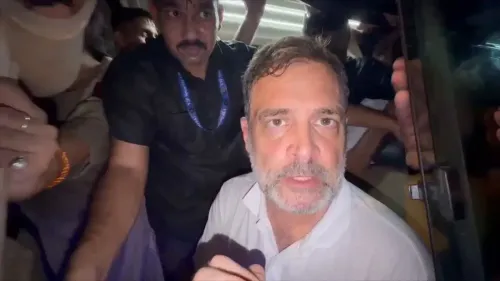
Gandhi's post was accompanied by a video, indicating a coordinated communication push rather than a one-off comment.
A question that surfaces every election cycle — why does the opposition not simply walk away from a system it accuses of being rigged — got a pointed public answer on Thursday, 19 November 2026, when Congress leader Rahul Gandhi framed participation in elections not as acceptance of the status quo, but as the last line of defence for Indian democracy itself.
In a Hindi-language post on X, Gandhi translated the argument into plain terms: 'जवाब साफ़ है: हमारे लिए भारत का लोकतंत्र सबसे पवित्र है' ('The answer is clear: for us, India's democracy is the most sacred thing'). He added that the day the opposition stops contesting elections is the day the public's faith in democracy collapses — and that, he argued, is precisely what the BJP wants.
The boycott question India's opposition keeps refusing to answer — until now
Opposition parties in India have faced this challenge for years: if you believe the Election Commission of India has been compromised and that Electronic Voting Machines are manipulated, why keep playing the game? Gandhi's answer flips the logic entirely. Withdrawal, he argues, would not expose the system's flaws — it would hand over the institution to those allegedly weakening it, and permanently alienate voters from the ballot box.
It is a position the Indian National Congress and allied opposition formations have held consistently since 2014, even as allegations of procedural irregularities and questions about institutional autonomy have multiplied across national and state election cycles. The strategic calculus is straightforward: an empty polling booth benefits only the party that shows up.
Democracy as an argument, not just a slogan
What makes Gandhi's framing notable is that it turns a defensive question — why don't you boycott? — into an offensive proposition. By staying in the fight, the opposition positions itself as the custodian of democratic faith rather than a reluctant participant in a flawed process. The post, which attached a video, suggests the message is part of a broader communication push aimed at voters who may be disillusioned with both the ruling establishment and an opposition that cannot seem to close the gap at the ballot box.
Gandhi, speaking as Leader of the Opposition in Lok Sabha and MP from Rae Bareli, has consistently made the health of democratic institutions his central campaign theme. The argument he is making now — that contesting is itself an act of protection — is designed to reframe every future election loss not as proof that the system works, but as a reason to keep showing up.
With state assembly elections on the horizon and opposition coordination still a work in progress, the signal from Gandhi is unambiguous: the Congress and its allies will contest every seat, in every booth, on every ballot — because the alternative is surrender dressed as protest.
Point of View
Not surrendered outside it. By making the argument public and in plain Hindi, Congress is signalling to its own base — and to undecided voters — that electoral fatigue will not translate into exit. The timing, ahead of anticipated state assembly polls, suggests the party is inoculating itself against calls from fringe voices within and outside the opposition coalition to escalate boycott rhetoric. The deeper stakes: if the opposition can sustain this 'we fight because democracy demands it' framing, it converts every election into a referendum on institutional health rather than purely a verdict on its own performance.
NationPress
19 Nov 2026
Frequently Asked Questions
Why did Rahul Gandhi say the opposition won't boycott elections?
Rahul Gandhi argued that boycotting elections would destroy the Indian public's faith in democracy, which he said is exactly what the BJP wants. He framed continued participation as the most sacred duty of an opposition party.
What is the Congress party's position on EVM and election commission allegations?
The Indian National Congress and allied opposition parties have raised concerns about EVM integrity and the Election Commission's autonomy since 2014, but have consistently chosen to contest elections rather than boycott them.
What did Rahul Gandhi post on X on 19 November 2026?
Gandhi posted a Hindi-language message directly addressing the question of why the opposition does not boycott elections, stating that India's democracy is the most sacred institution and that abandoning the electoral process would only benefit the BJP.
What is Rahul Gandhi's current political position?
Rahul Gandhi is the Leader of the Opposition in the Lok Sabha and a Member of Parliament representing Rae Bareli for the Indian National Congress.
What could an opposition election boycott in India lead to?
According to Gandhi, a boycott would erode public trust in democratic institutions and effectively cede the electoral space entirely to the ruling party, making it harder for citizens to hold the government accountable through the ballot.