Indian Railways to upgrade 40-year-old reservation system from August 2025
Synopsis
India's 40-year-old train reservation system — in place since 1986 — is finally getting a full overhaul, with migration beginning in August 2025. With 88% of bookings already online and the RailOne app's AI waitlist predictor hitting 94% accuracy, this is the most significant upgrade to Indian Railways' ticketing backbone in four decades.
Key Takeaways
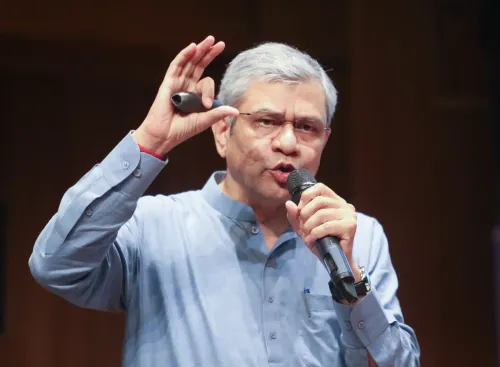
Indian Railways will begin migrating to a new passenger reservation system from August 2025 , as directed by Railway Minister Ashwini Vaishnaw .
The existing system, introduced in 1986 , is being completely overhauled for the first time in its 40-year history.
The RailOne app, launched in July 2024 , has surpassed 3.5 crore downloads and anchors the new digital platform.
An AI-based waitlist prediction feature has improved accuracy from 53% to 94% since its introduction earlier this year.
Nearly 88% of ticket bookings are now made online; around 9.29 lakh tickets are booked daily.
Passenger subsidies in 2024–25 totalled ₹60,239 crore , providing an average fare discount of 43% .
Indian Railways will begin migrating trains to a new, technology-driven passenger reservation system starting August 2025, Railway Minister Ashwini Vaishnaw announced on Thursday, 7 May, directing officials to ensure a seamless transition without disrupting passenger services. The announcement was made during a review meeting at Rail Bhawan, New Delhi, where the minister assessed preparedness for the overhaul of a system that has been in operation for nearly four decades.
Why the Old System Is Being Replaced
The current passenger reservation system was first introduced in 1986 and, while it has undergone incremental upgrades over the years, it has not been fundamentally redesigned since its launch. According to the Ministry of Railways, the system has now been completely overhauled with significantly expanded capacity and state-of-the-art technology to meet the rapidly growing demand for rail travel across India. This is the most comprehensive overhaul of the reservation infrastructure in the system's 40-year history.
Key Features of the Upgraded Platform
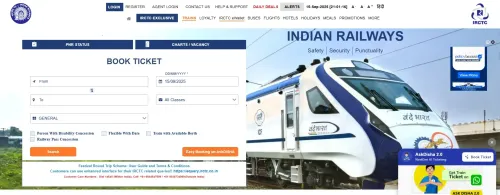
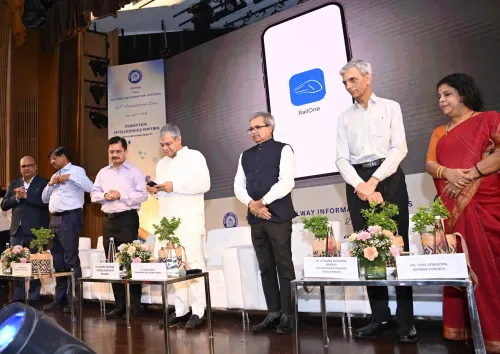
The new platform is designed to handle far higher transaction volumes and integrates advanced digital features. Central to this transformation is the RailOne mobile application, launched in July 2024, which has already recorded over 3.5 crore downloads. The app offers ticket booking, cancellations, refunds, live train tracking, platform and coach information, onboard food ordering with seat delivery, and complaint resolution through Rail Madad.
A standout addition is an AI-based prediction system that estimates the probability of waitlisted tickets getting confirmed. Introduced earlier this year, the feature has improved prediction accuracy from 53 per cent to 94 per cent, significantly boosting passenger confidence in planning travel on waitlisted bookings.
Scale of India's Digital Rail Ticketing
The transition builds on a long arc of digital adoption. Indian Railways launched internet-based ticketing in 2002, and today nearly 88 per cent of all ticket bookings are made online, according to the ministry. Currently, around 9.29 lakh tickets are booked daily through digital platforms, covering both reserved and unreserved categories — a figure that underscores the scale of the infrastructure being upgraded.
Passenger Subsidies and the Railways' Social Mandate
The government also reiterated the railways' role as a social lifeline. In 2024–25, passenger travel subsidies amounted to ₹60,239 crore, translating to an average fare discount of 43 per cent for passengers. The ministry noted that even as technology modernises the booking experience, affordability remains a core policy commitment.
What Happens Next
With the migration scheduled to begin in August 2025, officials have been directed to ensure the switchover does not cause booking disruptions or data loss for existing reservations. The phased rollout is expected to cover trains progressively, though a detailed timeline for full migration has not yet been made public. Industry observers will watch closely whether the new system can sustain peak-season booking loads — historically a stress point for the existing platform.
Point of View
But the real test is execution under peak load. The existing 1986 system has survived decades partly because it was battle-hardened through high-volume stress — the new platform has not yet faced a Diwali or Holi booking window. The AI waitlist predictor's jump from 53% to 94% accuracy is impressive, but accuracy figures released by the ministry itself warrant independent verification. More broadly, with 88% of bookings already digital, the last 12% — largely low-income, elderly, and rural passengers — deserve a clear plan to ensure the transition does not inadvertently widen the access gap.
NationPress
23 Sept 2026
Frequently Asked Questions
When will Indian Railways switch to the new reservation system?
Indian Railways will begin migrating trains to the upgraded passenger reservation system from August 2025. The transition was announced by Railway Minister Ashwini Vaishnaw at a review meeting at Rail Bhawan on 7 May 2025.
Why is the old reservation system being replaced?
The current system has been in operation since 1986 and, despite incremental changes, has not been fundamentally redesigned in 40 years. The Ministry of Railways states it is being completely overhauled with expanded capacity and state-of-the-art technology to handle growing passenger demand.
What is the RailOne app and what does it offer?
RailOne is Indian Railways' integrated mobile application, launched in July 2024, which has recorded over 3.5 crore downloads. It offers ticket booking, cancellations, refunds, live train tracking, onboard food ordering, and an AI-based waitlist confirmation predictor with 94% accuracy.
How accurate is the AI waitlist prediction feature on RailOne?
The AI-based waitlist prediction feature, introduced earlier in 2025, has improved its accuracy from 53% to 94%, according to the Ministry of Railways. It estimates the probability of a waitlisted ticket getting confirmed, helping passengers make more informed travel decisions.
How much does the government subsidise train travel in India?
In 2024–25, Indian Railways provided passenger subsidies worth ₹60,239 crore, translating to an average fare discount of 43% per passenger, reaffirming the railways' role as an affordable public transport lifeline.