Delhi logs highest October rainfall since 2022 as North India gets weather relief
Synopsis
Delhi's Safdarjung observatory recorded 41.6 mm of rain in a single day — its highest October reading since 2022 — pushing the city's AQI into the 'satisfactory' category for the first time this month. With the IMD forecasting rain across 23 states on 13 October, the country's long heat hangover may finally be ending, though the approaching stubble-burning season looms.
Key Takeaways
Delhi's Safdarjung observatory recorded 41.6 mm of rainfall in 24 hours ending 8:30 am on Monday, 13 October — the city's highest October reading since 9 October 2022 , when it received 74 mm .
The rain pushed Delhi's AQI into the 'satisfactory' category for the first time in October 2026 .
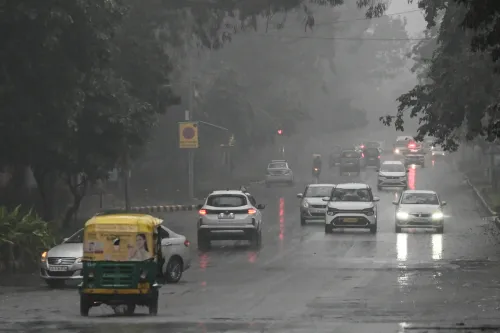
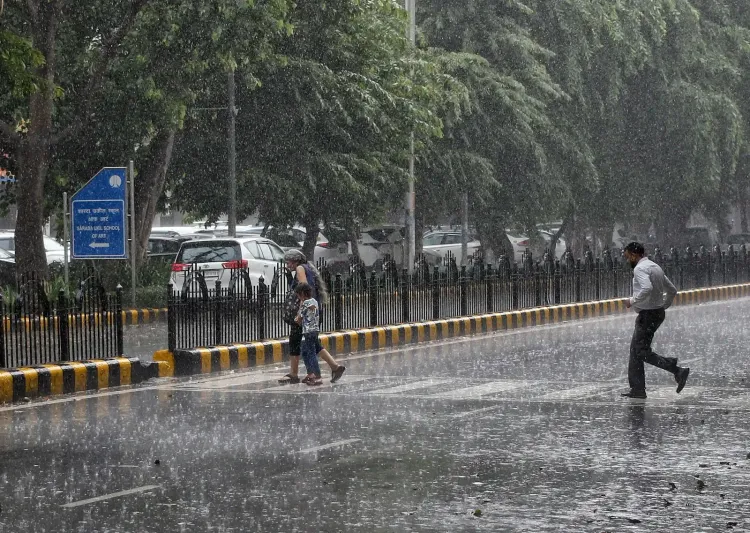
Showers also caused waterlogging in several areas and triggered traffic diversions across the capital.
The IMD forecast for 13 October covers rainfall across 23 states and union territories , with heavy rain expected in Andaman and Nicobar Islands , Jammu and Kashmir , and Ladakh .
Moderate rain is expected in Haryana , Punjab , Delhi , Himachal Pradesh , Chandigarh , and Lakshadweep .
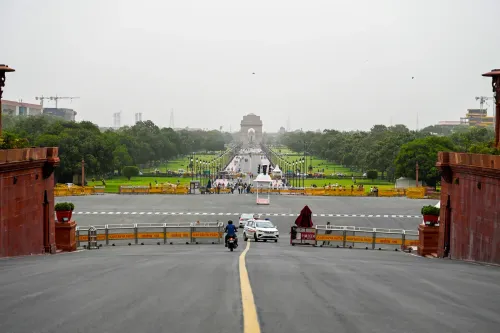
New Delhi recorded its highest October rainfall since 2022 on Monday, 13 October, after heavy showers and thunderstorms lashed the national capital and its surrounding areas through the early hours of the day, lowering temperatures and pushing the Air Quality Index (AQI) into the 'satisfactory' category for the first time this month. The downpour has brought widespread weather relief across North India, from Uttar Pradesh to Punjab, Haryana, and Rajasthan.
Delhi's Rainfall Record This Month
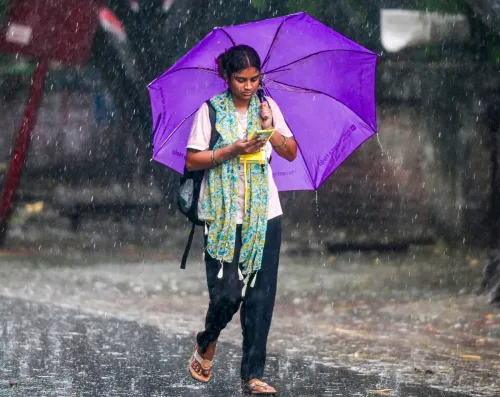
According to the India Meteorological Department (IMD), the Safdarjung observatory — Delhi's base weather station — recorded 41.6 mm of rainfall in the 24 hours ending at 8:30 am on Monday. The last time the observatory logged higher October rainfall was on 9 October 2022, when it received approximately 74 mm. The showers, which began as early as Sunday night, continued into Tuesday, with residents reporting noticeable morning chills and many opting for light warm clothing outdoors.
While the rain improved air quality and provided respite from lingering heat, it also caused waterlogging in several areas and led to traffic diversions across parts of the city. The natural coolness, according to residents, has offered greater comfort than air-conditioning — an early signal of the seasonal shift.
IMD Forecast: Rain Across 23 States and Union Territories
The IMD's forecast for 13 October covers rainfall in 23 states and union territories nationwide. Heavy rain is expected in the Andaman and Nicobar Islands, Jammu and Kashmir, and Ladakh. Moderate rainfall is likely in Haryana, Chandigarh, Delhi, Punjab, Himachal Pradesh, and Lakshadweep.
Light rain is also forecast across Uttar Pradesh, Uttarakhand, Rajasthan, Bihar, Assam, Meghalaya, Nagaland, Manipur, Mizoram, Tripura, Odisha, Chhattisgarh, Tamil Nadu, and Karnataka. Thunderstorms, lightning, and strong winds remain possible in isolated areas across these zones.
What the Weather Shift Means for Daily Life
Across Delhi-NCR, cloudy skies and strong winds have persisted since Sunday night, transforming morning and evening conditions considerably. If temperatures continue to dip in the mornings and evenings over the coming days, residents may need to reduce fan usage and bring out warm bedding at night — though daytime temperatures are expected to remain relatively elevated under direct sunlight.
The weather transition is also altering daily routines in the hilly states, where the combination of rainfall and falling nighttime temperatures is accelerating the onset of the pre-winter chill. This comes amid a broader seasonal pattern where North India's October weather can oscillate sharply between residual monsoon moisture and early winter air masses.
Air Quality and Urban Impact
One notable consequence of the heavy rainfall has been a temporary improvement in Delhi's air quality. The AQI moved into the 'satisfactory' category for the first time in October, a development that residents and health advocates have welcomed ahead of the typically polluted winter months. However, experts note that such AQI improvements driven by rain are transient — stubble burning season in neighbouring states is approaching, which historically drives Delhi's air quality into the 'poor' and 'very poor' range through November.
With the IMD forecasting continued unsettled weather across a large swathe of the country, the coming days will determine whether this rainfall marks the final flourish of the monsoon withdrawal or a more prolonged spell of mid-October precipitation.
Point of View
But the AQI subtext is the more consequential story. Delhi's air briefly touched 'satisfactory' — a category that becomes rarer as winter approaches and stubble burning in Punjab and Haryana accelerates. The rain cannot last, and when it clears, the city will almost certainly slide back toward 'poor' or worse. The real question is whether one good October rain shifts public complacency about the pollution season ahead, or whether — as in most years — the short-term relief masks the structural failure to tackle agricultural burning and vehicular emissions before the thermal inversion sets in.
NationPress
13 Oct 2026
Frequently Asked Questions
What is Delhi's October 2026 rainfall record?
The Safdarjung observatory recorded 41.6 mm of rainfall in the 24 hours ending at 8:30 am on Monday, 13 October 2026 — the highest October single-day reading since 9 October 2022, when the station logged approximately 74 mm. The heavy showers followed a night of thunderstorms that began on Sunday.
How did the rain affect Delhi's air quality?
The rainfall pushed Delhi's Air Quality Index (AQI) into the 'satisfactory' category for the first time in October 2026. However, this improvement is likely temporary, as the approaching stubble-burning season in neighbouring states typically drives AQI into the 'poor' or 'very poor' range through November.
Which states are under IMD rainfall forecast on 13 October?
The IMD has forecast rainfall across 23 states and union territories on 13 October 2026. Heavy rain is expected in Andaman and Nicobar Islands, Jammu and Kashmir, and Ladakh; moderate rain in Haryana, Punjab, Delhi, Himachal Pradesh, Chandigarh, and Lakshadweep; and light rain in Uttar Pradesh, Rajasthan, Bihar, and several northeastern and southern states.
Did the rain cause any disruptions in Delhi?
Yes, the heavy showers caused waterlogging in several parts of Delhi and prompted traffic diversions across the city. Morning commuters on Tuesday also experienced a noticeable chill, with many opting for light warm clothing.
Is North India entering winter early in 2026?
While it is too early to conclude a premature winter onset, the IMD-confirmed rainfall and falling morning and evening temperatures across Uttar Pradesh, Punjab, Haryana, and Rajasthan signal the monsoon withdrawal phase. Daytime temperatures are still expected to remain relatively high under direct sunlight in the near term.