Will the Raipur-Vizag Corridor Drive Growth Across Three States?
Synopsis
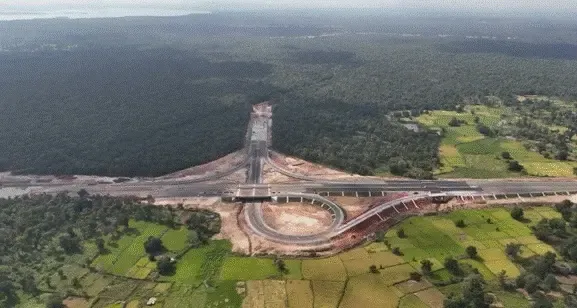
The Raipur–Visakhapatnam Economic Corridor, set to be completed by December 2026, will drastically reduce travel time and enhance economic opportunities across three states. This transformative project is expected to reshape logistics, boost trade, and significantly elevate land values for farmers along the route.
Key Takeaways
The Raipur-Vizag Corridor will reduce travel time significantly.
It connects vital economic regions in three states.
Farmers will see increased land values and market access.
The project is expected to enhance logistics efficiency and trade.
Completion is targeted for December 2026.
New Delhi, Dec 7 (NationPress) The forthcoming 6-lane greenfield Raipur–Visakhapatnam Economic Corridor is set to reduce travel time between these two cities from 12 hours to 5 hours while enhancing economic development along the route as the project is slated for completion in December 2026.
This corridor, under the auspices of the Ministry of Road Transport & Highways, traverses the lush forests of Chhattisgarh, the mineral-rich terrains of Odisha, and the picturesque hills of Andhra Pradesh. With a total investment of Rs 16,482 crore, it will shorten the distance from 597 km via the existing NH-26 to 465 km, saving 132 km and approximately seven hours of travel time. This will lead to significant fuel savings and lower transportation costs for both public and freight operators.
What once took 12 hours will soon take merely 5 hours, paving the way for expedited logistics and seamless connectivity under the PM Gati Shakti vision. Industries in Chhattisgarh and Odisha will gain immensely as they connect directly to the Visakhapatnam Port and the Chennai-Kolkata National Highway. This improved connectivity will bolster trade, enhance exports, streamline supply chains, and significantly elevate logistics efficiency. Furthermore, the corridor is expected to stimulate tourism and foster economic growth through job creation and real estate development, as per a statement from the ministry.
For truck drivers who often spend nights away from home, farmers eager for their goods to reach markets, and families searching for new opportunities, this corridor represents a beacon of hope for a brighter future.
Vishal, a truck owner who frequently transports goods from Raipur to Visakhapatnam, notes that this new corridor will revolutionize transportation operations. "Previously, the journey spanned one and a half days. Now, I can leave during the day and arrive by night," he shares. The reduced distance, he adds, will lead to lower diesel consumption and decreased wear on trucks, providing significant financial relief to operators like him.
Farmers are also witnessing a positive shift in their economic outlook. One farmer explains how land prices have skyrocketed since the inception of the greenfield highway project. "Our land was valued at approximately Rs 15 lakh per acre before. Now it is nearing Rs 1.5 crore. Farmers here are genuinely pleased," he states, indicating how development driven by connectivity is transforming rural prospects.
A resident from Vizianagaram expressed, "As farmers, we initially felt disappointed to relinquish our land for the greenfield highway. It wasn’t an easy decision. However, as the corridor nears completion, we are filled with hope. The value of our land has more than doubled, and we anticipate new opportunities for our families. What we lost is now evolving into a brighter future."
Srinivasulu, another farmer from Jami village in Vizianagaram district, remarked that "the value of the remaining land has seen a significant increase. The villagers and farmers are excited about the forthcoming greenfield highway."
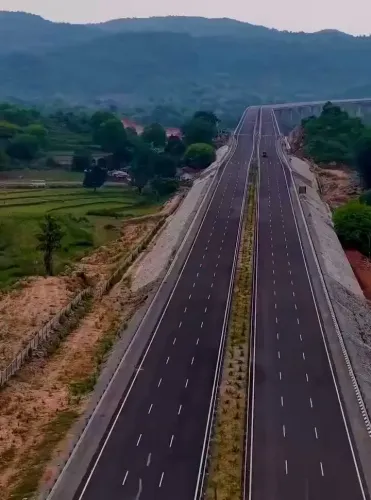
Apart from economic gains, the Raipur–Visakhapatnam Corridor will greatly enhance mobility for tribal and remote districts including Dhamtari, Keshkal, and Kanker (Chhattisgarh), Borigumma, Nabarangpur, and Koraput (Odisha), along with Ramabhadrapuram and Araku (Andhra Pradesh). By connecting these regions to major markets and essential services, the corridor aims to better integrate them into the broader economy. The new access-controlled, 6-lane Raipur–Visakhapatnam Economic Corridor will also alleviate congestion on the older 2-lane NH-26, enhancing travel comfort and road safety. Designed for speeds of 100 km/hr, it promises superior predictability, reliability, and cost-efficiency for both passengers and freight operators.
Point of View
I see the Raipur-Vizag Corridor as a pivotal infrastructure project that not only enhances connectivity but also fosters economic growth across three states. This initiative embodies the government's commitment to developing rural areas and significantly improving logistics efficiency, ultimately benefiting local communities.
NationPress
15 Oct 2026
Frequently Asked Questions
How much will the Raipur-Vizag Corridor reduce travel time?
The corridor is expected to reduce travel time from 12 hours to just 5 hours.
What is the total cost of the Raipur-Vizag Corridor project?
The total cost of the project is approximately Rs 16,482 crore.
Which states will benefit from the Raipur-Vizag Corridor?
The corridor will benefit Chhattisgarh, Odisha, and Andhra Pradesh.
When is the Raipur-Vizag Corridor expected to be completed?
The project is set to be completed by December 2026.
How will the corridor impact local farmers?
The corridor is expected to increase land values and provide better market access for farmers.