Tibetan diaspora must shape global narrative to keep Tibet relevant: Report
Synopsis
A report by Khedroob Thondup, nephew of the 14th Dalai Lama, argues that the Tibetan diaspora's global reach — from parliaments to universities — is its greatest weapon in keeping Tibet visible. The call comes as China's new assimilation law and the self-immolation death of activist Lobga Rangzen outside the UN converge to create a defining moment for the Tibetan cause.
Key Takeaways
Khedroob Thondup , nephew of the 14th Dalai Lama , argues in The Tibet Express that the Tibetan diaspora must actively shape the global narrative on Tibet.
Tibetans abroad have access to parliaments, universities, and media networks that those inside Tibet cannot freely use.
Tibetan activist Lobga Rangzen died after self-immolating outside the UN headquarters in New York in July , a day after China's 'Promoting Ethnic Unity and Progress Law' took effect.
UN experts have warned the Chinese legislation risks "entrenching forced assimilation and encouraging transnational repression." Tencho Gyatso , President of the International Campaign for Tibet (ICT) , has called on the global community to hold China accountable for "policies of repression and forced assimilation."
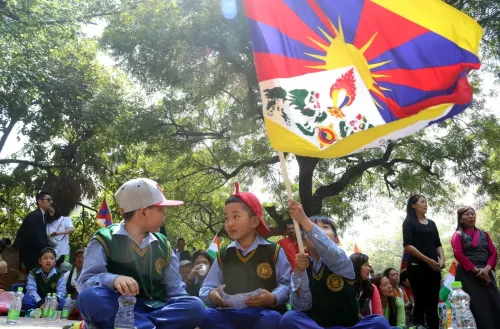
For over six decades, Tibetans in exile have worked to ensure the international community does not forget a homeland that remains under occupation — and according to a new report, that responsibility has never been more urgent. Khedroob Thondup, nephew of the 14th Dalai Lama, argues in a piece published in The Tibet Express that the global Tibetan diaspora must actively shape the international narrative to keep Tibet relevant in global discourse.
Diaspora as a Strategic Asset
Tibetans are spread across Australia, India, Europe, and beyond — a dispersion that Thondup frames not as a vulnerability but as a structural advantage. Unlike Tibetans living inside Tibet, those abroad have unimpeded access to parliaments, universities, media organisations, and civil society networks. Through protests, government engagement, and vocal opposition to human rights abuses, the diaspora keeps Tibet visible on the world stage.
Thondup writes: "The Tibetan diaspora embodies the paradox of exile: absence from the homeland, yet presence everywhere else. Their task is not only to remember Tibet but to make Tibet impossible to forget." He argues the choice facing diaspora members is stark — "fade into silence, or remain the heartbeat of a nation in exile."
A Network of Resistance
The report identifies the Tibetan government-in-exile, advocacy organisations based in New York and London, and student groups at universities worldwide as interconnected nodes in a global resistance network. Their collective work, Thondup argues, elevates Tibet from a regional political dispute to a universal issue of human rights, cultural survival, and the dignity of oppressed peoples.
Tibetans in exile, he notes, carry personal narratives of escape, resilience, and survival — stories that resonate across cultures and remind global audiences that Tibet is not an abstraction but a living people.
Lobga Rangzen's Self-Immolation at the UN
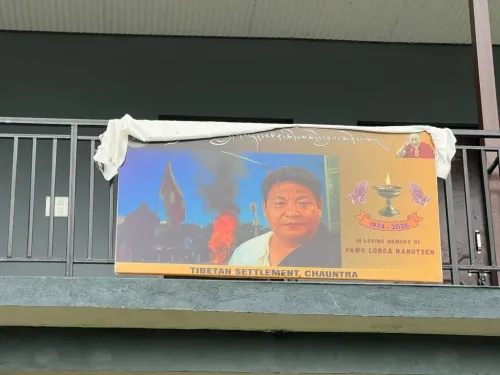
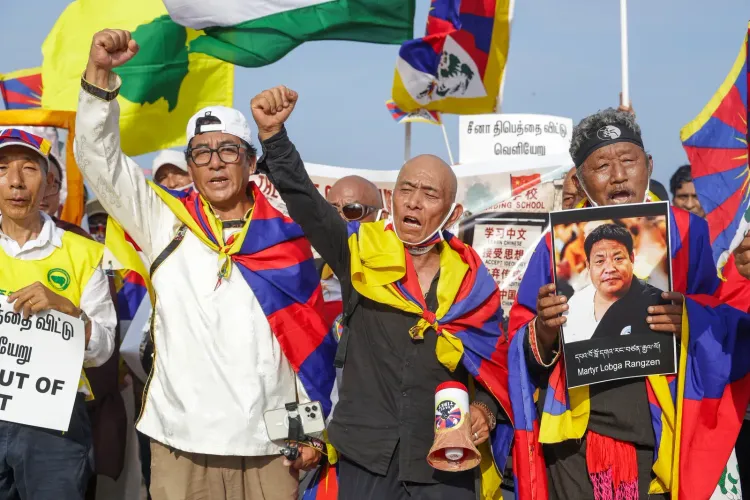
The report's call to action comes against a backdrop of profound tragedy. In July, Tibetan activist Lobga Rangzen died after self-immolating outside the United Nations headquarters in New York — a day after China's new 'Promoting Ethnic Unity and Progress Law' came into force. Moments before the act, Rangzen livestreamed a message calling for Tibetan independence and unity. He later succumbed to his burn injuries at Bellevue Hospital in New York.
The legislation has drawn widespread international criticism. UN experts have warned that it risks "entrenching forced assimilation and encouraging transnational repression."
International Campaign for Tibet Responds
Tencho Gyatso, President of the International Campaign for Tibet (ICT), expressed grief over Rangzen's death and called on the global community to act. "We are deeply saddened by the passing of Lobga, also known as Lobga Rangzen, following his self-immolation at the UN headquarters in New York on Thursday evening," Gyatso stated.
She added: "In his final statement, which he posted on his Facebook account, Lobga warned that China's policies threaten the very survival of Tibetan identity, language, and culture and called on all Tibetans to be united in their fight for the cause of the Tibetan struggle. While we mourn this tragic loss, it is imperative that the international community heed the message behind his profound despair by addressing the worsening human rights situation in Tibet and holding the Chinese government accountable for its policies of repression and forced assimilation."
What Comes Next
The combination of China's new assimilation legislation and the death of a prominent diaspora activist has intensified pressure on governments and international bodies to take a firmer stance on Tibet. Advocacy groups are expected to escalate lobbying efforts at the UN and in Western capitals, while the ICT has called for direct accountability measures against Beijing. Whether that pressure translates into concrete policy shifts remains to be seen.
Point of View
Arriving in the wake of Lobga Rangzen's death, is not incidental. The Tibetan diaspora has sustained international attention for over six decades largely through symbolic acts and personal testimony; the structural question is whether that model can withstand China's increasingly sophisticated diplomatic and legislative machinery. Beijing's 'Promoting Ethnic Unity and Progress Law' is not just a domestic measure — UN experts' warnings about transnational repression suggest it is designed to reach diaspora communities themselves. The diaspora's greatest vulnerability is fragmentation; its greatest asset is moral authority. Whether advocacy groups can convert that authority into binding international action — sanctions, UN resolutions, trade conditionality — is the test that no report alone can answer.
NationPress
28 Aug 2026
Frequently Asked Questions
What does the report by Khedroob Thondup argue about the Tibetan diaspora?
The report argues that the Tibetan diaspora — spread across Australia, India, Europe, and elsewhere — has a strategic responsibility to shape the international narrative and keep Tibet relevant in global discourse. Thondup contends that diaspora access to parliaments, universities, and civil society networks is a strength that Tibetans inside Tibet do not enjoy.
Who is Khedroob Thondup?
Khedroob Thondup is the nephew of the 14th Dalai Lama and the author of the report published in The Tibet Express. He is a prominent voice within the Tibetan diaspora on issues of political advocacy and cultural preservation.
Who was Lobga Rangzen and what happened to him?
Lobga Rangzen was a Tibetan activist who self-immolated outside the United Nations headquarters in New York in July. He succumbed to his burn injuries at Bellevue Hospital. The act occurred a day after China's 'Promoting Ethnic Unity and Progress Law' came into force, and moments before, Rangzen livestreamed a message calling for Tibetan independence and unity.
What is China's 'Promoting Ethnic Unity and Progress Law' and why is it controversial?
The law, which came into force in July, has drawn widespread international criticism. UN experts have warned that it risks 'entrenching forced assimilation and encouraging transnational repression' of Tibetan identity, language, and culture. Critics argue it is part of a broader Chinese policy of suppressing Tibetan distinctiveness.
What has the International Campaign for Tibet said in response?
ICT President Tencho Gyatso expressed grief over Lobga Rangzen's death and called on the international community to address the worsening human rights situation in Tibet and hold the Chinese government accountable for what she described as 'policies of repression and forced assimilation.' The ICT has urged governments and international bodies to take concrete action.