Rajasthan ranks 2nd in natural farming clusters, 3rd in farmer enrolment
Synopsis
Rajasthan has quietly become one of India's most aggressive adopters of natural farming — 2,380 clusters, over 2 lakh farmers enrolled, and ₹49.97 crore committed, all within months of the national mission's November 2024 launch. With NITI Aayog data showing 91% of adopters reporting higher yields, the state's scale-up could reshape how large agrarian states approach the chemical-to-organic transition.
Key Takeaways
Rajasthan ranks 2nd nationally in natural farming cluster formation with 2,380 clusters , behind only Andhra Pradesh.
The state has enrolled 2,12,346 farmers , placing it 3rd nationally after Andhra Pradesh and Uttar Pradesh.
Natural farming now covers approximately 91,166 hectares in Rajasthan.
The state government has allocated ₹49.97 crore for the mission up to 2025-26 , targeting one lakh hectares and 2.5 lakh farmers .
A Centre of Excellence for Natural Farming is planned at Agricultural University, Jobner under the 2025-26 budget.
According to a NITI Aayog evaluation, 91% of natural farming adopters reported higher production and 90% saw lower cultivation costs.
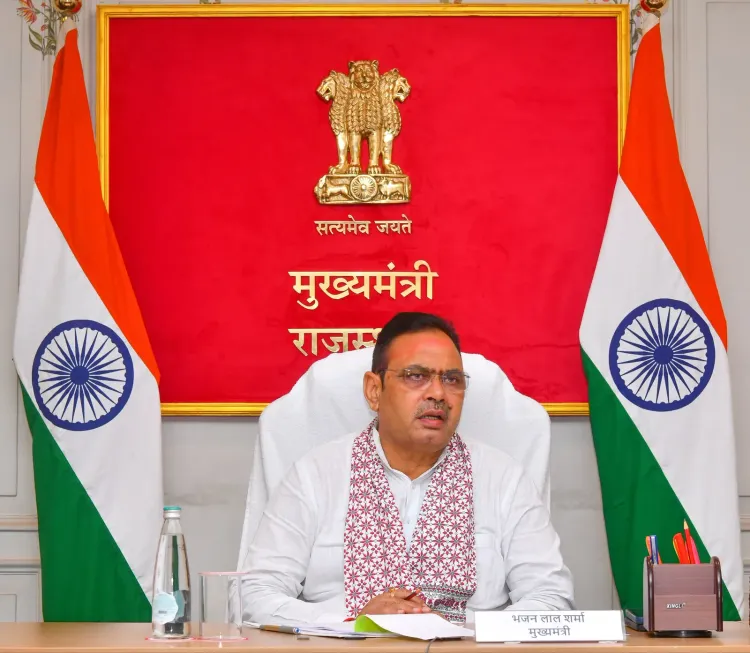
Rajasthan has cemented its position as one of India's foremost states in natural farming, securing second place in cluster formation and third place in farmer enrolment under the National Mission on Natural Farming, officials from the Chief Minister's Office said on Thursday, 30 July 2025. The state's rapid progress signals a significant policy pivot toward sustainable agriculture in one of India's largest farming regions.
Key Milestones So Far
A total of 2,380 natural farming clusters have been established across Rajasthan — the highest count in the country after Andhra Pradesh. Farmer enrolment stands at 2,12,346, placing the state behind only Andhra Pradesh and Uttar Pradesh in participation. Natural farming has already spread across roughly 91,166 hectares, reinforcing the state's standing among national frontrunners in the transition away from chemical-intensive agriculture.
Financial Outlay and Expansion Targets
The state government has earmarked approximately ₹49.97 crore for mission implementation up to 2025-26. Authorities are now working to scale natural farming to one lakh hectares by enrolling 2.5 lakh farmers. Under the Govardhan Organic Fertilizer Scheme, financial assistance of ₹10,000 is being extended to 50,000 farmers to support organic manure production. Additionally, farmers who use bullocks for agricultural operations receive an incentive of ₹30,000, encouraging a return to traditional cultivation methods.
Infrastructure and Market Support
Organic food markets are being set up in Jodhpur, Kota, and Udaipur to give farmers direct access to premium buyers for their produce. The state's gaushalas (cow shelters) have received a grant of ₹2,856 crore for cattle upkeep, which directly feeds into the supply of organic inputs for natural farming. The 2025-26 state budget also includes a provision to establish a Centre of Excellence for Natural Farming at Agricultural University, Jobner, intended to serve as a hub for research, training, and innovation.
The National Mission Context
The National Natural Farming Mission was launched on 25 November 2024 with the stated goals of reducing dependence on chemical fertilisers, improving soil health, and boosting farmer incomes. Across the country, 527 Krishi Vigyan Kendras, 76 agricultural universities, 194 local natural farming institutes, and 18 Centres of Excellence are providing training and technical support. The Central Government is offering an incentive of ₹4,000 per acre annually to participating farmers for a period of two years.
Outcomes: What the Data Shows
According to an evaluation report by NITI Aayog, approximately 91% of farmers who adopted natural farming reported an increase in production, while around 90% experienced a reduction in cultivation costs. Measurable improvements in soil health have also been recorded. This comes amid a broader national push to reduce agrochemical dependency, with Rajasthan's scale of adoption now making it a model worth watching for other large agricultural states.
Point of View
But cluster counts and enrolment figures are inputs, not outcomes — the harder question is whether farmers are sustaining the practice beyond the incentive window. The ₹4,000-per-acre central incentive runs for just two years, and past experience with scheme-driven adoption in Indian agriculture shows sharp drop-offs once transfers end. The NITI Aayog's 91% productivity figure is promising but comes without a disclosed sample size or methodology, limiting its evidentiary weight. The real test for Rajasthan will be whether the Jobner Centre of Excellence and the organic market infrastructure in Jodhpur, Kota, and Udaipur can create durable market linkages — because without price premiums, natural farming remains a subsidy story, not a structural shift.
NationPress
13 Sept 2026
Frequently Asked Questions
What is Rajasthan's rank in the National Mission on Natural Farming?
Rajasthan ranks 2nd in cluster formation with 2,380 clusters and 3rd in farmer enrolment with 2,12,346 farmers registered under the National Mission on Natural Farming, according to officials from the Chief Minister's Office.
When was the National Natural Farming Mission launched?
The National Natural Farming Mission was launched on 25 November 2024, with the objectives of reducing chemical fertiliser dependence, improving soil health, and increasing farmers' incomes.
What financial support is Rajasthan offering to natural farming adopters?
The state is providing ₹10,000 to 50,000 farmers for organic manure production under the Govardhan Organic Fertilizer Scheme, and ₹30,000 to farmers who use bullocks for agricultural operations. The Central Government separately offers ₹4,000 per acre annually for two years.
What does the NITI Aayog evaluation say about natural farming outcomes?
According to a NITI Aayog evaluation report, approximately 91% of farmers who adopted natural farming reported an increase in production, while around 90% experienced a reduction in cultivation costs. Improvements in soil health were also recorded.
What infrastructure is being built to support natural farming in Rajasthan?
Organic food markets are being established in Jodhpur, Kota, and Udaipur to improve market access for farmers. A Centre of Excellence for Natural Farming is also planned at Agricultural University, Jobner, under the 2025-26 state budget.