Rajasthan CM Sharma: 3.29 Crore Employment Days Created Since July
Synopsis
The Chief Minister's Office of Rajasthan announced on September 25, 2026 that 3 crore 29 lakh employment days have been created since July under the VB-Giramji Yojana, highlighting the rural welfare programme's reach under CM Bhajan Lal Sharma.
Key Takeaways
3 crore 29 lakh employment days generated in Rajasthan between July and September 2026 .
The achievement is attributed to the VB-Giramji Yojana , a state rural employment scheme.
Chief Minister Bhajan Lal Sharma , in office since December 2023 , was specifically credited by the CMO post.
The central MGNREGA framework (2005) guarantees up to 100 days of rural wage employment annually — state schemes supplement this floor.
The announcement coincides with the seasonal agricultural slack period when demand for guaranteed employment is highest in rural Rajasthan.
The post uses the hashtag #आपणो_अग्रणी_राजस्थान ('Our Leading Rajasthan'), part of the Sharma government's broader branding strategy.
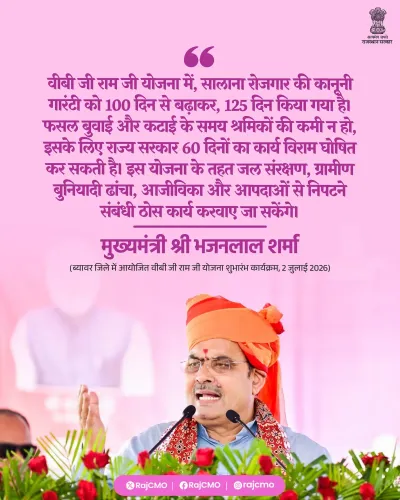
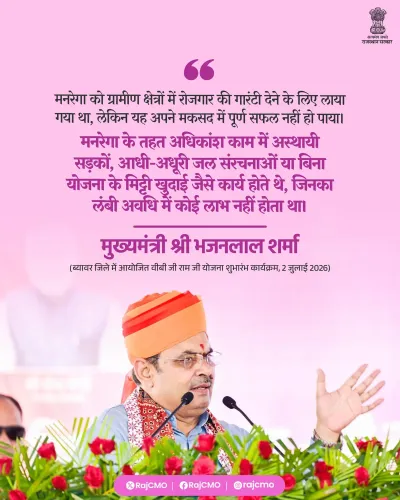
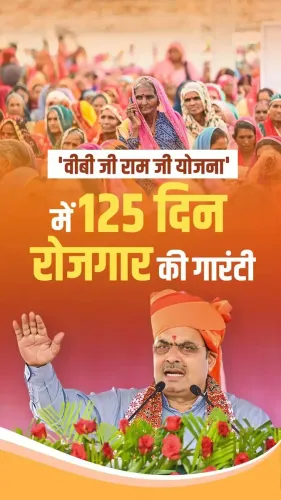
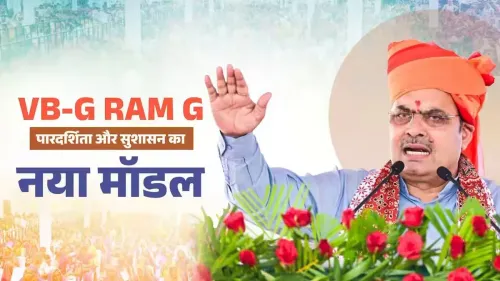
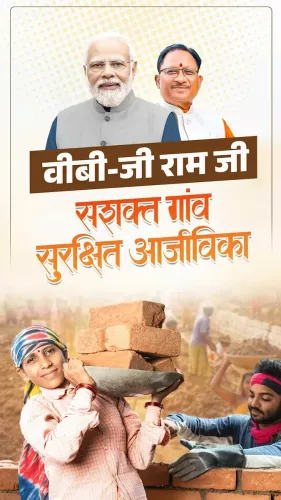
Since July 2026, Rajasthan has generated 3 crore 29 lakh employment days under what the state government is calling the VB-Giramji Yojana — a number the Chief Minister's Office of Rajasthan flagged on Friday, September 25 as a standout achievement of the rural welfare programme.
The official post, directed at Chief Minister Bhajan Lal Sharma, described the figure as 'behtareen uplabdhi' — a 'remarkable achievement' — under the scheme, framing the tally as evidence of the state administration's momentum on rural employment in the current fiscal cycle.What the 3.29 Crore Figure Represents
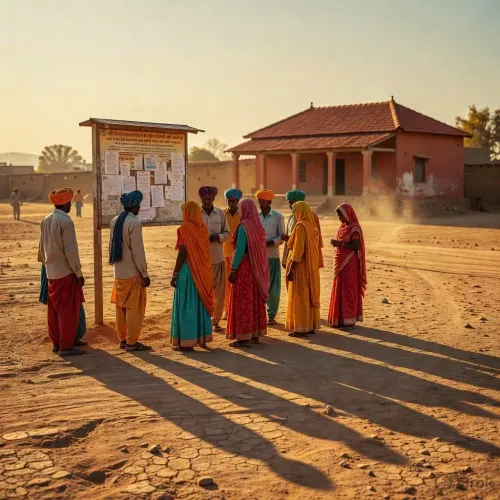
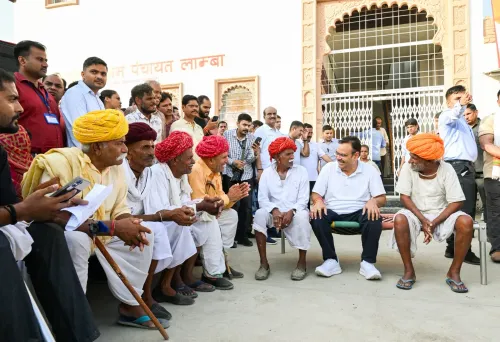
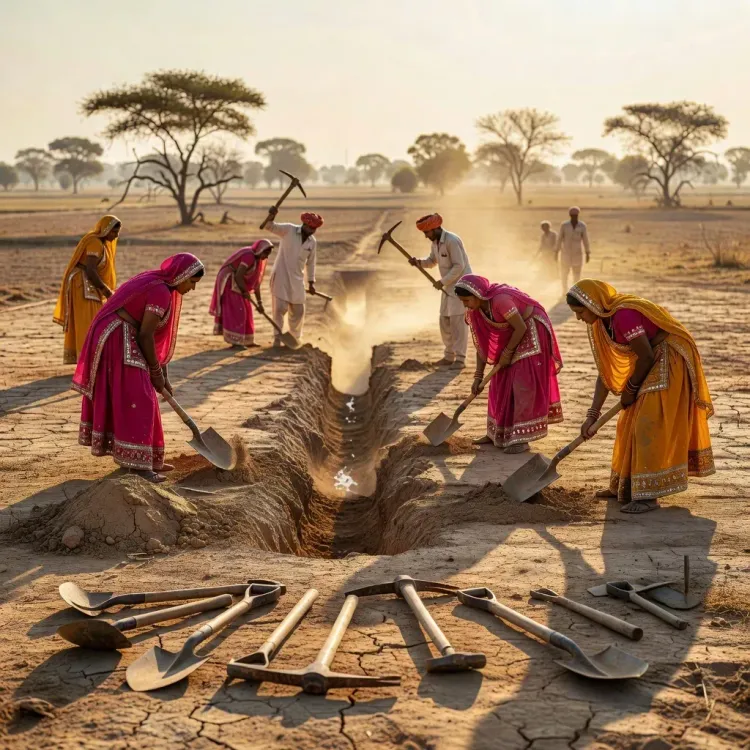
In the world of rural welfare governance, employment days — or 'rozgar divas' — are the core unit of measurement. Each figure represents one person employed for one day under a government-backed scheme, typically manual labour on public infrastructure like roads, water conservation works, and land development. A cumulative count of 3.29 crore employment days in roughly three months points to significant operational reach across Rajasthan's vast rural hinterland, which spans 200-plus blocks and tens of thousands of villages. Rajasthan's rural economy is heavily dependent on agricultural cycles, and the pre-kharif and post-harvest periods historically see demand spikes for such guaranteed employment. Rolling out employment days at this scale during the July-September window aligns with that pattern — plugging income gaps when farm work is thin.Bhajan Lal Sharma's Rural Employment Push
Chief Minister Bhajan Lal Sharma, who took office in December 2023 after the BJP's victory in the Rajasthan assembly elections, has positioned rural welfare delivery as a centrepiece of his administration's first full year in office. The backdrop is the central Mahatma Gandhi National Rural Employment Guarantee Act (MGNREGA), enacted in 2005, which guarantees up to 100 days of wage employment per year to rural households — a floor that state governments can supplement with their own schemes and administrative drive. State-level employment programmes that layer on top of MGNREGA are common across India, and their periodic performance numbers serve a dual purpose: demonstrating welfare delivery to rural voters and generating accountability data for programme managers.The Hashtag and the Political Signal
The post carries the hashtag #आपणो_अग्रणी_राजस्थान — loosely translating to 'Our Leading Rajasthan' — a branding phrase the Sharma government has used to project the state as a front-runner on development metrics. That framing turns a welfare statistic into a political narrative: Rajasthan not just meeting benchmarks, but setting them. For rural labourers across the state's arid districts, the real question is whether those employment days translated into timely wages and durable local assets — that audit will come with official quarterly data.Point of View
These periodic performance announcements are as much about political positioning as administrative accountability. The broader pattern across Indian states is one of competitive welfare signalling, where MGNREGA-adjacent schemes are deployed not just as safety nets but as proof-points of governance. The real test for the VB-Giramji Yojana will be independent verification of wage payment timelines and asset creation quality — metrics that rarely make it into official social media posts.
NationPress
25 Sept 2026
Frequently Asked Questions
What is the VB-Giramji Yojana in Rajasthan?
The VB-Giramji Yojana is a rural employment scheme run by the Rajasthan state government. The Chief Minister's Office announced on September 25, 2026 that it had generated 3.29 crore employment days since July 2026, though detailed official documentation of the scheme is not yet widely available in public records.
What does '3.29 crore employment days' actually mean?
An employment day means one person employed for one working day under a government scheme. A total of 3.29 crore employment days means that cumulative figure of person-days of work was provided to rural labourers in Rajasthan between July and September 2026.
What is MGNREGA and how is it related to Rajasthan's scheme?
MGNREGA, enacted by the central government in 2005, guarantees up to 100 days of wage employment per year to rural households across India. State governments like Rajasthan can run supplementary schemes on top of this central framework to boost rural employment further.
Who is Bhajan Lal Sharma, the Rajasthan Chief Minister?
Bhajan Lal Sharma is the Chief Minister of Rajasthan, representing the BJP. He assumed office in December 2023 following the party's victory in the state assembly elections.
Why does Rajasthan's government announce rural employment figures in September?
The July-to-September period typically coincides with a seasonal agricultural slack in Rajasthan, when demand for guaranteed employment peaks. State governments release employment data during this period to demonstrate welfare delivery and administrative performance.