CM Bhajanlal's Govt Touts SIT, AGTF and Jobs Push in Rajasthan
Synopsis
The Rajasthan CMO, citing CM Bhajanlal Sharma, says the state government has formed an SIT and AGTF to check paper leaks and is steadily expanding job opportunities for youth — framing the twin moves as central to its governance agenda.
Key Takeaways
The Chief Minister's Office of Rajasthan posted on 31 May 2026 highlighting anti-paper-leak and youth employment measures.
CM Bhajanlal Sharma stated that the government has constituted an SIT (Special Investigation Team) and an AGTF (Anti-Gang Task Force) to curb examination paper leaks.
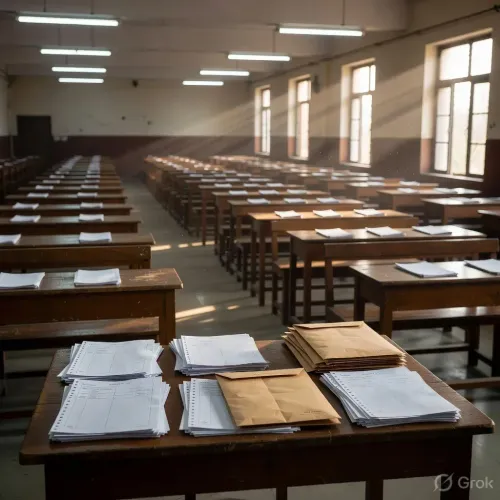
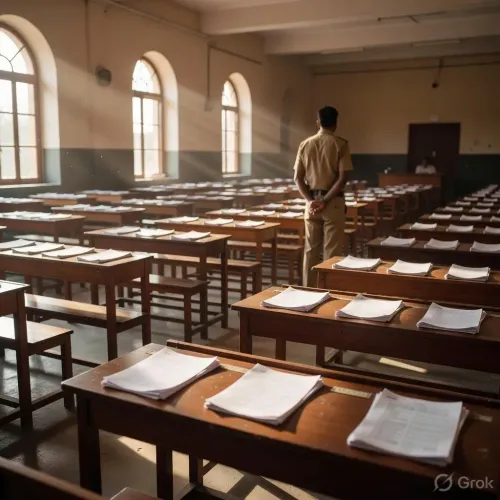
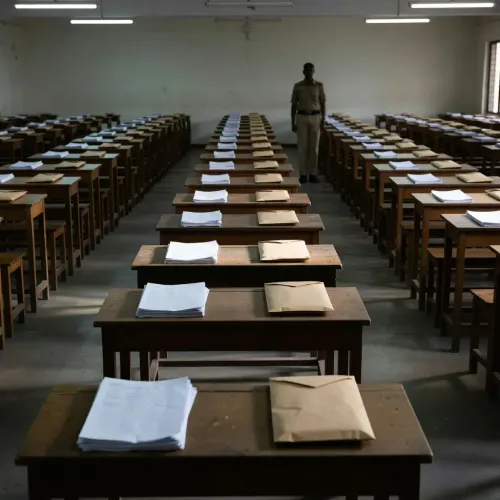
The government claims it has put a check on paper leaks across the state of Rajasthan .
The administration says it is continuously providing employment opportunities to the youth of Rajasthan.
The initiative fulfils a key BJP manifesto commitment made ahead of the December 2023 assembly elections.
The post was shared under the hashtag #आपणो_अग्रणी_राजस्थान ('Our Pioneering Rajasthan'), underscoring the government's brand of proactive governance.
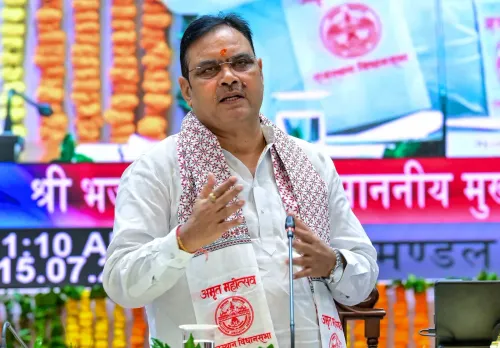
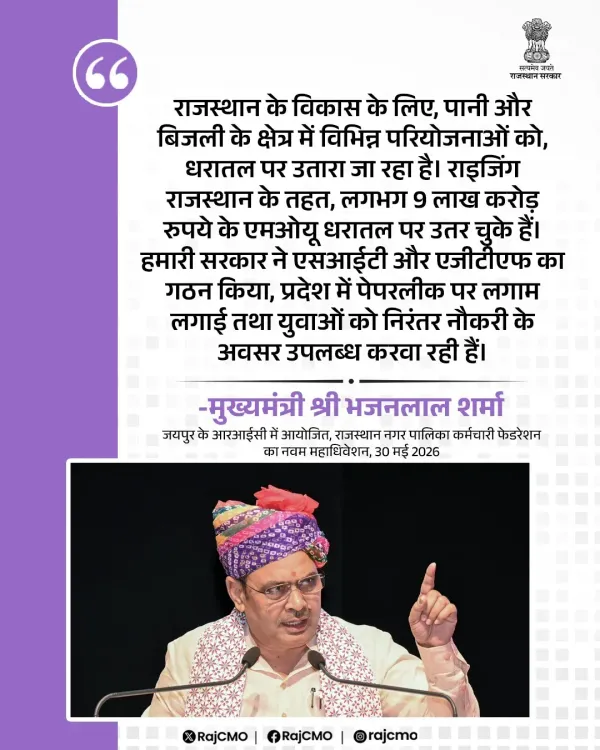
The Chief Minister's Office of Rajasthan, posting on behalf of Chief Minister Bhajanlal Sharma, on Sunday, 31 May 2026, highlighted the state government's formation of a Special Investigation Team (SIT) and an Anti-Gang Task Force (AGTF) to curb paper leaks, alongside continuous efforts to create employment opportunities for the youth of Rajasthan.
Context
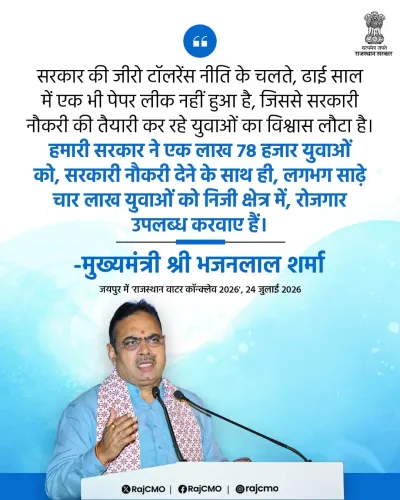
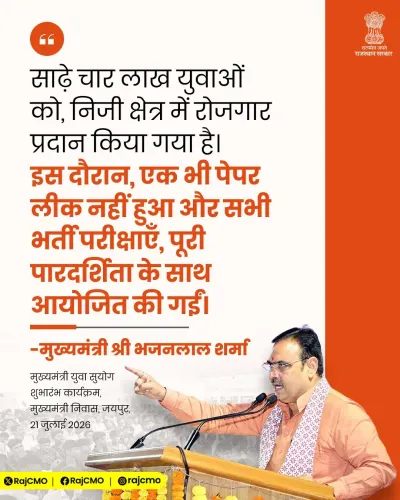
The post, shared under the hashtag #आपणो_अग्रणी_राजस्थान ('Our Pioneering Rajasthan'), quotes Chief Minister Bhajanlal Sharma directly: 'हमारी सरकार ने एसआईटी और एजीटीएफ का गठन किया, प्रदेश में पेपरलीक पर लगाम लगाई तथा युवाओं को निरंतर नौकरी के अवसर उपलब्ध करवा रहे हैं।' In English: 'Our government formed the SIT and AGTF, put a check on paper leaks in the state, and is continuously providing job opportunities to the youth.' The statement is a direct assertion of governance delivery, framing the administration's anti-paper-leak machinery and recruitment drive as twin pillars of its youth agenda.
Policy Backdrop
Rajasthan has been one of several Indian states where recurring examination irregularities severely damaged public trust in competitive recruitment. The preceding state government (2018–2023) faced sustained criticism over multiple leaks in high-stakes examinations including the Rajasthan Eligibility Examination for Teachers (REET) and the Sub-Inspector (SI) recruitment test, among others. These incidents galvanised youth aspirants and became a significant electoral issue ahead of the 2023 Rajasthan assembly elections.
The BJP manifesto for those elections explicitly promised decisive action against paper leaks and an expansion of youth employment. After the party's victory in December 2023, Chief Minister Bhajanlal Sharma took charge with those commitments as a stated priority. The constitution of a dedicated SIT and an AGTF represents the institutional response to that mandate, signalling that the government is deploying specialised investigative capacity rather than relying on routine law-enforcement channels.
Stakeholders and Impact
The primary beneficiaries of these measures, as framed by the government, are youth job aspirants and competitive examination candidates across Rajasthan — a demographic that numbers in the lakhs and has historically borne the brunt of examination fraud. For this group, a credible anti-leak mechanism directly affects the fairness and reliability of recruitment to state services including the police force, teaching cadre, and other public-sector posts.
Broader stakeholders include the state's administrative machinery, which gains legitimacy when recruitment is seen as merit-based, and the families of aspirants who invest years of preparation and significant resources in these examinations. The AGTF component suggests the government also views organised criminal networks — often implicated in paper-leak syndicates — as a concurrent law-and-order challenge requiring a dedicated response.
What's Next
Observers will watch for the rollout of any new provisions under a Rajasthan Public Examination Act, the pace of ongoing SIT and AGTF proceedings, and the schedule of forthcoming recruitment examinations for police, teachers, and other state services. The government's ability to demonstrate measurable outcomes — clean examinations conducted, cases prosecuted, posts filled — will determine whether this narrative of governance delivery translates into lasting public confidence among Rajasthan's youth.
Point of View
Timed to reinforce the BJP administration's credibility on a promise — curbing paper leaks — that resonated deeply with youth voters in the 2023 election cycle. By naming both the SIT and the AGTF in the same breath as job creation, the government is attempting to link law-enforcement action to economic opportunity, a pairing that broadens the political appeal of what is otherwise a narrow anti-corruption message. This fits a wider pattern across BJP-governed states of deploying task-force nomenclature as visible proof of institutional intent, even before outcomes are fully measurable. Whether the messaging sustains depends on the government's ability to deliver clean examinations and fill vacancies at a pace that keeps pace with aspirant expectations.
NationPress
16 Oct 2026
Frequently Asked Questions
What is the SIT formed by the Rajasthan government for paper leaks?
The Rajasthan government under CM Bhajanlal Sharma constituted a Special Investigation Team (SIT) specifically to probe and curb examination paper leak cases in the state. The SIT is intended to bring focused investigative capacity to a problem that has affected multiple recruitment examinations in Rajasthan over the years.
What is AGTF in Rajasthan?
AGTF stands for Anti-Gang Task Force, a specialised unit formed by the Rajasthan government to tackle organised criminal networks, including those implicated in paper-leak syndicates. Its formation alongside the SIT reflects the government's view that paper leaks are partly driven by organised crime.
Has Rajasthan stopped paper leaks in government exams?
The Chief Minister's Office of Rajasthan has claimed that the government has 'put a check' on paper leaks since forming the SIT and AGTF. Independent verification of this claim and full outcome data were not available at the time of publication.
What jobs is the Rajasthan government providing to youth in 2026?
The Rajasthan CMO stated that the government is 'continuously providing job opportunities' to youth, with upcoming recruitment drives expected in sectors including police, teaching , and other state services. Specific vacancy numbers had not been detailed in the post.
What was Bhajanlal Sharma's promise on paper leaks before the 2023 Rajasthan election?
The BJP manifesto ahead of the December 2023 Rajasthan assembly elections explicitly committed to decisive action against paper leaks and expanded youth employment. CM Bhajanlal Sharma took office after the party's victory and the SIT and AGTF formations are part of fulfilling that pledge.