Rajasthan CMO: Cooperatives Can Transform Rural Livestock Economy
Synopsis
The Chief Minister's Office of Rajasthan on 17 August 2026 stated that cooperatives and the dairy sector can transform the rural economy, improve lives of poor animal rearers, and open new opportunities for youth, tagging Union Home Minister Amit Shah in the post.
Key Takeaways
The Chief Minister's Office of Rajasthan posted on 17 August 2026 stating that cooperatives and dairy hold the power to transform the rural economy and the lives of poor animal rearers.
The post directly tagged Union Home Minister Amit Shah , who heads India's Ministry of Cooperation established in July 2021 .
Rajasthan has one of India's largest rural populations engaged in animal husbandry, making the cooperative model especially relevant to the state.
India's dairy cooperative model, pioneered by Amul and the White Revolution of the 1970s , forms the historical backdrop for this push.
The CMO explicitly highlighted opportunities for the 'new generation,' framing cooperatives as a rural employment and livelihood solution for Rajasthan's youth.
Key watchpoints include new budgetary allocations for dairy infrastructure and cooperative credit rollout in Rajasthan's livestock districts.
Rajasthan's rural heartland — where millions of poor animal rearers depend on livestock for survival — has a powerful ally in the cooperative and dairy model, the Chief Minister's Office of Rajasthan declared on Monday, 17 August 2026, tagging Union Home Minister Amit Shah in a post that invoked the state's signature campaign hashtag #आपणो_अग्रणी_राजस्थान ('Our Pioneering Rajasthan').
The post, shared at 9:15 AM IST, stated that cooperatives and the dairy sector hold the power not only to transform the rural economy and the lives of poor animal rearers, but also to 'open doors of possibility for the new generation.' The direct address to Amit Shah — the minister who has championed cooperative expansion at the national level — signals Rajasthan's alignment with the Centre's cooperative push.
From the White Revolution to Rajasthan's Livestock Belt
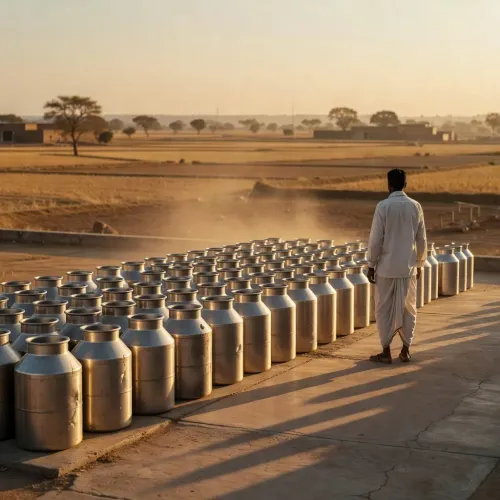
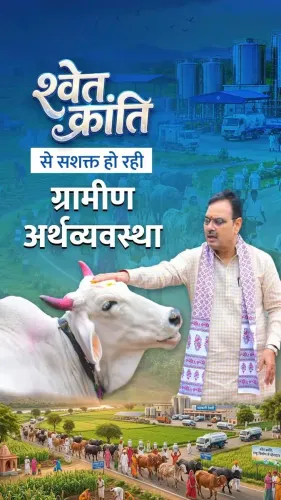
The idea is not new — but the ambition is expanding. India's dairy cooperative model, first proven by Amul and the White Revolution of the 1970s, demonstrated that collective marketing and processing could lift rural incomes at scale. What worked for Gujarat's milk producers has since become a national template. Rajasthan, with one of the country's largest rural populations engaged in animal husbandry, stands to gain significantly if that model is deepened and extended.
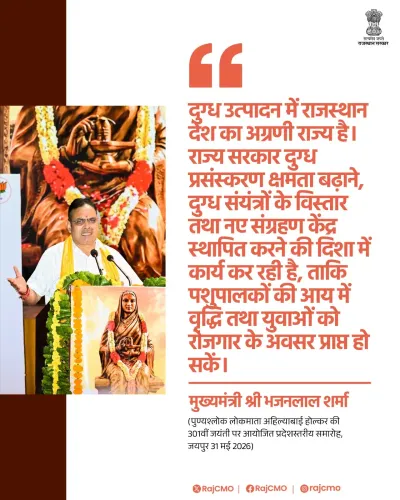
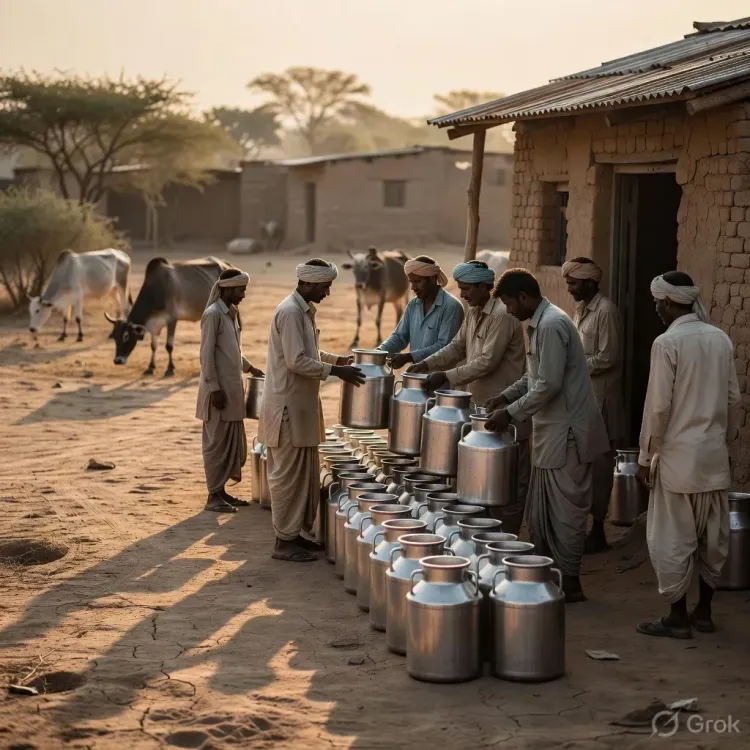
The state's livestock sector — spanning cattle, buffalo, sheep, goat, and camel rearing — underpins millions of livelihoods in semi-arid districts where agriculture alone cannot sustain families. Cooperatives offer a route to collective bargaining, shared infrastructure, and access to formal credit that individual small producers rarely secure on their own.
Shah's Ministry of Cooperation and the National Push
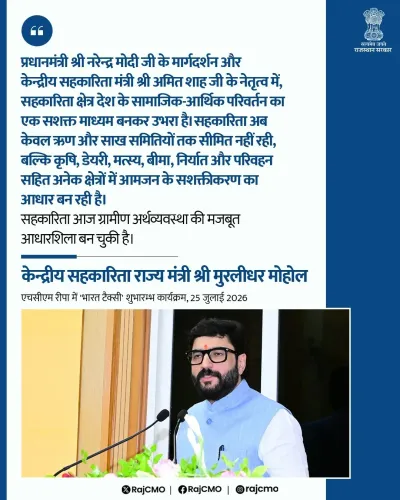
The tagging of Amit Shah is pointed. In July 2021, the Union government created a dedicated Ministry of Cooperation — the first in India's history — with Shah at its helm, specifically to modernise and expand the cooperative sector beyond its traditional strongholds. The ministry's mandate includes financial inclusion, value addition for small producers, and replicating successful frameworks across states that have historically lagged in cooperative penetration.
Rajasthan's public alignment with that national agenda — channelled through the CMO's post — positions the state as an active partner in the Centre's cooperative drive rather than a passive recipient of policy.
What the New Generation Stands to Win
The CMO's reference to 'the new generation' is the sharpest line in the post. Rural youth in Rajasthan face a stark choice: migrate to cities for work, or find viable livelihoods at home. A mature cooperative ecosystem — linking dairy processing, cold-chain logistics, and cooperative credit — could make the second option real. That is the promise embedded in the post, and the one policymakers will be held to as schemes roll out.
The key watchpoints now are fresh budgetary allocations for dairy infrastructure in Rajasthan, the rollout of central cooperative credit schemes in the state's livestock districts, and whether the political signal in this post translates into on-ground institutional momentum.
Rajasthan has long had the livestock — the question is whether it will finally build the cooperative architecture to match.
Point of View
The CMO frames cooperatives as a dual-purpose policy instrument: a poverty-alleviation tool and a rural employment engine. This mirrors a broader BJP governance pattern of projecting cooperative federalism through sectoral ministries. The real test will be whether the rhetoric is followed by concrete dairy infrastructure investment and cooperative credit access in Rajasthan's semi-arid livestock belt.
NationPress
17 Aug 2026
Frequently Asked Questions
What did the Rajasthan CMO say about cooperatives and dairy?
The Chief Minister's Office of Rajasthan stated on 17 August 2026 that cooperatives and the dairy sector have the power to transform the rural economy, improve the lives of poor animal rearers, and open new opportunities for the younger generation.
Why was Amit Shah tagged in the Rajasthan CMO's cooperative post?
Amit Shah heads India's Ministry of Cooperation, created in July 2021 to modernise and expand the cooperative sector nationwide. Tagging him signals Rajasthan's alignment with the Centre's cooperative push.
What is India's Ministry of Cooperation and when was it formed?
The Ministry of Cooperation was established in July 2021, making it India's first dedicated ministry for the sector. Its mandate includes financial inclusion, value addition for small producers, and expanding cooperative frameworks across states.
How important is the dairy and livestock sector to Rajasthan's rural economy?
Rajasthan has one of India's largest rural populations engaged in animal husbandry, including cattle, buffalo, sheep, and goat rearing. Dairy cooperatives are seen as a key route to collective income and formal credit access for small producers.
What is the White Revolution and how does it relate to Rajasthan's cooperative ambitions?
The White Revolution of the 1970s, pioneered by Amul in Gujarat, demonstrated that dairy cooperatives could raise rural incomes at scale through collective marketing and processing. It is now the national template that states like Rajasthan seek to replicate.