Rajasthan CMO directs PHED to fast-track piped water to Sahariya settlements
Synopsis
The Rajasthan Chief Minister's Office on 20 June 2026 directed PHED officials to fast-track Amrut 2.0 and the Parwan Akawad Project to ensure piped drinking water reaches Sahariya PVTG settlements. The move targets one of the state's most vulnerable tribal communities in Baran and Kota districts.
Key Takeaways
The Chief Minister's Office of Rajasthan issued a public directive on 20 June 2026 to PHED officials to expedite two drinking water projects.
The directive specifically targets Sahariya settlements , whose residents are classified as a Particularly Vulnerable Tribal Group (PVTG) .
Two projects are named: Amrut 2.0 (central urban infrastructure mission, approved 2021) and the Parwan Akawad Project (state water supply initiative).
Sahariya communities are concentrated in Baran and Kota districts of Rajasthan and have historically faced acute drinking water scarcity.
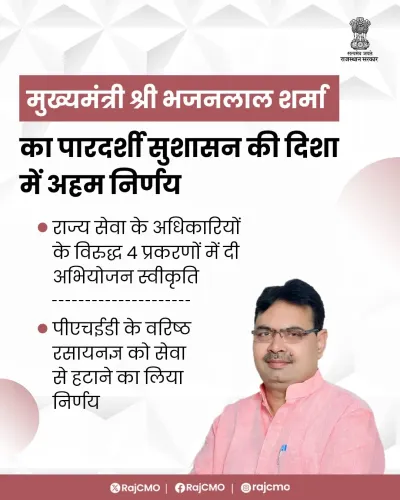
The directive is addressed to Chief Minister Bhajanlal Sharma under the state's #AapnoAgraniRajasthan development branding.
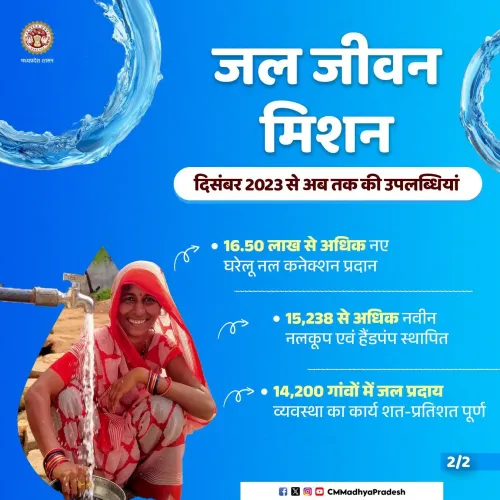
Completion of these projects would also support Rajasthan's Jal Jeevan Mission targets for universal household tap connections.
The Chief Minister's Office of Rajasthan, on Saturday, 20 June 2026, directed officials of the Public Health Engineering Department (PHED) to expedite work on two key drinking water projects to ensure piped water supply reaches Sahariya tribal settlements across the state.
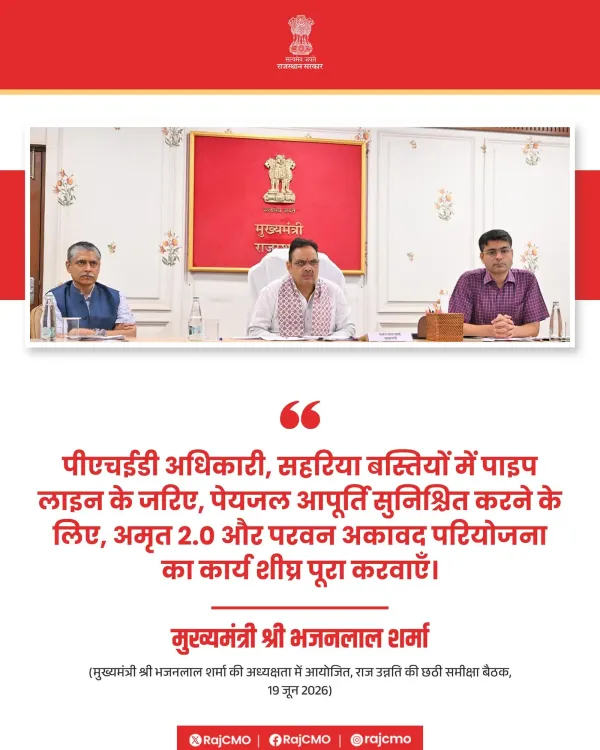
The directive, posted on the official CMO handle and addressed to Chief Minister Bhajanlal Sharma, states: 'PHED adhikari, Sahariya bastiyon mein pipe line ke zariye, peyjal aapurti sunishchit karne ke liye, Amrit 2.0 aur Parwan Akawad Pariyojana ka karya sheeghra poora karwaen' — ('PHED officials must ensure that work on Amrut 2.0 and the Parwan Akawad Project is completed at the earliest to guarantee piped drinking water supply to Sahariya settlements.')
Context
The Sahariya community is classified as a Particularly Vulnerable Tribal Group (PVTG), concentrated primarily in the Baran and Kota districts of Rajasthan. Their habitations have historically faced acute drinking water scarcity, with limited access to safe, piped water supply. The CMO's directive signals a push for time-bound delivery of infrastructure that directly addresses this gap. The instruction comes under the hashtag #AapnoAgraniRajasthan ('Our Pioneering Rajasthan'), the state government's branding for its development agenda under CM Sharma.Policy Backdrop
Amrut 2.0 — the Atal Mission for Rejuvenation and Urban Transformation's second phase — was approved by the central government in 2021 with an expanded mandate covering water supply, sewerage networks, and green spaces across hundreds of additional cities and towns. Rajasthan is a key beneficiary state, with multiple urban and peri-urban projects sanctioned under the mission. The Parwan Akawad Project is a state-level water supply and irrigation initiative targeting specific regions of Rajasthan, including areas with tribal habitations. Rajasthan has run successive phases of drinking water pipeline projects since the 2000s under both central and state schemes to reach arid and tribal pockets, and the Parwan Akawad Project represents a continuation of this lineage. The PHED is the nodal Rajasthan government agency responsible for designing, executing, and maintaining drinking water pipelines and sanitation infrastructure across the state.Stakeholders and Impact
The primary beneficiaries of this directive are Sahariya PVTG families in districts such as Baran and Kota, who stand to gain reliable, piped drinking water — a basic entitlement that has remained elusive for many households in these communities. PHED field engineers and project contractors are the immediate actors tasked with accelerating execution. Beyond the Sahariya community, the directive reflects a broader state commitment to aligning with central tribal welfare guidelines that mandate prioritised infrastructure delivery to PVTG habitations. Completion of these projects would also contribute to Rajasthan's targets under the Jal Jeevan Mission, the central scheme aiming for universal household tap connections.What's Next
The CMO's public directive to PHED is a signal that the state government intends to monitor project timelines closely. Completion reports for Amrut 2.0 projects are submitted to the Ministry of Housing and Urban Affairs, making progress a matter of both state accountability and central review. Any state budget allocations for the Parwan Akawad Project in the 2026-27 financial year will be a key indicator of how seriously the government pursues this commitment. If the directive is followed by formal project reviews or on-ground inspections, it could accelerate delivery timelines for one of Rajasthan's most vulnerable communities.Point of View
The administration creates a visible benchmark against which delivery can be measured. Rajasthan governments across party lines have long used central missions like Amrut and Jal Jeevan Mission as vehicles to extend last-mile infrastructure to PVTG habitations, but execution gaps have persisted. The Bhajanlal Sharma government's focus on Sahariya settlements aligns with central tribal welfare mandates that require prioritised infrastructure for PVTGs, suggesting this is as much about compliance with national frameworks as it is about state-level political signalling. Whether the directive translates into on-ground acceleration will depend on PHED's project management capacity and the pace of fund releases in the 2026-27 budget cycle.
NationPress
20 Jun 2026
Frequently Asked Questions
What is the Parwan Akawad Project in Rajasthan?
The Parwan Akawad Project is a Rajasthan state water supply and irrigation initiative designed to extend drinking water access to specific regions of the state, including tribal habitations. It works alongside central missions to provide piped water to underserved communities.
Who are the Sahariya people and where do they live in Rajasthan?
The Sahariya are a Particularly Vulnerable Tribal Group (PVTG) in Rajasthan, primarily inhabiting the Baran and Kota districts. They are among the most economically and socially marginalised communities in the state and have historically lacked access to basic infrastructure including safe drinking water.
What is Amrut 2.0 and how does it help tribal areas?
Amrut 2.0 is the second phase of the central government's Atal Mission for Rejuvenation and Urban Transformation, approved in 2021. It funds water supply, sewerage, and green space projects in cities and towns, and Rajasthan is using it partly to extend piped water to peri-urban and tribal settlements.
What is PHED in Rajasthan?
PHED stands for Public Health Engineering Department, the Rajasthan government agency responsible for planning, constructing, and maintaining drinking water pipelines and sanitation infrastructure across the state.
What did the Rajasthan CMO post on 20 June 2026?
The Chief Minister's Office of Rajasthan posted a directive on 20 June 2026 instructing PHED officials to expedite work on the Amrut 2.0 and Parwan Akawad projects to ensure piped drinking water supply to Sahariya tribal settlements at the earliest.