Rajasthan CMO hails state as cooperative innovation model
Synopsis
The Chief Minister's Office of Rajasthan on 26 July 2026 declared the state a national exemplar in cooperative innovation, saying its model is worth replicating across India — a claim rooted in the post-2021 push to modernise the cooperative sector.
Key Takeaways
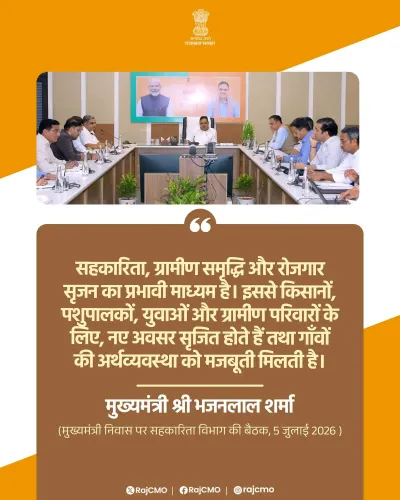
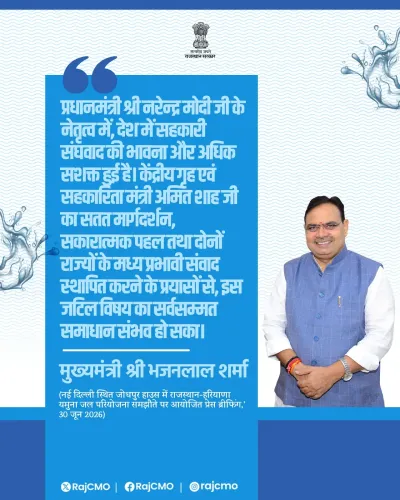
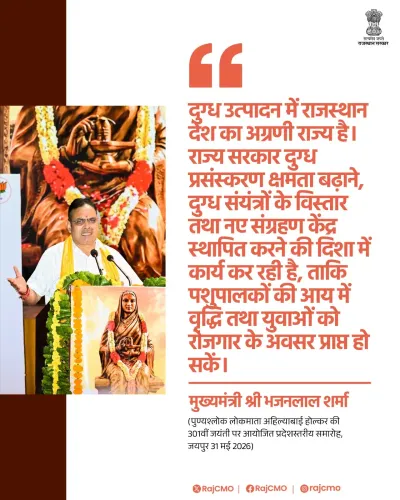
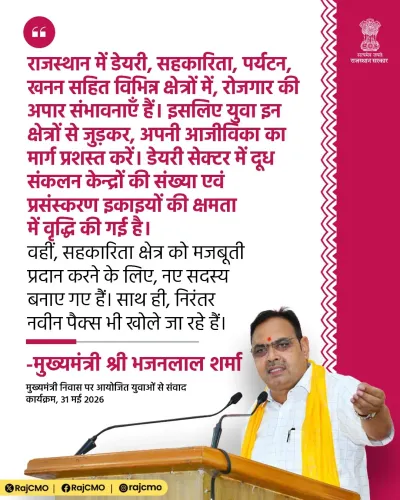
The Chief Minister's Office of Rajasthan declared on 26 July 2026 that the state has emerged as an ideal national model for cooperative innovations.
The CMO called Rajasthan's cooperative approach worthy of emulation by other Indian states.
The statement was shared under the hashtag #AapnoAgraniRajasthan , part of a broader state development branding effort.
India's Ministry of Cooperation , established in July 2021 , has catalysed competitive cooperative reforms across states, providing the backdrop for Rajasthan's claim.
Key beneficiaries include rural farmers who depend on cooperative societies for credit, dairy marketing, and agricultural inputs.
Specific details of the innovations cited are expected to follow in subsequent official announcements.
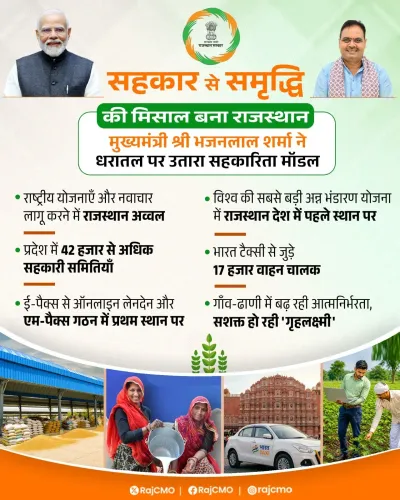
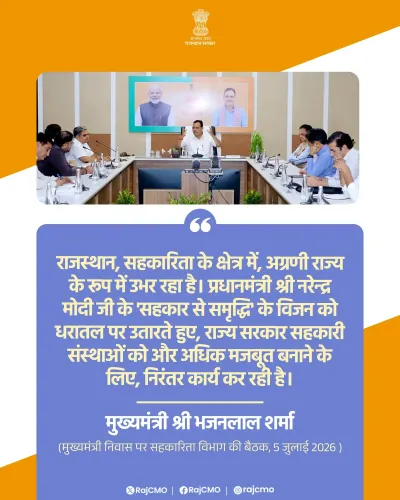
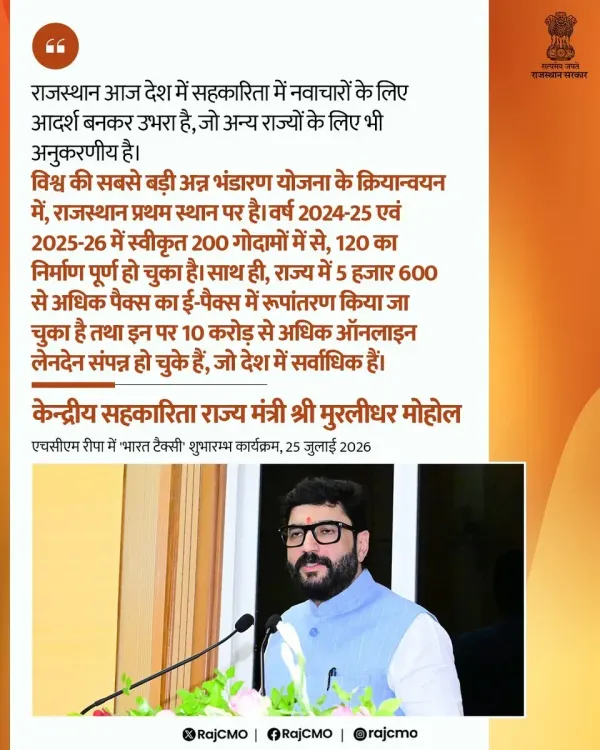
The Chief Minister's Office of Rajasthan declared on Sunday, 26 July 2026 that Rajasthan has emerged as an ideal model in cooperative innovation at the national level, calling the state's approach worthy of emulation by other states across India.
The post, shared on the official CMO handle, stated: 'Rajasthan aaj desh mein sahkarita mein navaacharon ke liye adarsh bankar ubhra hai, jo anya raajyon ke liye bhi anukarneeya hai' — meaning, 'Rajasthan has today emerged as an ideal in cooperative innovations in the country, and is worth emulating for other states as well.' The message was accompanied by the hashtag #AapnoAgraniRajasthan ('Our Leading Rajasthan'), signalling a broader branding push around the state's development narrative.
Context
Rajasthan is India's largest state by area and has a predominantly rural economy where cooperative societies have long served as the primary vehicles for agricultural credit, dairy marketing, and input supply. The state's cooperative framework traces its legal roots to the Cooperative Credit Societies Act of 1904, later reinforced by the Rajasthan Cooperative Societies Act. The CMO's claim positions the state as a front-runner in a sector that directly touches millions of farming households.
Policy Backdrop
The Central Government established a dedicated Ministry of Cooperation in July 2021 — the first such standalone ministry in independent India — with a mandate to modernise the cooperative sector through digital tools, improved governance, and state-level coordination. Since then, several states have accelerated reforms, creating a competitive policy environment sometimes described as cooperative federalism in action. Rajasthan's assertion of being an 'ideal model' places it squarely within this national race to demonstrate best practices in cooperative governance.
Efforts in this domain have typically focused on expanding rural credit access, integrating dairy and agricultural value chains, reducing dependence on middlemen, and digitising cooperative records and transactions. The CMO's statement suggests Rajasthan considers its innovations in at least some of these areas to be replicable at a national scale.
Stakeholders and Impact
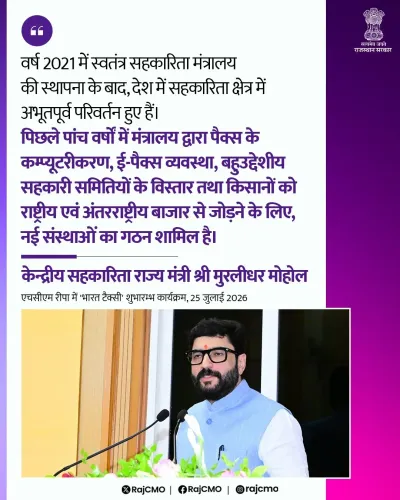
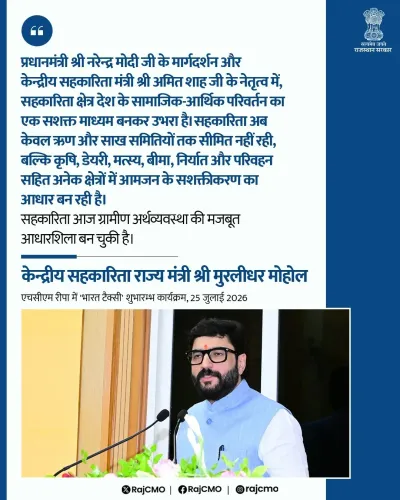
The primary beneficiaries of a well-functioning cooperative ecosystem in Rajasthan are its rural farming communities, who rely on Primary Agricultural Credit Societies and dairy cooperatives for affordable credit and market linkages. Strengthening these institutions can reduce indebtedness to informal moneylenders and improve income stability for smallholder farmers. The post's tagging of a public official — @mohol_murlidhar — suggests coordination with or acknowledgement of a central or state-level stakeholder in the cooperative policy space, though the individual's precise role could not be independently confirmed from available records.
Other Indian states watching Rajasthan's cooperative trajectory may look to replicate specific digital or institutional innovations, particularly as the Ministry of Cooperation continues to push for standardised reforms across state cooperative laws.
What's Next
Attention will now turn to whether Rajasthan formalises its cooperative innovations through new policy announcements, legislation, or participation in national cooperative conferences and award processes. The #AapnoAgraniRajasthan campaign framing indicates the government intends to sustain this narrative as part of a wider governance showcase ahead of any upcoming political or policy milestones. Concrete details of the specific innovations being cited — whether in digital platforms, credit delivery, or value-chain integration — are expected to follow in subsequent official communications.
Point of View
The state government is staking a claim in a policy domain with direct electoral resonance among rural and farming communities. The hashtag-driven framing suggests this is as much a governance communication strategy as a policy announcement, designed to consolidate the state's image ahead of potential political milestones. Absent specific data on the innovations cited, the statement functions as a signal of intent — one that will need to be backed by verifiable outcomes to carry lasting credibility.
NationPress
26 Jul 2026
Frequently Asked Questions
What did the Rajasthan CMO say about cooperatives on 26 July 2026?
The Chief Minister's Office of Rajasthan declared that the state has emerged as an ideal national model for cooperative innovation and that its approach is worth emulating by other Indian states.
Why is cooperative innovation important for Rajasthan?
Rajasthan has a large rural economy where cooperative societies are critical for providing agricultural credit, dairy marketing, and input supply to smallholder farmers, making cooperative reform a high-impact policy area.
What is India's Ministry of Cooperation and when was it created?
The Ministry of Cooperation is a Central Government ministry established in July 2021, the first such dedicated ministry in independent India, created to modernise and strengthen the cooperative sector across states.
What does the hashtag AapnoAgraniRajasthan mean?
'Aapno Agrani Rajasthan' translates from Hindi and Rajasthani as 'Our Leading Rajasthan,' and is used by the state government as part of its broader development and governance branding campaign.
How does Rajasthan's cooperative model compare to other Indian states?
Several Indian states have intensified cooperative reforms since 2021, but the Rajasthan CMO's post positions the state as a front-runner whose specific innovations in governance, credit delivery, or digital integration are replicable nationally — though detailed comparative data has not yet been officially published.