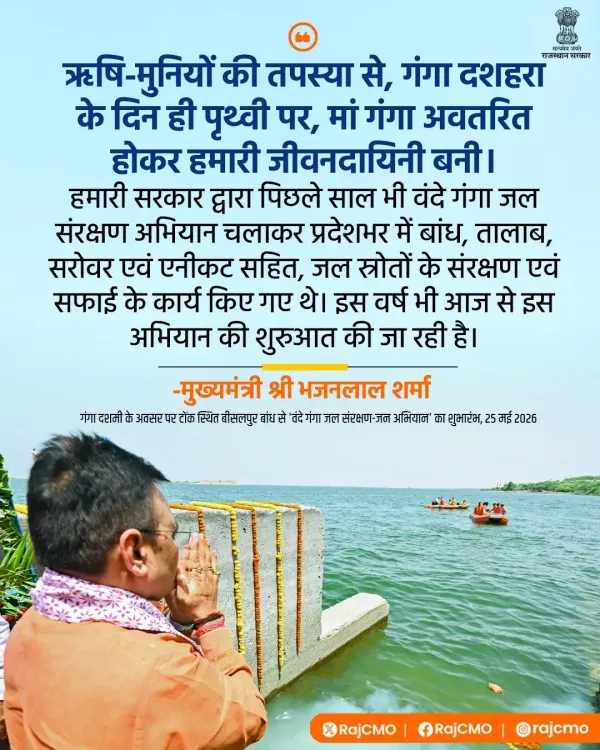
Rajasthan CM Office highlights Vande Ganga water conservation drive
Synopsis
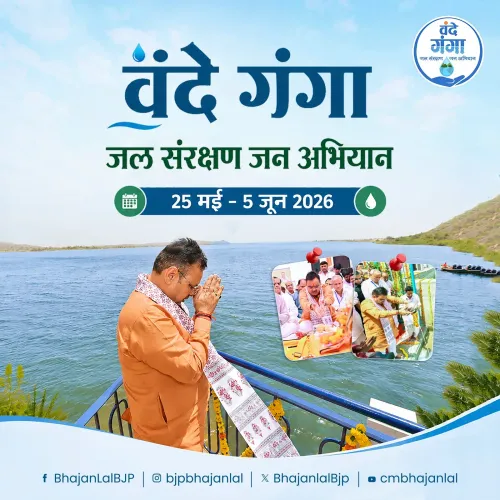
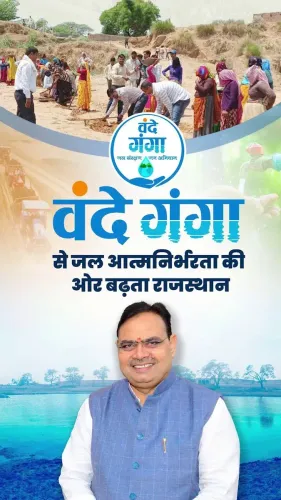
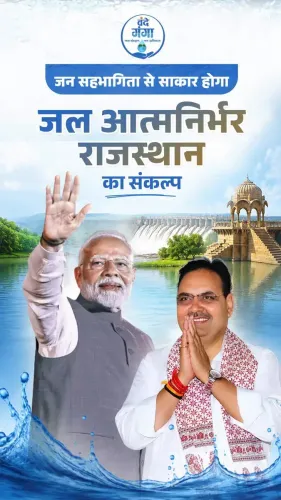
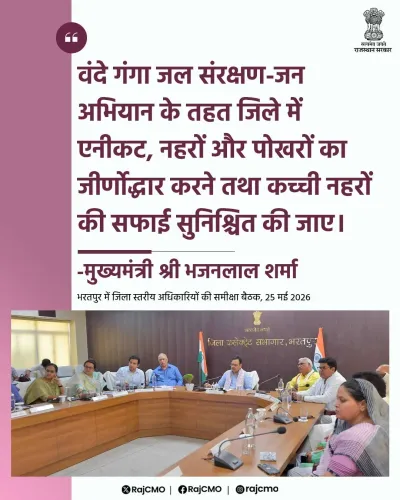
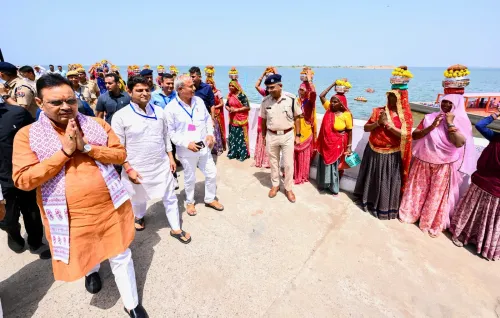
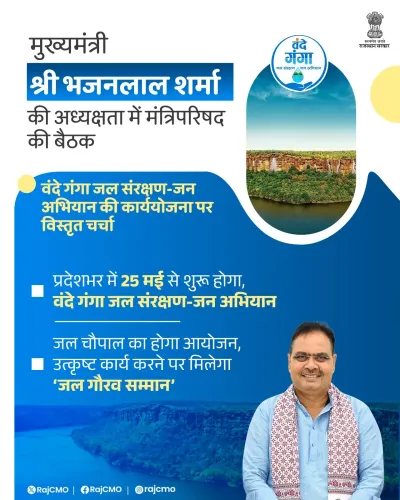
The Chief Minister's Office of Rajasthan highlighted the Vande Ganga Jal Sanrakshan Abhiyan, a recurring state campaign that last year cleaned and conserved dams, ponds, lakes, and anicuts across the water-scarce state. The post signals a likely 2026 edition ahead of the monsoon season.
Key Takeaways
The Chief Minister's Office of Rajasthan confirmed that the Vande Ganga Jal Sanrakshan Abhiyan was conducted last year across the state.
The campaign covered conservation and cleaning of dams, ponds, lakes, and anicuts — key surface-water structures in an arid state.
Chief Minister Bhajan Lal Sharma has led the BJP government in Rajasthan since December 2023 .
Rajasthan has a decades-long policy lineage in water conservation, including the Mukhya Mantri Jal Swavalamban Abhiyan of 2016 .
The post, published in late May 2026 , signals the likely launch of a 2026 edition of the campaign ahead of the monsoon.
Primary beneficiaries are farmers and rural communities in water-stressed districts across the state.
The Chief Minister's Office of Rajasthan on Monday, 25 May 2026 recalled the state government's Vande Ganga Jal Sanrakshan Abhiyan, noting that the campaign was conducted last year across the state to conserve and clean water sources including dams, ponds, lakes, and anicuts.
Context
The post, attributed to the office of Chief Minister Bhajan Lal Sharma, states in Hindi: 'हमारी सरकार द्वारा पिछले साल भी, वंदे गंगा जल संरक्षण अभियान चलाकर प्रदेशभर में बांध, तालाब, सरोवर एवं एनीकट सहित जल स्रोतों के संरक्षण एवं सफाई के कार्य किए गए थे' — meaning, 'Our government, last year as well, ran the Vande Ganga Jal Sanrakshan Abhiyan and carried out conservation and cleaning work on water sources including dams, ponds, lakes, and anicuts across the state.' The reference to 'last year as well' signals that the campaign is a recurring state initiative rather than a one-off drive.
Policy Backdrop
Rajasthan, a largely arid state in western India, faces chronic water scarcity compounded by low and erratic rainfall. The state has a long tradition of relying on traditional water bodies — locally called talabs, johads, and baoris — for drinking water, irrigation, and livestock. Successive governments have built policy around reviving these structures, most notably through the Mukhya Mantri Jal Swavalamban Abhiyan launched in 2016, which focused on village-level water harvesting and conservation infrastructure.
The Vande Ganga Jal Sanrakshan Abhiyan, taken up by the Bhajan Lal Sharma-led BJP government that came to power in December 2023, continues this lineage. The campaign targets dams, ponds, lakes, and anicuts — small check dams used to arrest runoff — for both structural conservation work and community-level cleaning drives. The hashtag #आपणो_अग्रणी_राजस्थान ('Our Leading Rajasthan') frames the effort within the government's broader brand of developmental governance.
Stakeholders and Impact
Farmers and rural communities across Rajasthan are the primary beneficiaries of water-body restoration. Functional ponds and anicuts recharge groundwater, reduce dependence on erratic monsoon flows, and support kharif and rabi crops in rain-shadow districts. Community participation in cleaning drives also builds local ownership of water infrastructure, a model that has shown durable results in states with similar agro-climatic conditions.
Anicuts, in particular, play a critical role in districts such as Barmer, Jalore, and Pali, where surface water retention is the primary buffer against drought. The campaign's statewide scale — covering dams, lakes, and smaller structures simultaneously — reflects the scale of the challenge Rajasthan faces in managing its finite water resources.
What's Next
The CMO's post, coming in late May 2026, arrives just ahead of the southwest monsoon season, when water-body preparedness becomes operationally critical. The framing of the campaign as a recurring annual effort suggests the government intends to run a 2026 edition of the Vande Ganga Abhiyan. Observers will watch for official announcements on the scope of this year's drive, any new budget allocations for water-body works in the state, and measurable targets such as the number of structures covered or volume of silt removed.
Rajasthan's experience with large-scale water conservation campaigns is increasingly cited as a reference point for other water-stressed Indian states, and the continuity of such programmes under successive governments underlines their political and administrative salience.
Point of View
The government is laying the groundwork for announcing a 2026 edition of the Vande Ganga Abhiyan, keeping the water-conservation narrative alive in public discourse. For the Bhajan Lal Sharma administration, water security is both a governance imperative and a political asset in a state where drought and agrarian distress have historically shaped electoral outcomes. The recurring nature of the campaign also reflects a broader BJP state-government strategy of branding welfare and infrastructure work under memorable, culturally resonant names. Whether the 2026 drive translates into measurable improvements in water-body storage capacity will be the real test of the programme's depth beyond optics.
NationPress
14 Sept 2026
Frequently Asked Questions
What is the Vande Ganga Jal Sanrakshan Abhiyan in Rajasthan?
The Vande Ganga Jal Sanrakshan Abhiyan is a Rajasthan state government campaign to conserve and clean water sources including dams, ponds, lakes, and anicuts (small check dams) across the state. It was conducted last year under the Bhajan Lal Sharma-led BJP government and is expected to be held again in 2026.
Who is Bhajan Lal Sharma?
Bhajan Lal Sharma is the Chief Minister of Rajasthan, heading the BJP government that came to power in December 2023. His office posted about the Vande Ganga Jal Sanrakshan Abhiyan on 25 May 2026.
Why does Rajasthan focus so much on water conservation?
Rajasthan is a largely arid state in western India that faces chronic water scarcity due to low and erratic rainfall. The state depends heavily on traditional water bodies such as ponds and anicuts for drinking water, irrigation, and livestock, making conservation campaigns critical.
What is an anicut and why is it important in Rajasthan?
An anicut is a small check dam built across a stream or seasonal river to arrest surface runoff and recharge groundwater. In water-stressed Rajasthan districts such as Barmer, Jalore, and Pali, anicuts are a primary buffer against drought and support both farming and drinking water needs.
What was the Mukhya Mantri Jal Swavalamban Abhiyan?
The Mukhya Mantri Jal Swavalamban Abhiyan was a Rajasthan government scheme launched in 2016 to promote village-level water harvesting and conservation structures. The Vande Ganga Jal Sanrakshan Abhiyan continues this long-standing state policy lineage of restoring traditional water bodies.