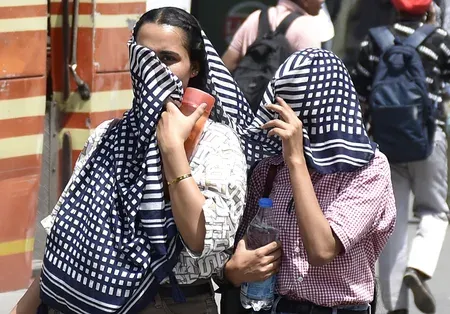
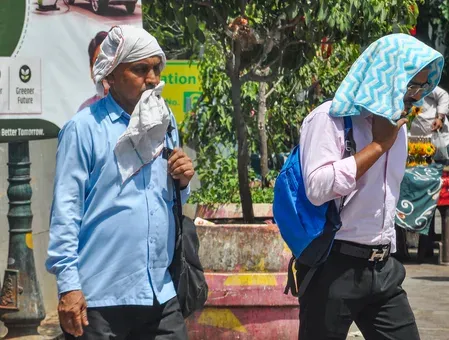
Rajasthan heat wave: Sri Ganganagar hits 47°C, Orange Alert issued for 2-3 days
Synopsis
Sri Ganganagar has hit 47°C and border areas of western Rajasthan could touch 48°C on 27–28 May — among the most extreme readings in the country right now. An IMD Orange Alert covers large parts of the state, with warm nights compounding the danger for vulnerable groups. The only relief in sight is a Western Disturbance due from 28 May that could cut temperatures by 2–3°C from the 29th.
Key Takeaways
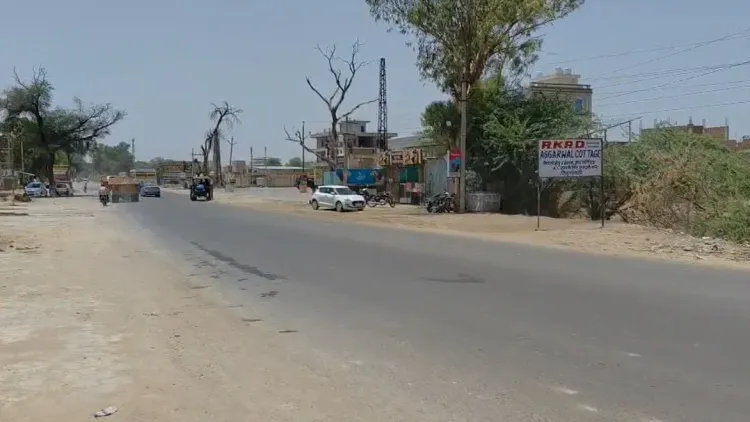
Sri Ganganagar recorded Rajasthan's highest maximum temperature of 47°C on 27 May .
IMD has issued an Orange Alert for severe heat and warm night conditions for the next 2–3 days .
Border regions of western Rajasthan may touch 48°C on 27–28 May .
Vulnerable groups — children , senior citizens , and those with pre-existing conditions — face heightened heat stress risk.
A Western Disturbance is expected to bring thunderstorms and gusty winds of 60–70 kmph from 28 May .
Temperatures forecast to drop by 2–3°C from 29 May , offering relief across seven divisions.
Rajasthan is enduring a severe heat wave, with Sri Ganganagar recording the highest maximum temperature of 47 degrees Celsius in the 24 hours to 27 May, according to the India Meteorological Department (IMD), Jaipur. The state-wide heat emergency has prompted an Orange Alert for severe heat and warm night conditions across large parts of Rajasthan for the next two to three days.
Temperature Extremes Across the State
Kota logged the highest minimum temperature at 33.6 degrees Celsius, while Sirohi recorded the coolest night at 22.8 degrees Celsius. Across most districts, maximum temperatures are expected to remain between 44 degrees Celsius and 46 degrees Celsius through 28 May.
In isolated pockets of the Bikaner, Kota, and Shekhawati divisions, readings may climb further to 46–47 degrees Celsius. The most intense conditions are concentrated along the border regions of western Rajasthan, where temperatures could touch 48 degrees Celsius on 27 and 28 May, according to Radhshyam Sharma, Director, IMD Jaipur.
Health Risks and Vulnerable Groups
The IMD has specifically flagged warm night conditions as an aggravating factor, warning that sustained overnight heat will intensify heat stress and discomfort — particularly for children, senior citizens, and individuals with pre-existing health conditions. Authorities have advised citizens to take necessary precautions and remain alert to rapidly changing weather.
This comes amid a broader pattern of increasingly severe pre-monsoon heat across northwest India, where desert geography and dry westerly winds routinely push temperatures to extreme levels in May.
Relief on the Horizon: Western Disturbance Approaching
A new Western Disturbance is expected to bring partial relief. The IMD has forecast the onset of thunderstorm and rainfall activity in parts of Rajasthan beginning 28 May, with the weather system's impact intensifying between 29 and 31 May.
The approaching system is likely to trigger strong dust storms and gusty winds reaching speeds of 60–70 kmph, along with isolated rainfall across the Jaipur, Bharatpur, Kota, Ajmer, Udaipur, Jodhpur, and Bikaner divisions.
Temperature Drop Expected from 29 May
According to the IMD, the combined effect of thunderstorms and rainfall is projected to lower temperatures by 2–3 degrees Celsius from 29 May onwards, offering significant relief from the current heat wave. Citizens have been urged to remain vigilant for rapidly changing conditions, including sudden dust storms and high-speed winds, even as cooler days approach.
Point of View
Yet state-level heat action plans remain patchy and under-resourced. The incoming Western Disturbance offers short-term relief, but the structural question — how Rajasthan prepares its health infrastructure for a lengthening heat season — remains unanswered.
NationPress
20 Sept 2026
Frequently Asked Questions
Which district recorded the highest temperature in Rajasthan on 27 May?
Sri Ganganagar recorded Rajasthan's highest maximum temperature of 47 degrees Celsius in the 24 hours to 27 May, according to the IMD. Border areas of western Rajasthan could touch 48 degrees Celsius on 27 and 28 May.
What does the IMD Orange Alert for Rajasthan mean?
An Orange Alert issued by the India Meteorological Department signals severe heat wave conditions requiring preparedness and caution. It covers large parts of Rajasthan for two to three days and warns of both extreme daytime highs and warm night conditions that heighten heat stress.
When will the heat wave in Rajasthan ease?
The IMD forecasts that a Western Disturbance will bring thunderstorms and rainfall from 28 May, with temperatures expected to fall by 2–3 degrees Celsius from 29 May onwards. The most significant relief is expected between 29 and 31 May.
Which divisions of Rajasthan will be affected by dust storms and rain?
The IMD has identified the Jaipur, Bharatpur, Kota, Ajmer, Udaipur, Jodhpur, and Bikaner divisions as likely to experience strong dust storms, gusty winds of 60–70 kmph, and isolated rainfall between 29 and 31 May.
Who is most at risk during the Rajasthan heat wave?
The IMD has specifically warned that children, senior citizens, and individuals with pre-existing health conditions face the greatest risk from the current heat wave. Warm night conditions are expected to intensify heat stress, reducing the body's ability to recover overnight.