Rajasthan CM Backs ODOP and Panch Gaurav to Lift Local Producers
Synopsis
The Chief Minister's Office of Rajasthan spotlighted the One District One Product and Panch Gaurav schemes on August 12, 2026, framing them as the state's twin engines for promoting local artisans, rural producers, and MSMEs under CM Bhajan Lal Sharma's BJP government.
Key Takeaways
Rajasthan's CMO highlighted One District One Product (ODOP) and Panch Gaurav as active schemes promoting local products, posted on August 12, 2026 .
ODOP originated in Uttar Pradesh in 2018 and was scaled nationally to support MSMEs and export growth under the Atmanirbhar Bharat framework.
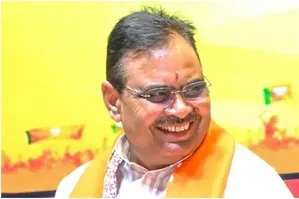
CM Bhajan Lal Sharma , in office since December 2023 , has aligned Rajasthan's state initiatives with central ODOP guidelines.
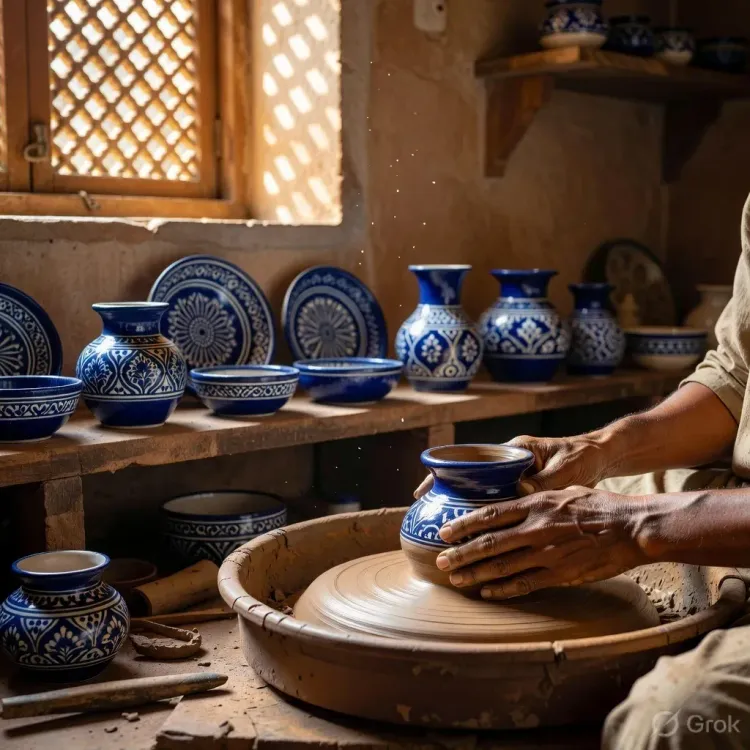
Rajasthan's artisanal strengths — blue pottery, Kota Doria textiles, Jodhpur furniture — make it a natural fit for district-level product specialisation.
Key metrics to watch: state budget allocations for ODOP clusters and integration with central export promotion schemes.
Rajasthan's artisans and rural producers are getting a policy spotlight. The Chief Minister's Office of Rajasthan posted on Wednesday, August 12, 2026, highlighting how schemes like One District One Product (ODOP) and Panch Gaurav are being used to champion locally made goods across the state, tagging Chief Minister Bhajan Lal Sharma in the message.
The post, shared under the hashtag #आपणो_अग्रणी_राजस्थान ('Our Leading Rajasthan'), captures the state government's stated push to make every district an economic identity in itself — not just a dot on a map, but a brand.
ODOP: From Lucknow to Jaipur — A Scheme That Travels
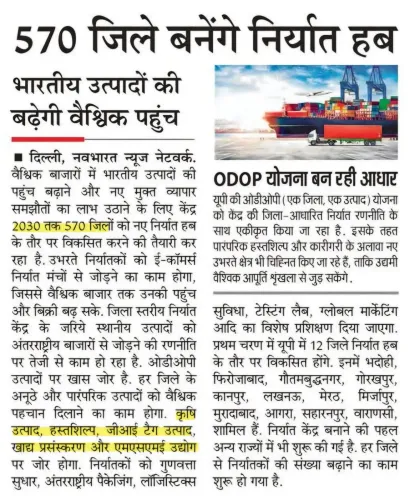
One District One Product has a clear lineage. Uttar Pradesh piloted the idea in 2018, matching each district to its most distinctive product — be it Varanasi silk, Agra leather, or Moradabad brassware. The model worked well enough that the central government scaled it nationally, weaving it into the broader Atmanirbhar Bharat self-reliance framework to boost MSMEs and export volumes.
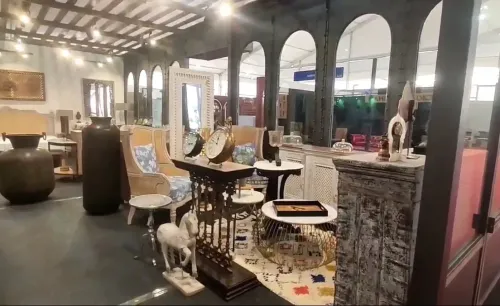
Rajasthan, with its deep artisanal heritage — blue pottery, Kota Doria textiles, Jodhpur furniture, Bikaner papads — sits squarely in ODOP's sweet spot. The state's BJP government under CM Bhajan Lal Sharma, in power since December 2023, has aligned itself with central ODOP guidelines as part of a wider rural economy push.
Panch Gaurav: Rajasthan's Own Layer
Alongside ODOP, the CMO's post specifically names the Panch Gaurav scheme as a vehicle for promoting local products. While granular implementation details of Panch Gaurav remain to be officially documented, the name — meaning 'Five Prides' — signals a state-level framework designed to celebrate and commercialise Rajasthan's distinct cultural and economic assets.
Together, these two schemes represent a layered approach: a national backbone (ODOP) reinforced by a state-specific identity push (Panch Gaurav), aimed at giving local producers both a platform and a market.
What Local Artisans and MSMEs Stand to Gain
The real beneficiaries are the weavers, potters, food processors, and small manufacturers spread across Rajasthan's 50 districts. ODOP's design connects them to export promotion clusters, packaging support, and government procurement channels — pathways that were historically difficult for micro-enterprises to access on their own.
The question now is whether state budget allocations will back the rhetoric: dedicated ODOP cluster funding, integration with central export promotion schemes, and district-level product exhibitions are the metrics that will separate intent from impact.
Rajasthan has the raw material — centuries of craft tradition and a geography that produces everything from spices to semi-precious stones. Whether ODOP and Panch Gaurav can convert that heritage into sustained economic output for rural producers is the test CM Sharma's government has set for itself.
Point of View
Then localise it with a state-branded wrapper to claim credit at both levels. The real policy test will come in budget cycles — whether ODOP cluster funding in Rajasthan keeps pace with the rhetoric, and whether Panch Gaurav develops a verifiable implementation track record beyond the hashtag.
NationPress
26 Sept 2026
Frequently Asked Questions
What is the One District One Product scheme in Rajasthan?
One District One Product (ODOP) is a central government initiative that identifies and promotes one unique product per district to boost local MSMEs and exports. Rajasthan participates in this national scheme, leveraging its artisanal products like blue pottery, Kota Doria textiles, and Jodhpur furniture.
What is the Panch Gaurav scheme in Rajasthan?
Panch Gaurav, meaning 'Five Prides,' is a Rajasthan state-level scheme aimed at promoting the state's distinct cultural and economic products. It works alongside ODOP to give local producers a platform and market access, though detailed implementation specifics are still emerging.
Who is Bhajan Lal Sharma?
Bhajan Lal Sharma is the Chief Minister of Rajasthan, a BJP politician who assumed office in December 2023. His government has aligned state economic initiatives with central schemes like ODOP under the Atmanirbhar Bharat framework.
Where did the ODOP scheme originate?
ODOP originated in Uttar Pradesh in 2018 and was subsequently adopted at the national level to support district-level product specialisation, MSME growth, and export promotion across India.
How does ODOP benefit local artisans in Rajasthan?
ODOP connects local artisans and small manufacturers to export promotion clusters, packaging support, and government procurement channels — giving micro-enterprises access to markets and institutional support they would otherwise find difficult to reach independently.