Rajnath Singh invokes Operation Sindoor at ADMM-Plus meet
Synopsis
Union Defence Minister Rajnath Singh invoked Operation Sindoor at the ADMM-Plus forum on 29 October 2026, positioning India's ground-tested counter-terrorism record as a shared asset for building a safer Indo-Pacific alongside ASEAN dialogue partners.
Key Takeaways
Rajnath Singh addressed the ADMM-Plus forum on 29 October 2026 , citing India's decades of operational counter-terrorism experience.
Operation Sindoor was highlighted as proof of India's resolve to dismantle terrorist infrastructure and confront state-sponsored terrorism.
India has been a dialogue partner in ADMM-Plus since the forum expanded to include non-ASEAN members around 2010 .
Singh committed India to sharing its counter-terrorism experience with ADMM-Plus partners to build a safer Indo-Pacific .
The statement follows a pattern linking India's domestic operational record to multilateral Indo-Pacific security goals, established since the 2016 surgical strikes and 2019 Balakot operation .
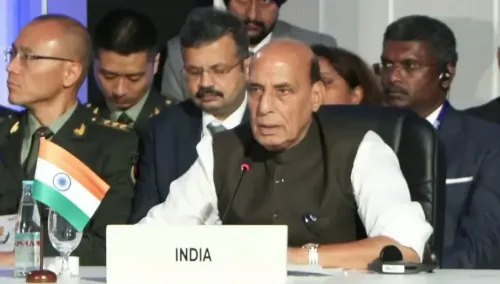
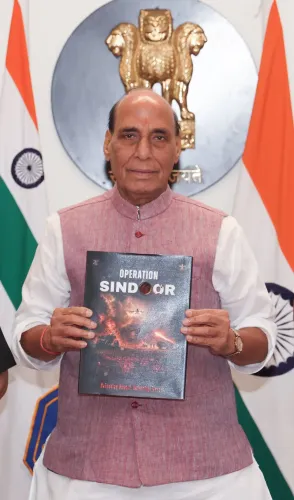
India's fight against terrorism has never been a classroom argument — it has been tested in the field, and Union Defence Minister Rajnath Singh made that point sharply at the ADMM-Plus forum on Thursday, 29 October 2026, citing Operation Sindoor as proof that India will dismantle terrorist infrastructure and confront state-sponsored terrorism without hesitation.
Operation Sindoor: India's message to the world
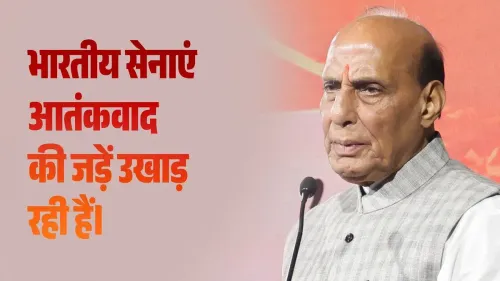
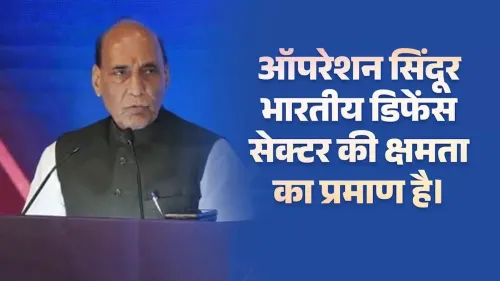
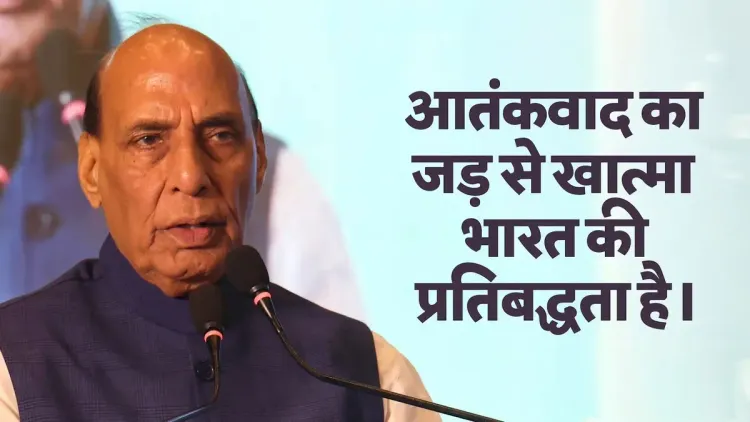
In his post, Rajnath Singh stated — 'आतंकवाद के खिलाफ भारत की लड़ाई केवल सैद्धांतिक नहीं' — 'India's fight against terrorism is not merely theoretical, but has been strengthened by decades of ground-level experience and successful operations.' He pointed specifically to Operation Sindoor, describing it as an action that 'dismantled the terrorist architecture and placed India's firm resolve against state-sponsored terrorism before the world.'
The invocation of a named, executed operation — rather than a doctrinal statement — is deliberate. India has consistently sought to distinguish its counter-terrorism posture as evidence-based: built on operational track records, not just policy papers. That framing now travels into a multilateral arena where ASEAN and its partners set the table for Indo-Pacific security norms.
ADMM-Plus: the forum India is addressing
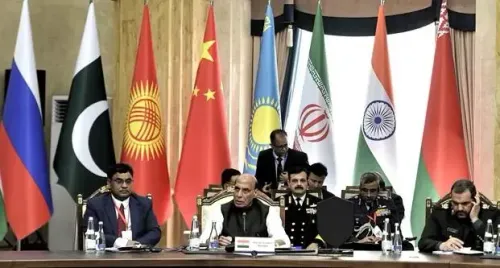
The ASEAN Defence Ministers' Meeting Plus (ADMM-Plus) brings together defence establishments from across ASEAN's ten member states and eight dialogue partners — India among them since the forum expanded to include such partners around 2010. It is one of the region's highest-level multilateral defence platforms, covering non-traditional security threats including counter-terrorism, maritime security, and humanitarian assistance.
For India, ADMM-Plus is a strategic venue: it allows New Delhi to shape regional security norms, build interoperability with Southeast and East Asian partners, and project its own operational credibility. Rajnath Singh signalled that India is not arriving merely as a participant — it is arriving with lessons learned.
Sharing experience for a stable Indo-Pacific
The minister's post closed with a forward-looking commitment: India is 'dedicated to building a safer, stable, and peaceful Indo-Pacific by sharing this experience with its ADMM-Plus partners.' That language ties a domestic counter-terrorism operation directly to the broader regional security architecture — a linkage India has been making with increasing confidence since the 2016 surgical strikes and the 2019 Balakot operation.
The logic is straightforward: partners building joint counter-terrorism frameworks benefit most from a member who has actually run the operations. India is positioning that institutional memory as a collective asset for the Indo-Pacific, not a bilateral bargaining chip.
The next scheduled ADMM-Plus ministerial interaction on counter-terrorism cooperation will be the real test — whether India's operational narrative converts into joint doctrine, shared protocols, or new bilateral defence arrangements with partners across the region.
Point of View
New Delhi is now offering operational expertise as a regional public good. Naming Operation Sindoor in a multilateral forum converts a bilateral grievance into a credibility asset, signalling that India expects its counter-terrorism doctrine to inform Indo-Pacific norms. This positions India not merely as a rule-follower in ASEAN-centred institutions but as a norm-shaper — a strategic ambition the government has been building toward since the post-Balakot period. The real dividend, however, will only crystallise if ADMM-Plus produces concrete joint frameworks rather than diplomatic communiqués.
NationPress
29 Oct 2026
Frequently Asked Questions
What is Operation Sindoor?
Operation Sindoor is a counter-terrorism operation cited by Defence Minister Rajnath Singh as having dismantled terrorist infrastructure and demonstrated India's resolve against state-sponsored terrorism. Specific operational details have not been independently confirmed from publicly available records.
What is ADMM-Plus and why does India participate?
ADMM-Plus — the ASEAN Defence Ministers' Meeting Plus — is a multilateral platform for defence cooperation among ASEAN nations and eight dialogue partners, including India. India joined as a dialogue partner around 2010 and uses the forum to build regional security cooperation and project its defence capabilities.
What did Rajnath Singh say about India's counter-terrorism fight?
Rajnath Singh stated that India's fight against terrorism is not merely theoretical but has been strengthened by decades of ground-level experience and successful operations, specifically citing Operation Sindoor as evidence of India's resolve against state-sponsored terrorism.
How does India link its counter-terrorism operations to Indo-Pacific security?
India has consistently argued, including in forums like ADMM-Plus, that its operational counter-terrorism record — from surgical strikes to named operations — provides concrete experience that strengthens collective security across the Indo-Pacific region.
What could India's next steps be at ADMM-Plus on counter-terrorism?
Defence analysts will watch India's interventions at the next ADMM-Plus ministerial meeting to see whether New Delhi's operational narrative translates into joint counter-terrorism protocols, shared intelligence frameworks, or new bilateral defence arrangements with Indo-Pacific partners.