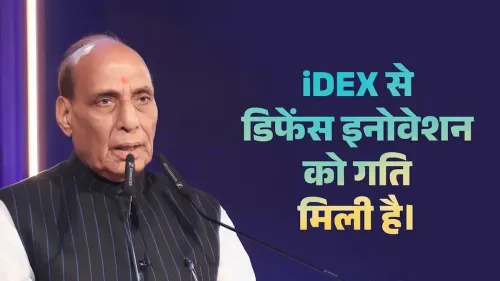
Rajnath Singh flags iDEX, TDF as pillars of India's defence innovation
Synopsis
Union Defence Minister Rajnath Singh spotlighted iDEX and the Technology Development Fund as cornerstones of India's defence innovation drive, reinforcing the Atmanirbhar Bharat push to reduce import dependence and build indigenous capabilities across critical strategic sectors.
Key Takeaways
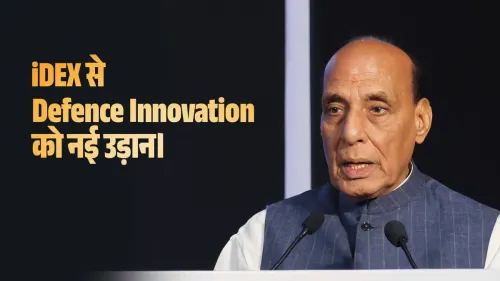
Rajnath Singh on 15 November 2026 highlighted iDEX and the Technology Development Fund (TDF) as central to India's defence innovation strategy. iDEX , launched in 2018 , engages startups and MSMEs in solving real defence technology problems with grants and procurement incentives.
The Technology Development Fund , managed by DRDO , funds upstream indigenous R&D through industry and academic partnerships.
Both schemes are operational pillars of the Atmanirbhar Bharat self-reliance agenda, backed by successive Defence Procurement Procedure reforms.
India aims to become a leading defence exporter, with iDEX and TDF forming critical links in the domestic innovation-to-production pipeline.
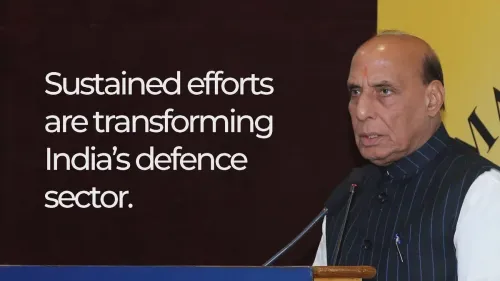
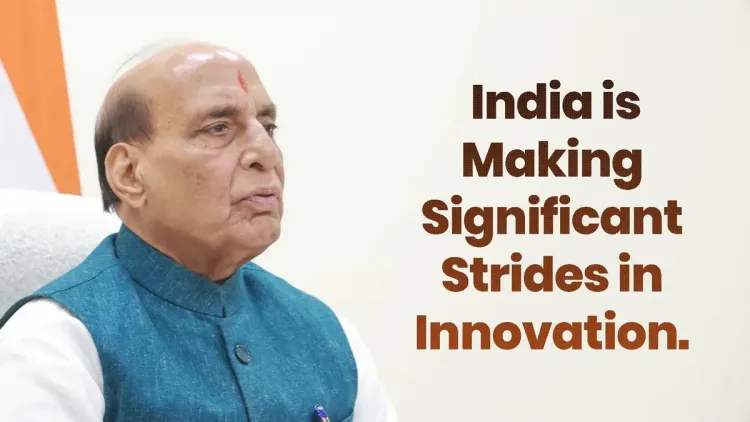
India's defence innovation ecosystem is being deliberately engineered — and Union Defence Minister Rajnath Singh wants the world to know it. On Sunday, 15 November 2026, Singh took to X to highlight two cornerstone programmes driving this transformation: iDEX (Innovations for Defence Excellence) and the Technology Development Fund (TDF), calling them central to a 'strong culture of innovation in defence.'
What iDEX and TDF actually do
iDEX, launched in 2018 under the Ministry of Defence, was built to pull India's startups and MSMEs into the country's defence supply chain — sectors historically dominated by state-run giants and foreign original equipment manufacturers. The fund challenges small innovators to solve real military problems, from drone swarms to wearable soldier systems, with grants and procurement commitments as the prize.
The Technology Development Fund, managed by DRDO, works upstream of that — partnering with industry and academic institutions to fund indigenous R&D projects at the research bench, long before a prototype reaches a procurement committee. Together, they form a two-stage ignition system: TDF seeds the science, iDEX converts it into deployable product.
Atmanirbhar Bharat's sharpest edge
These schemes do not exist in isolation. They are the operational machinery of India's broader Atmanirbhar Bharat push — a sustained national policy to shrink defence import dependence and grow domestic manufacturing. Successive revisions to the Defence Procurement Procedure have hardwired preference for indigenous content, creating the demand-side pull that makes iDEX and TDF investment worthwhile for private players.
Singh's post describes the results as 'driving indigenous technological advancements and strengthening capabilities across critical defence sectors' — language that spans aerospace, naval systems, electronics, and emerging technologies simultaneously. The beneficiaries include not just large primes, but the defence startup community and armed forces end-users who get access to faster, fresher technology cycles than traditional procurement allowed.
Why this moment matters for India's strategic calendar
Statements like this from the Defence Minister are rarely accidental. With DefExpo editions and annual defence budget cycles serving as recurring showcases for scheme outcomes, public articulation of iDEX and TDF signals that the Ministry is priming stakeholders — investors, startups, global partners — to expect further milestones. India's ambition to become a top-tier defence exporter by the end of this decade rests substantially on whether these innovation pipelines deliver at scale.
The question now is whether the pipeline matures fast enough to meet that ambition — or whether funding, procurement timelines, and absorptive capacity inside the armed forces become the bottleneck no policy reform has fully cracked yet.
Point of View
Global partners, and domestic investors that India's self-reliance framework is institutionally embedded — not a one-budget headline. The pairing of a demand-side scheme (iDEX) with a supply-side fund (TDF) reflects a maturing policy architecture that moves beyond procurement preference toward genuine R&D capacity-building. The larger challenge — translating innovation pipeline growth into export-ready, armed-forces-approved systems at scale — remains the metric by which Atmanirbhar Bharat's defence chapter will ultimately be judged. Ministerial articulation at this stage also reads as pre-positioning ahead of budget season and potential DefExpo visibility.
NationPress
15 Nov 2026
Frequently Asked Questions
What is iDEX in Indian defence?
iDEX, or Innovations for Defence Excellence, is a Ministry of Defence initiative launched in 2018 that engages startups, MSMEs, and individual innovators to develop defence technologies, offering grants and procurement opportunities in return.
What is the Technology Development Fund for defence?
The Technology Development Fund (TDF) is a DRDO-managed scheme that provides financial support to industry and academic institutions to develop indigenous technologies for India's defence needs.
What did Rajnath Singh say about defence innovation?
On 15 November 2026, Rajnath Singh stated that India is fostering a strong culture of innovation in defence through iDEX and the Technology Development Fund, backed by progressive policy reforms driving indigenous technological advancements.
How does Atmanirbhar Bharat relate to defence?
Atmanirbhar Bharat's defence dimension focuses on reducing India's dependence on weapon and equipment imports by promoting domestic R&D, manufacturing, and procurement — with schemes like iDEX and TDF as key instruments.
Which startups benefit from iDEX?
Indian defence-technology startups and MSMEs working on areas such as drones, sensors, wearable soldier systems, and advanced electronics are primary beneficiaries of iDEX grants and Ministry of Defence procurement commitments.