Rajnath Singh: Peace is India's Goal, Power is Its Shield
Synopsis
Union Defence Minister Rajnath Singh invoked India's civilizational preference for peace while warning that Hybrid, Hi-tech and Hyper Warfare — including disinformation and destabilisation — demand constant readiness. His call to 'Hope for Peace but Prepare for War' reinforces the doctrinal arc built since Galwan 2020.
Key Takeaways
Rajnath Singh on October 15, 2026 declared India must be perpetually prepared against Hybrid, Hi-tech, and Hyper Warfare threats.
He explicitly named Disinformation and Destabilization as emerging threats alongside conventional military challenges.
Singh framed the desire for peace as India's 'civilizational consciousness,' but argued that strength is its necessary guarantor.
The post follows structural defence reforms including creation of the Chief of Defence Staff in 2019 and accelerated modernisation after the Galwan clash of 2020 .
India's Atmanirbhar Bharat initiative in defence production underpins the self-reliance dimension of this preparedness doctrine.
Upcoming parliamentary defence budget discussions and potential new integrated commands for cyber and information warfare will test this doctrine's institutional depth.
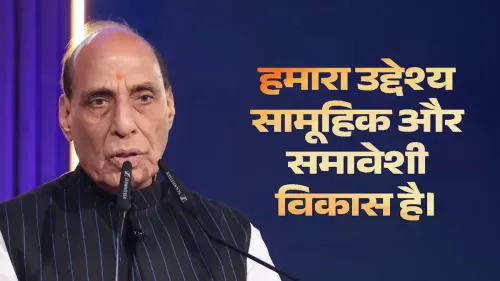
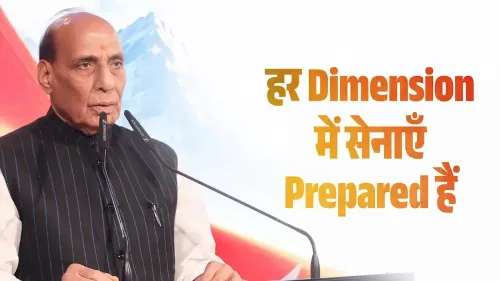
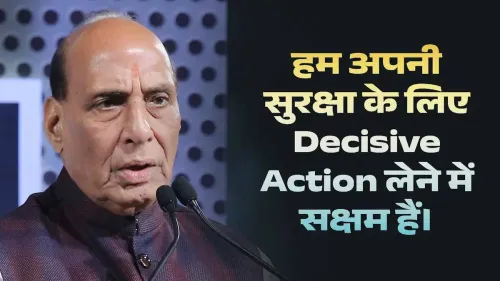
The desire for peace is ancient — but so is the cost of being unprepared for war. Union Defence Minister Rajnath Singh on Thursday, October 15, 2026 articulated India's defence philosophy in a single, unsparing line: 'Hope for Peace but Prepare for War' — framing national security not as aggression, but as civilizational responsibility.
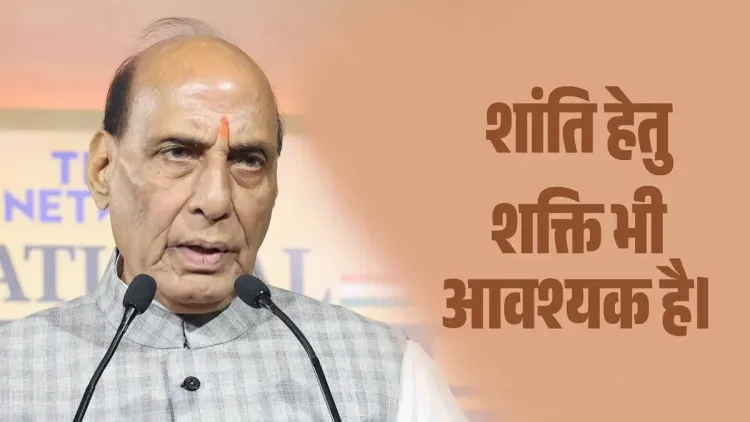
Singh's post, shared in Hindi and English, warned that in an era of Hybrid, Hi-tech and Hyper Warfare, India faces threats that go far beyond the battlefield. 'The desire for peace is our civilizational consciousness,' he wrote, 'but strength is also essential to maintain peace.' He called out Disinformation and Destabilization as explicit and emerging threats that demand constant readiness.
The Three H's India Must Confront
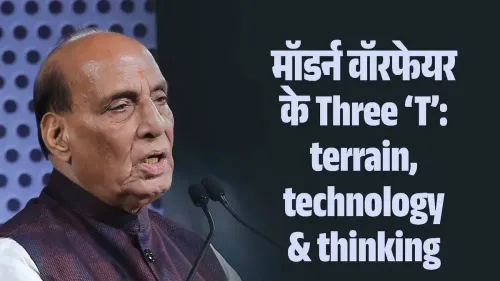
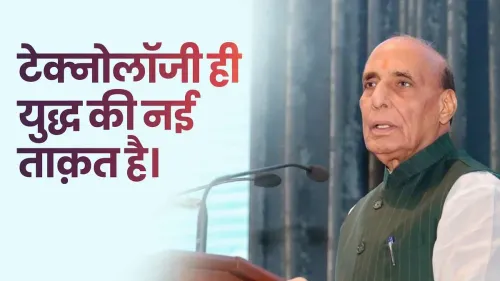
The Minister's framing is deliberate — 'Hybrid, Hi-tech, Hyper' is not rhetorical flourish. Hybrid warfare blends conventional military pressure with economic coercion, proxy forces, and cyberattacks. Hi-tech warfare means the battlefield has moved into space, undersea cables, and semiconductor supply chains. Hyper warfare — the compression of conflict timelines through autonomous systems and AI-enabled targeting — leaves states with little room for slow deliberation.
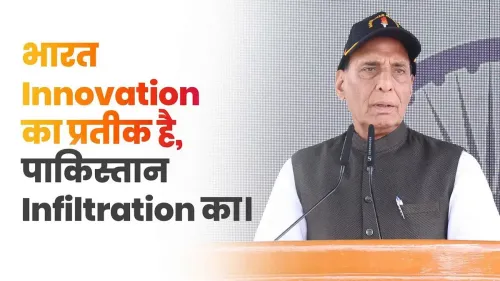
Disinformation, which Singh names explicitly, is perhaps the quietest of these threats. It does not require a missile or a soldier; it requires a convincing false narrative and a social media feed. India's security planners have increasingly flagged coordinated influence operations as a front-line challenge, particularly along its borders and in its internal security environment.
The Policy Backbone Behind the Message
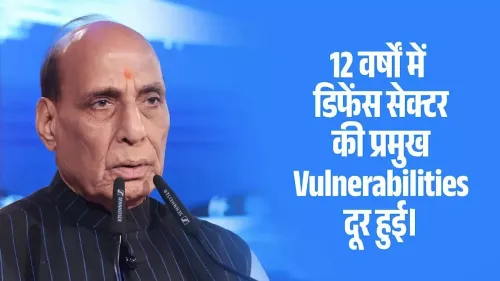
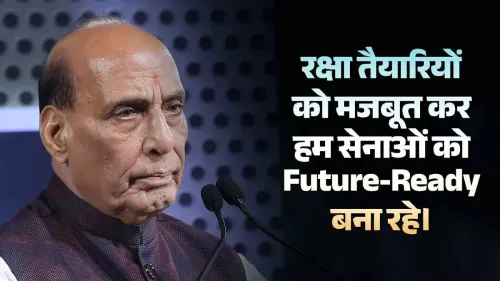
The sentiment is not new — but the structural architecture backing it has grown considerably. Since the Galwan Valley clash of 2020, India has sharply accelerated military modernisation and indigenous defence production under the Atmanirbhar Bharat initiative, reducing dependence on single-source foreign suppliers. In 2019, the government created the Chief of Defence Staff position and the Department of Military Affairs, both aimed specifically at integrating India's three services against exactly the kind of multi-domain, hybrid challenges Singh describes today.
These are not ceremonial reforms. A unified command structure matters when a threat arrives simultaneously in the cyber domain, the information domain, and along a physical border — as modern adversaries have demonstrated they can engineer.
'Shanti ki Kamna' — Civilisation's Preference, Not Naivety
What makes Singh's message worth reading carefully is its opening clause: 'Shanti ki kamna hamari sabhyatagat chetna hai' — the desire for peace is our civilizational consciousness. This is not the language of a hawk; it is the language of a strategist who understands that deterrence is the price of the peace you actually want. The logic is old — Chanakya articulated it, Clausewitz did too — but it lands differently when a sitting Defence Minister says it plainly to a national audience.
Parliamentary debates on the next defence budget and any new integrated command structures for cyber and information warfare will be the real test of whether the doctrine Singh is articulating translates into institutional muscle.
The message is clear: India is not looking for a fight. It is making sure a fight it did not start ends on its terms.
Point of View
He signals that India's security calculus has formally expanded beyond kinetic threats. Coming from a former Home Minister who oversaw the abrogation of Article 370 and now steers the defence portfolio, the message carries the weight of institutional continuity across domestic and external security. The 'Hope for Peace, Prepare for War' formulation also serves a domestic political function — anchoring the BJP's national security credentials ahead of budget season — without requiring reference to any specific adversary or incident.
NationPress
15 Oct 2026
Frequently Asked Questions
What did Rajnath Singh mean by 'Hope for Peace but Prepare for War'?
Singh argued that while peace is India's civilizational preference, maintaining peace requires credible military and strategic strength — especially against modern threats like disinformation, destabilisation, and hybrid warfare.
What is Hybrid Warfare and why is India concerned about it?
Hybrid Warfare combines conventional military pressure with cyber attacks, influence operations, economic coercion, and proxy forces. India's security planners have flagged it as a growing threat, particularly following the 2020 Galwan clash and rising disinformation campaigns.
What steps has India taken to prepare for Hi-tech and Hyper Warfare?
India created the Chief of Defence Staff position in 2019, established the Department of Military Affairs for inter-service integration, and accelerated indigenous defence production under the Atmanirbhar Bharat initiative after the Galwan clash in 2020.
Who is Rajnath Singh and what is his role in India's defence policy?
Rajnath Singh is India's Union Minister of Defence and a senior BJP leader. He previously served as Chief Minister of Uttar Pradesh and as Union Home Minister, making him one of the most experienced figures in India's national security establishment.
What is India's Atmanirbhar Bharat initiative in defence?
Atmanirbhar Bharat in defence is India's self-reliance drive to reduce dependence on foreign arms suppliers by boosting domestic defence manufacturing, including through private sector participation, export targets, and indigenisation of critical platforms.