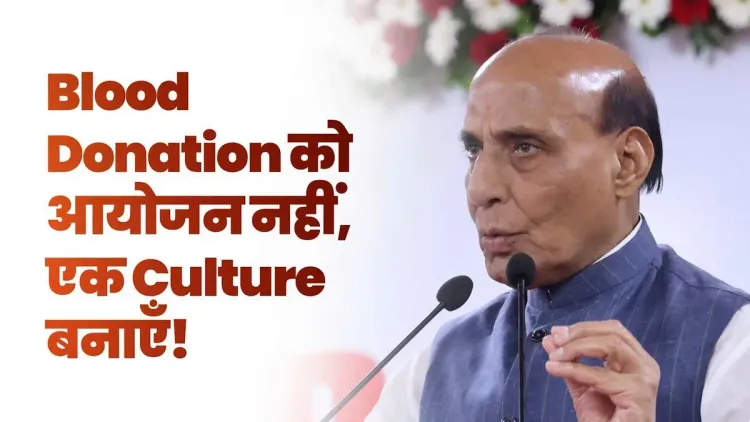
Rajnath Singh urges youth to make blood donation a culture
Synopsis
Union Defence Minister Rajnath Singh appealed to Indian youth on 9 August 2026 to transform blood donation from a one-off event into a sustained cultural practice, framing voluntary donation as a concrete contribution to the Viksit Bharat 2047 national development vision.
Key Takeaways
Union Defence Minister Rajnath Singh posted the appeal on 9 August 2026 .
He urged youth to treat blood donation as a 'culture', not just an 'event' or one-time drive.
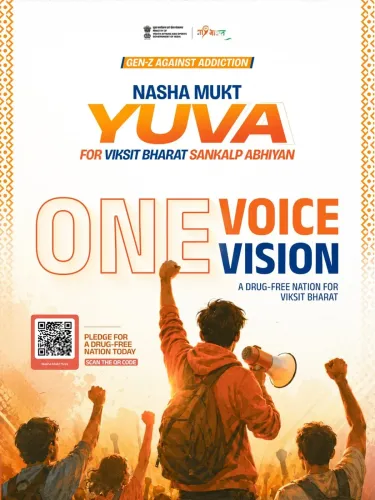
The appeal is explicitly tied to the Viksit Bharat 2047 vision of a healthy, safe, and compassionate India by independence centenary.
India's voluntary blood donation system has long been criticised for relying on episodic camps rather than a steady donor base.
Defence establishments run extensive blood bank networks serving both military and civilian needs during emergencies.
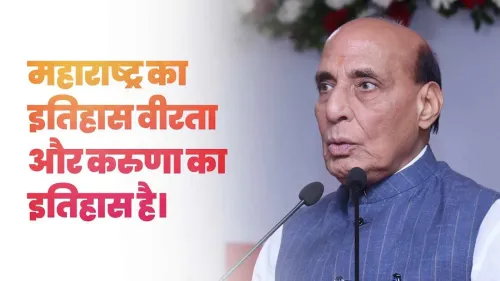
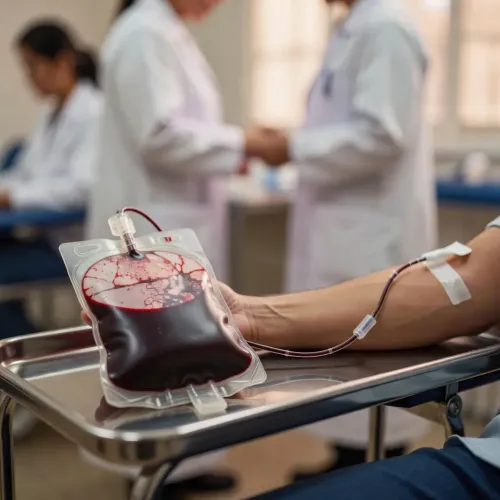
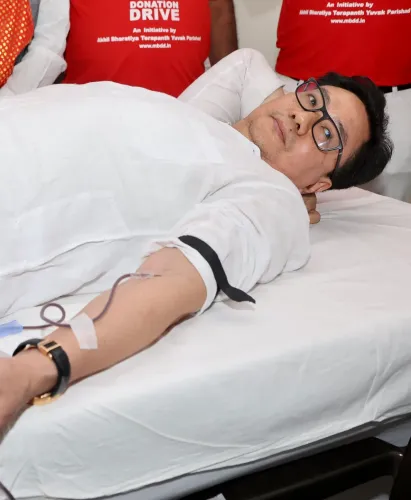
A call to transform an act of generosity into a national habit — Union Defence Minister Rajnath Singh on Sunday, 9 August 2026 appealed to India's youth to go beyond one-off blood donation drives and embed the practice into everyday civic life, tying the appeal directly to the country's Viksit Bharat 2047 vision.
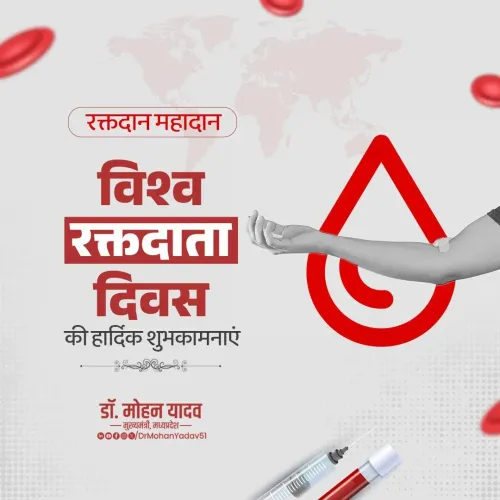
In a post in Hindi, Singh wrote: 'Yuva sathiyon se aagraha hai ki raktadan ko aayojan nahin, sanskriti banaen' — urging young people to 'not treat blood donation as an event, but make it a culture' — and to contribute to building a 'healthy, safe and compassionate India by 2047.'
From one-time drive to living habit
The distinction Singh draws is deliberate and pointed. India's voluntary blood donation ecosystem has historically depended on episodic camps — tied to festivals, death anniversaries of public figures, or institutional events — rather than a steady, year-round supply. Health administrators have long flagged this as a structural vulnerability: demand spikes during disasters and surgical emergencies, but the donor pool rarely keeps pace.
The National Blood Transfusion Council and programmes under the National AIDS Control Organisation have for decades pushed to shift India toward a 100-per-cent voluntary, non-remunerated donation model. Singh's framing — culture over occasion — echoes that institutional goal, now dressed in the language of youth mobilisation.
Viksit Bharat 2047 as the organising frame
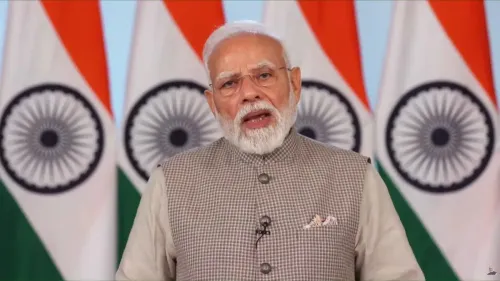
Prime Minister Narendra Modi first laid out the Viksit Bharat @2047 vision in his Independence Day address in 2022, asking citizens across sectors to align their contributions toward making India a fully developed nation by the centenary of independence. Since then, the framework has become a standard reference point for government messaging on everything from infrastructure to public health.
By anchoring a public-health appeal in that vision, Singh signals that grassroots civic habits — not just large schemes — are part of the development calculus. A safe, sustainable blood supply is, in that framing, as much a nation-building project as a highway or a semiconductor plant.
Defence establishments, it is worth noting, operate some of the country's most extensive blood bank networks, serving both armed forces personnel and civilians during emergencies — giving Singh's ministry a direct institutional stake in the cause he is championing.
The ask is simple, the ambition is long. If India's youth treat every eligible donation cycle as a civic duty rather than a calendar event, the cumulative effect by 2047 could reshape the country's blood security in ways no single policy announcement can.
Point of View
The BJP is broadening the definition of national development beyond infrastructure to include civic character. It also positions the Defence Ministry — whose blood bank networks are among the country's most robust — as a stakeholder in public health, not just national security. The messaging targets youth precisely because long-term behaviour change requires early adoption; a generation that donates routinely through its twenties reshapes supply curves by mid-century. Watch for state-level BJP units to amplify this with donation camps branded around 2047 milestones.
NationPress
23 Sept 2026
Frequently Asked Questions
What did Rajnath Singh say about blood donation?
On 9 August 2026, Rajnath Singh urged Indian youth to stop treating blood donation as a one-time event and instead make it a sustained cultural practice, linking the habit to the goal of building a healthy India by 2047.
What is Viksit Bharat 2047?
Viksit Bharat 2047 is the national vision, first outlined by Prime Minister Narendra Modi in his 2022 Independence Day address, to transform India into a fully developed nation by the centenary of its independence.
Why is voluntary blood donation important in India?
India's blood supply has historically depended on episodic donation camps rather than a steady pool of regular donors, creating shortages during emergencies. Health bodies like the National Blood Transfusion Council have long pushed for a shift to year-round voluntary donation.
Does the Defence Ministry have a role in blood donation?
Yes — defence establishments operate some of India's most extensive blood bank networks, supporting both armed forces personnel and civilians during crises, giving the Defence Ministry a direct institutional interest in a robust voluntary donor base.
How can Indian youth contribute to Viksit Bharat 2047 through health?
Singh's appeal suggests that regular voluntary blood donation is one concrete way youth can contribute — building a safe, sustainable national blood supply that supports public health infrastructure as part of the broader 2047 development goals.