Rajnath Singh: National security is duty of all 140 crore Indians
Synopsis
Union Defence Minister Rajnath Singh on 26 July 2026 declared that national security is not the soldier's burden alone but the collective duty of all 140 crore Indians, calling on every citizen to carry a soldier's discipline, devotion to duty, and 'nation first' consciousness.
Key Takeaways
Rajnath Singh posted on 26 July 2026 that national security is the collective responsibility of all 140 crore Indians, not soldiers alone.
He called on every citizen to cultivate a soldier-like consciousness, discipline, and 'nation first' values.
The message aligns with the government's 'whole-of-nation' security approach, reinforced since the Galwan clash of June 2020 .
Key policy anchors include the Agnipath scheme (2022) , Atmanirbhar Bharat (2020) , and the creation of the Chief of Defence Staff post (2019) .
Possible follow-through includes expanded NCC enrolment and civil defence training in upcoming budgets or parliamentary sessions.
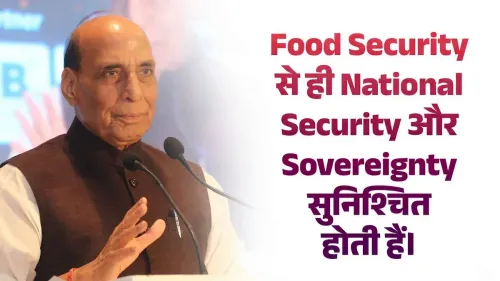
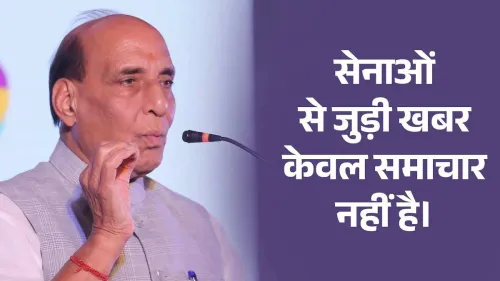
Union Defence Minister Rajnath Singh on Sunday, 26 July 2026, called national security a collective responsibility of all 140 crore Indians, urging every citizen to cultivate a soldier's discipline and an unwavering 'nation first' ethos.
What the Minister said
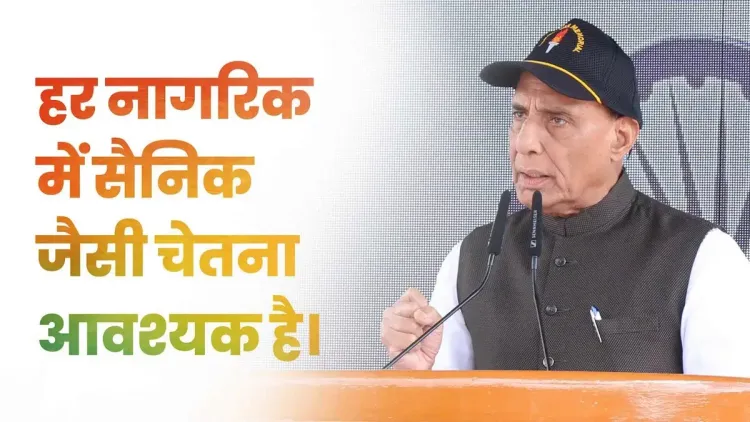
Posting in Hindi on X, Rajnath Singh wrote: 'राष्ट्रीय सुरक्षा केवल सैनिकों की जिम्मेदारी नहीं है, बल्कि यह 140 करोड़ देशवासियों का सामूहिक दायित्व भी है।' ('National security is not the responsibility of soldiers alone; it is also the collective duty of 140 crore fellow citizens.')
He added that every Indian must keep alive within themselves a soldier-like consciousness, the feeling of 'nation first', discipline, and devotion to duty — 'राष्ट्र प्रथम का भाव, अनुशासन और कर्तव्यनिष्ठा।'
Context
The message arrives against a backdrop of sustained policy emphasis on what strategists call a 'whole-of-nation' approach to security. Since the June 2020 Galwan Valley clash, successive defence policy statements have stressed civilian awareness and societal resilience alongside military modernisation.
Rajnath Singh has been a consistent voice on this theme, frequently invoking the idea that a nation's first line of defence is the moral and civic readiness of its people, not only its armed forces.
Policy backdrop
The sentiment aligns with several landmark reforms under the current government. The Agnipath scheme, launched in June 2022, restructured military recruitment to draw more youth into short-term national service, explicitly aiming to deepen the connect between civil society and the armed forces.
The Atmanirbhar Bharat initiative, announced in May 2020, extended the 'national participation' logic to defence manufacturing, encouraging domestic industry and citizens to contribute to India's strategic self-reliance. The creation of the Chief of Defence Staff post in December 2019 further signalled a push for integrated, modernised defence structures that require broad societal support.
Stakeholders and impact
The call is directed at India's entire civilian population — students, professionals, and communities — asking them to internalise values of discipline and national duty that are traditionally associated with uniformed service. Organisations such as the National Cadet Corps (NCC) and civil defence bodies stand to benefit from renewed political attention to such messaging.
For the armed forces, a citizenry that views security as a shared obligation strengthens recruitment pipelines, public support for defence budgets, and community cooperation in border and coastal regions.
What's next
Observers will watch whether this statement is followed by concrete policy announcements — such as expanded NCC enrolment targets, civil defence training mandates, or references in the next defence budget — that translate the rhetorical call into institutional programmes. Rajnath Singh's track record suggests such messaging often precedes or accompanies substantive policy moves, making the coming parliamentary session a key moment to watch.
Point of View
Which has been systematically built since 2019 through institutional reforms and now seeks to embed itself in civic culture. By framing national security as a duty of all 140 crore citizens rather than a professional obligation of the armed forces, the Defence Minister is extending the political logic of Agnipath — youth participation in national defence — to the broader civilian sphere. The timing, on what is likely a defence-related commemorative occasion, suggests deliberate messaging aimed at sustaining public support for an ambitious and sometimes contested defence reform agenda. If matched by policy action, this could signal the next phase of civilian-military integration in India's security architecture.
NationPress
26 Oct 2026
Frequently Asked Questions
What did Rajnath Singh say about national security on 26 July 2026?
Rajnath Singh said national security is not the responsibility of soldiers alone but the collective duty of all 140 crore Indians, and that every citizen must cultivate discipline, devotion to duty, and a 'nation first' mindset.
What is the Agnipath scheme and how does it relate to this message?
The Agnipath scheme , launched in June 2022 , introduced short-term military service for youth to deepen the link between civil society and the armed forces — directly reflecting the 'whole-of-nation' security philosophy that Rajnath Singh articulated in this post.
What does 'nation first' mean in the context of Indian defence policy?
'Nation first' — Rashtra Pratham — is a guiding value promoted by the government asking citizens to prioritise national interest, discipline, and civic duty, mirroring the ethos instilled in military personnel.
Who is Rajnath Singh?
Rajnath Singh is India's Union Defence Minister, a senior BJP leader, and a former Chief Minister of Uttar Pradesh and former Union Home Minister.
What policy changes could follow Rajnath Singh's call for citizen participation in national security?
Analysts expect possible expansion of NCC enrolment, new civil defence training programmes, and references in the next defence budget or parliamentary session to institutionalise the 'whole-of-nation' security approach.