Rajnath Singh addresses KGMU Lucknow convocation
Synopsis
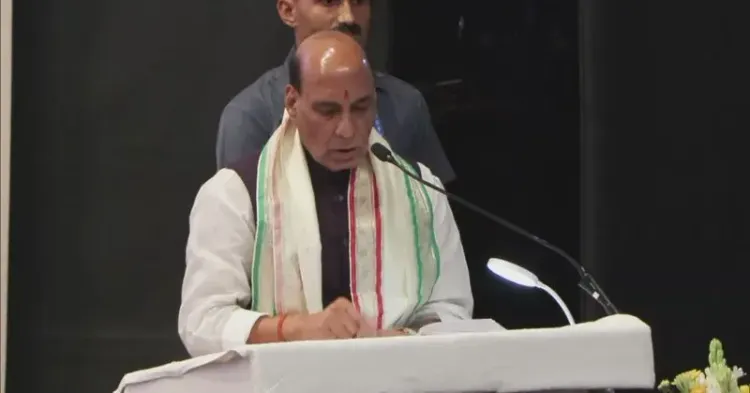
Union Defence Minister Rajnath Singh addressed the convocation ceremony of King George's Medical University in Lucknow on 13 July 2026. The event brought together graduating medical professionals at one of India's oldest government medical universities, with Singh's appearance reflecting continued high-level political engagement with Uttar Pradesh's academic institutions.
Key Takeaways
Rajnath Singh , Union Defence Minister and Lucknow MP, addressed the KGMU convocation on 13 July 2026 .
King George's Medical University was established in 1905 and is one of India's oldest and most prominent government medical universities.
The event is held in Lucknow , capital of Uttar Pradesh and Singh's parliamentary constituency.
Senior political leaders addressing university convocations is a common practice to highlight government priorities in education and health.
Uttar Pradesh has expanded medical college infrastructure significantly in recent years under central and state schemes.
Observers will watch for any policy announcements on medical education or defence-health research linkages following the event.
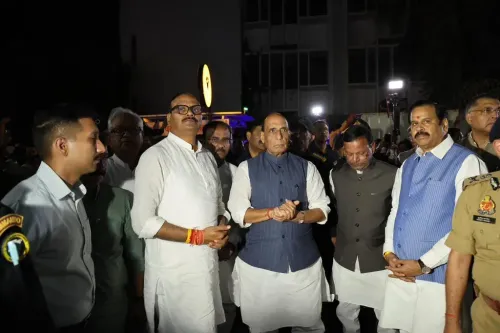
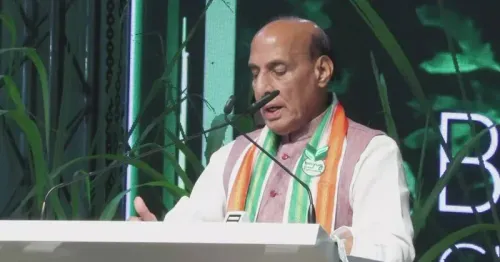
Union Defence Minister Rajnath Singh addressed the Convocation Ceremony of King George's Medical University (KGMU) in Lucknow on Monday, 13 July 2026, marking a significant engagement between a senior Union Cabinet minister and one of northern India's most storied medical institutions.
Context
King George's Medical University, established in 1905, is among India's oldest and most prestigious government medical universities. Located in the heart of Lucknow, the capital of Uttar Pradesh, it has long served as a centre of medical education, research, and tertiary healthcare for the region. Its convocation ceremonies mark a milestone for hundreds of graduating doctors and healthcare professionals each year.
Rajnath Singh, who represents the Lucknow parliamentary constituency, has deep ties to the city and the state. As a former Chief Minister of Uttar Pradesh and now Union Defence Minister, his presence at a KGMU convocation carries both political and institutional weight.
Policy Backdrop
Senior political leaders addressing university convocations is a well-established practice in India, used to spotlight government priorities in higher education and public health. In recent years, both the central government and the Uttar Pradesh state government have announced significant expansions in medical education infrastructure — including new medical colleges and increased MBBS seats — as part of broader healthcare access initiatives.
The intersection of defence and health has also gained policy relevance, with central schemes exploring linkages between defence research bodies and civilian medical institutions, particularly in areas such as trauma care, biotechnology, and emergency medicine.
Stakeholders and Impact
The immediate beneficiaries of the convocation are the graduating cohort of medical students and healthcare professionals receiving their degrees from KGMU. For them, an address by a minister of Rajnath Singh's stature underscores the national importance attached to the medical profession.
More broadly, the event signals continued high-level political attention to Uttar Pradesh's academic institutions. KGMU serves patients from across Uttar Pradesh, Bihar, and neighbouring states, making its institutional health a matter of public interest well beyond Lucknow.
What's Next
Observers will watch for any follow-up statements from the Uttar Pradesh government regarding medical education infrastructure, faculty expansion, or new central-state partnerships in healthcare. Any announcements linking defence research institutions with civilian medical universities — a theme that has gained traction in policy circles — would be notable.
As Rajnath Singh continues to maintain a visible presence in Lucknow, his engagement with institutions like KGMU reinforces the role senior BJP leaders play in anchoring the party's connect with Uttar Pradesh's professional and academic communities ahead of future electoral cycles.
Point of View
Who represents Lucknow in Parliament and served as the state's Chief Minister, such appearances reinforce a local stewardship narrative that complements his national defence portfolio. The choice of a medical university also subtly signals the government's emphasis on healthcare capacity-building as a political deliverable. Whether the visit translates into concrete policy announcements for KGMU or UP's medical education sector will determine its lasting significance.
NationPress
13 Jul 2026
Frequently Asked Questions
Why did Rajnath Singh attend the KGMU convocation?
Rajnath Singh attended the King George's Medical University convocation in his capacity as a senior Union minister and as the Member of Parliament from Lucknow, where KGMU is located. Senior political leaders regularly address major university convocations to engage with students and highlight government priorities in education and health.
What is King George's Medical University?
King George's Medical University (KGMU) is a premier government medical university in Lucknow, Uttar Pradesh, established in 1905. It is one of India's oldest medical institutions and provides medical education, research, and tertiary healthcare services to patients from across northern India.
What is Rajnath Singh's connection to Lucknow?
Rajnath Singh is the Member of Parliament from the Lucknow constituency and is a former Chief Minister of Uttar Pradesh. He has maintained a strong political and personal connection to Lucknow throughout his career.
What is the significance of a Defence Minister addressing a medical university?
A Union Defence Minister addressing a medical convocation highlights the growing policy interest in linking defence research institutions with civilian healthcare, particularly in areas such as trauma care, emergency medicine, and biotechnology. It also reflects the BJP's broader strategy of keeping senior Cabinet ministers engaged with Uttar Pradesh's institutions.
Has Uttar Pradesh expanded medical education recently?
Yes, Uttar Pradesh has seen significant expansion in medical education infrastructure in recent years, including new medical colleges and increased MBBS seats, supported by both central government schemes and state-level initiatives aimed at improving healthcare access.