Rajnath Singh greets nation on Maa Kalratri, seventh day of Navratri
Synopsis
Union Defence Minister Rajnath Singh greeted the nation on the seventh day of Sharad Navratri, invoking Maa Kalratri with a Sanskrit shloka and praying for the destruction of fear, obstacles, and negativity from devotees' lives.
Key Takeaways
Rajnath Singh posted a Navratri greeting on 17 October 2026 , the seventh day (Saptami) of Sharad Navratri.
The post honours Maa Kalratri , the seventh of the nine forms of Goddess Durga, associated with the destruction of evil and the grant of fearlessness.
Singh shared a Sanskrit shloka describing Kalratri as 'the giver of all desires and prosperity.' He prayed for devotees to be blessed with the courage to walk the path of truth without fear.
Senior Indian political figures regularly share devotional messages for each day of Navratri on social media, reflecting the festival's wide cultural reach.
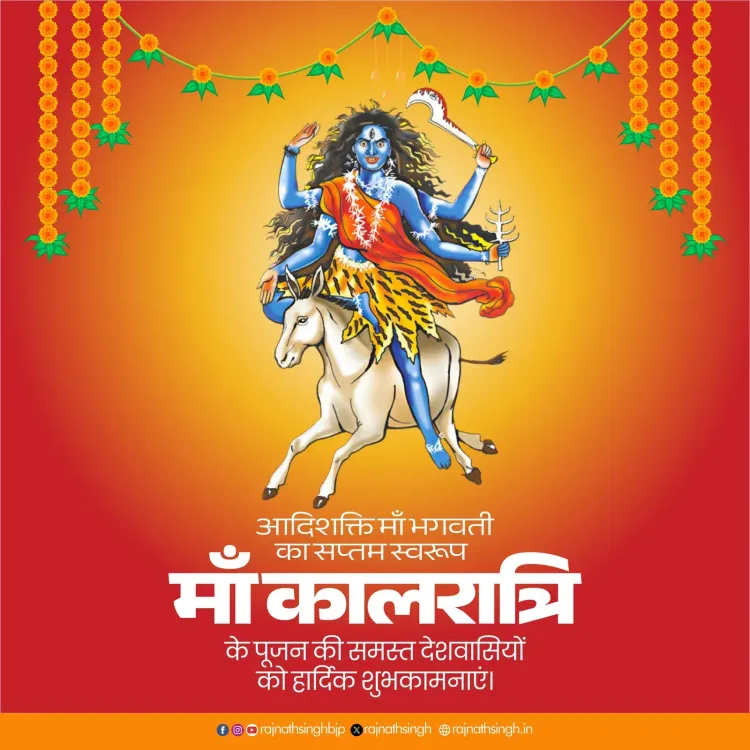
On the seventh day of Navratri, Union Defence Minister Rajnath Singh offered reverence to Maa Kalratri — the fierce, fearless seventh form of Goddess Durga — praying that she destroy evil, obstacles, and negativity from the lives of devotees across the country.
Posting on Saturday, 17 October 2026, Singh invoked the goddess with the salutation 'शत-शत नमन' (a hundredfold bow) and shared a Sanskrit shloka from the Devi Mahatmya tradition: 'सुखप्रसन्नवदनां स्मेराननसरोरुहाम्। एवं सञ्चियन्तयेत्कालरात्रिंसर्वकामसमृद्धिदाम्॥' — loosely translated as 'Meditate upon Kaalratri with a blissful, smiling lotus face, the giver of all desires and prosperity.' He prayed that the goddess bless every devotee with the courage to walk the path of truth without fear.
Who is Maa Kalratri — the seventh form of Durga
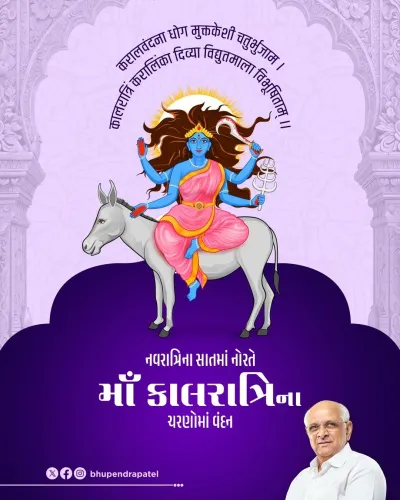
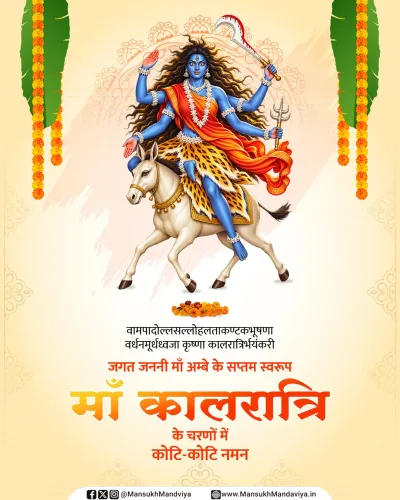
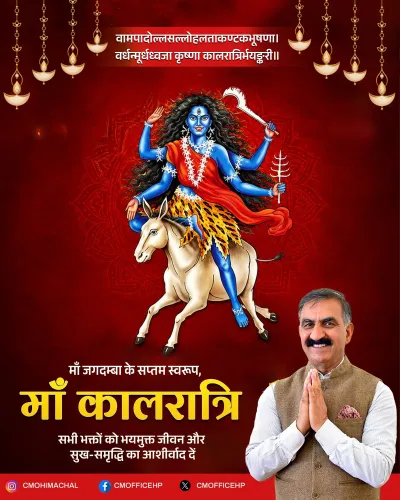
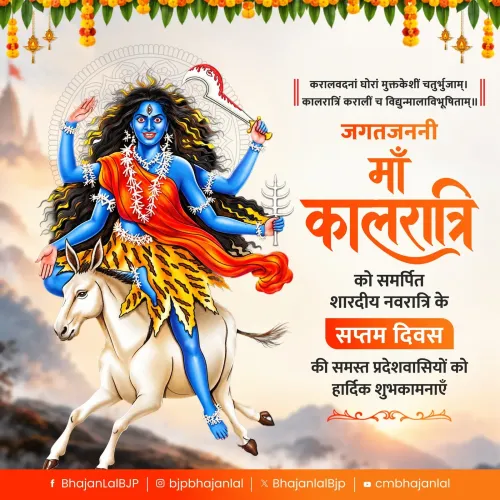
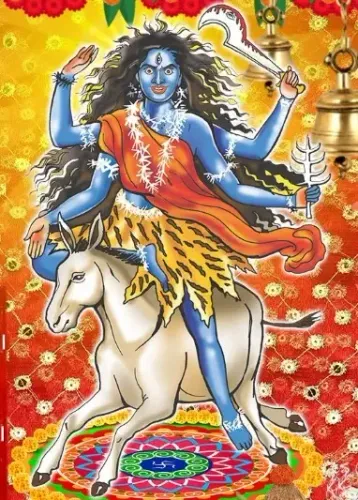
Maa Kalratri is the seventh of the Navadurga — the nine manifestations of Goddess Durga worshipped across nine nights of Navratri. Depicted with a dark complexion, flowing hair, and a luminous third eye, she is believed to annihilate demonic forces and free devotees from fear (abhay). Her worship on Saptami, the seventh night, marks one of the most intense and spiritually charged phases of the festival.
Politicians, festival greetings, and the social-media tradition
Singh's post follows a well-established pattern among senior Indian political leaders — across party lines — of marking each of the nine Navratri days with dedicated devotional messages on social media. For a leader of Singh's stature, who has held the offices of Chief Minister of Uttar Pradesh, Union Home Minister, and now Union Defence Minister, such posts also carry symbolic weight: a senior figure of the ruling establishment publicly aligning with one of Hinduism's most widely observed festival cycles.
Navratri, celebrated twice a year with the autumn edition — Sharad Navratri — being the most prominent, draws hundreds of millions of devotees. The nine days of prayer, fasting, and cultural celebration culminate in Vijayadashami (Dussehra), the festival of victory over evil.
As the final two nights of Navratri approach, the energy of the festival — and the flow of devotional messages from public figures — is only set to intensify before the Dussehra finale.
Point of View
Such posts reinforce personal accessibility and spiritual rootedness. While the content carries no policy implication, the consistency of these gestures across the party's leadership reflects a communications strategy that treats cultural participation as a form of governance visibility.
NationPress
17 Oct 2026
Frequently Asked Questions
Which day of Navratri is dedicated to Maa Kalratri?
Maa Kalratri is worshipped on the seventh day (Saptami) of Navratri. She is the seventh of the nine forms of Goddess Durga in the Navadurga tradition.
What did Rajnath Singh post for Navratri 2026?
Union Defence Minister Rajnath Singh posted a devotional message on 17 October 2026 invoking Maa Kalratri on the seventh day of Navratri, including a Sanskrit shloka and a prayer for fearlessness and the destruction of negativity.
What is the meaning of the Sanskrit shloka Rajnath Singh shared?
The shloka — 'सुखप्रसन्नवदनां स्मेराननसरोरुहाम्...' — is from the Devi tradition and translates roughly to: 'Meditate upon Kaalratri with a blissful, smiling lotus face, who grants all desires and prosperity.'
Who is Maa Kalratri and why is she significant?
Maa Kalratri is the fierce seventh manifestation of Goddess Durga, believed to destroy evil forces and grant devotees freedom from fear. Her dark complexion and luminous third eye symbolise her power over darkness and negativity.
When does Sharad Navratri 2026 end?
Sharad Navratri concludes with Vijayadashami, also known as Dussehra, which falls two days after Saptami. The festival marks the symbolic victory of good over evil.