Rajnath Singh hails ₹23,731 cr GOBAR-DHAN cabinet nod
Synopsis
The Union Cabinet chaired by PM Modi approved the ₹23,731 crore GOBAR-DHAN scheme to convert cattle dung, crop residue, and organic waste into biogas, bio-fertiliser, and rural income. Defence Minister Rajnath Singh hailed the decision as a milestone for energy security, farmer prosperity, and Atmanirbhar Bharat.
Key Takeaways
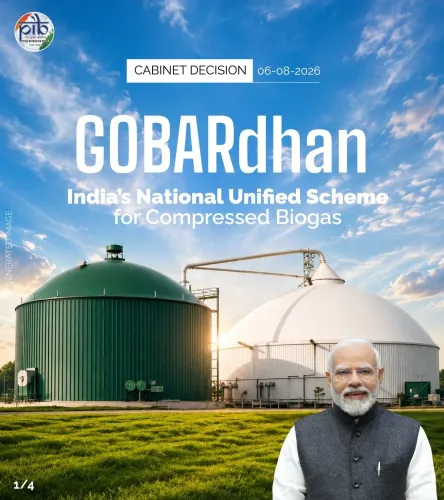
The Union Cabinet approved the National Circular Bio-Economy Scheme 'GOBAR-DHAN' with an outlay of ₹23,731 crore .
The scheme converts cattle dung, agricultural residue, and organic waste into biogas, bio-fertiliser, and new income for farmers and rural entrepreneurs.
GOBAR-DHAN was originally launched under the Swachh Bharat Mission (Gramin) in Budget 2018-19 ; this approval marks a major scale-up.
A stated goal is reducing India's dependence on imported fuel , supporting the Atmanirbhar Bharat and Viksit Bharat agendas.
Defence Minister Rajnath Singh publicly welcomed the decision, framing it as a 'Waste to Wealth' milestone for inclusive and sustainable development.
Key implementation watch-point: roll-out of new compressed biogas plants and state-level guidelines under the revised outlay.
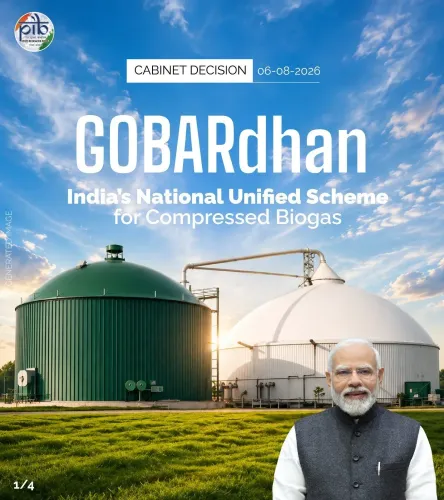
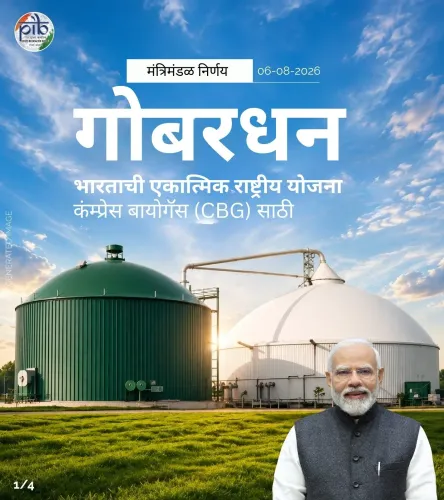
India's farm waste is about to become fuel — and a Cabinet decision has just put a ₹23,731 crore engine behind that idea. Union Defence Minister Rajnath Singh on Thursday, 6 August 2026 welcomed the Cabinet's approval of the National Circular Bio-Economy Scheme 'GOBAR-DHAN', calling it a far-sighted move toward energy security, farmer prosperity, and a clean-energy economy.
Posting in Hindi on X, Singh framed the Cabinet decision — chaired by Prime Minister Narendra Modi — as a direct embodiment of the 'Waste to Wealth' philosophy: 'कृषि अवशेष, गोबर और जैविक अपशिष्ट को स्वच्छ ऊर्जा, जैविक खाद और आय के नए स्रोत में परिवर्तित करना' — converting agricultural residue, cattle dung, and organic waste into clean energy, bio-fertiliser, and new income streams for farmers and rural entrepreneurs.
From Budget 2018 to a ₹23,731 crore upgrade
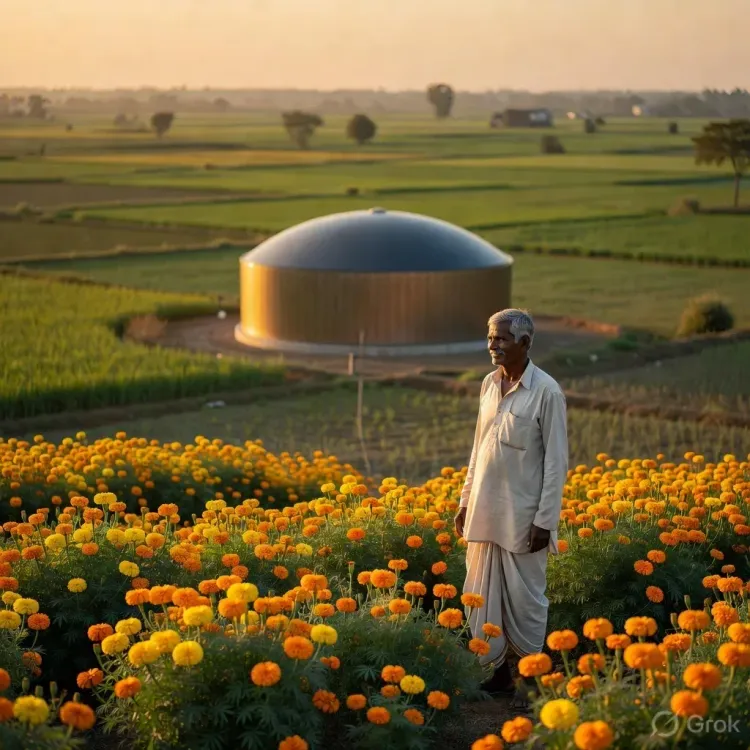
GOBAR-DHAN — short for Galvanising Organic Bio-Agro Resources — was first introduced in the Union Budget 2018-19 under the Swachh Bharat Mission (Gramin), with an initial mandate to set up biogas plants that could process cattle dung and farm waste at the village level. The latest Cabinet approval dramatically scales that ambition, channelling a fresh outlay into compressed biogas plants, bio-fertiliser production, and rural enterprise creation. The scheme's circular logic is simple and powerful: waste that once polluted fields and water bodies now powers homes and feeds soil.
Singh specifically highlighted the scheme's role in reducing dependence on imported fuel — a pressure point that has repeatedly tested India's current account deficit. By converting organic waste domestically into usable energy, GOBAR-DHAN directly supports the Atmanirbhar Bharat and Viksit Bharat goals that the government has made central to its economic narrative.
What the scheme puts in farmers' hands
The scheme's design targets three outcomes simultaneously: energy, income, and soil health. Farmers supplying cattle dung and crop residue to biogas plants earn an additional revenue stream. The bio-slurry produced as a by-product becomes organic fertiliser, reducing input costs. And the compressed biogas itself feeds into the national energy grid or local cooking-fuel supply — cutting both import bills and rural pollution from stubble burning. Rural entrepreneurs, identified as a key stakeholder group, are positioned to own and operate the new plants, creating a decentralised green-energy economy at the grassroots.
Singh's endorsement and what comes next
As a senior BJP leader who has served as both Chief Minister of Uttar Pradesh and Union Home Minister, Singh's effusive welcome — he offered 'हार्दिक अभिनंदन' (heartfelt congratulations) to the Prime Minister — carries political weight beyond routine ministerial solidarity. It signals broad Cabinet consensus around the scheme's rural and energy dimensions ahead of what will be a complex state-level roll-out.
The immediate watch-point is implementation: how quickly state governments issue guidelines for new compressed biogas plants, and whether the outlay reaches the farm-gate entrepreneurs it is designed to empower. India's circular bio-economy ambition now has its biggest budget line yet — the next test is turning that number into working plants and working incomes.
Point of View
His framing of the scheme as a farmer-income measure signals how the BJP intends to communicate it ahead of state elections. The real test will be whether the compressed biogas infrastructure can be deployed at scale without the implementation bottlenecks that hobbled the scheme's earlier avatar. If it does, India gains both a genuine energy hedge and a rural income story; if it doesn't, the ₹23,731 crore figure becomes a political liability.
NationPress
6 Aug 2026
Frequently Asked Questions
What is the GOBAR-DHAN scheme?
GOBAR-DHAN (Galvanising Organic Bio-Agro Resources Dhan) is a government scheme that converts cattle dung, crop residue, and organic waste into biogas, compressed biogas, and bio-fertiliser, generating clean energy and additional income for farmers and rural entrepreneurs.
How much money has the government approved for GOBAR-DHAN in 2026?
The Union Cabinet approved an outlay of ₹23,731 crore for the National Circular Bio-Economy Scheme GOBAR-DHAN in August 2026.
When was GOBAR-DHAN first launched?
GOBAR-DHAN was first introduced in the Union Budget 2018-19 as part of the Swachh Bharat Mission (Gramin), with a focus on setting up biogas plants at the village level.
What did Rajnath Singh say about the GOBAR-DHAN scheme?
Defence Minister Rajnath Singh called the Cabinet's approval a 'far-sighted decision' toward energy security and farmer prosperity, praising PM Modi for linking the 'Waste to Wealth' concept to inclusive national development.
How does GOBAR-DHAN help reduce India's fuel imports?
By converting domestic organic waste into compressed biogas for cooking and energy use, GOBAR-DHAN reduces the volume of fossil fuels India needs to import, easing pressure on the current account deficit and supporting the Atmanirbhar Bharat goal.