Rajnath Singh Hails Armed Forces Unity, Tri-Service Resolve
Synopsis
Union Defence Minister Rajnath Singh on 22 July 2026 invoked 'one flag, one resolve, one purpose' to salute India's three armed forces, reinforcing the government's push for tri-service jointness and integrated theatre commands.
Key Takeaways
Union Defence Minister Rajnath Singh posted on X on 22 July 2026 praising the unity of India's three armed services.
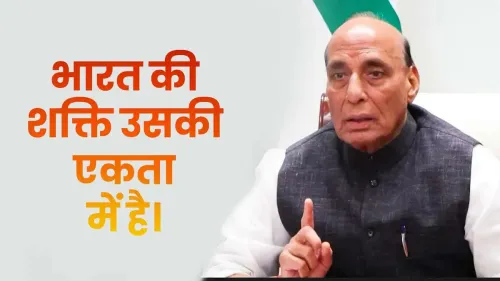
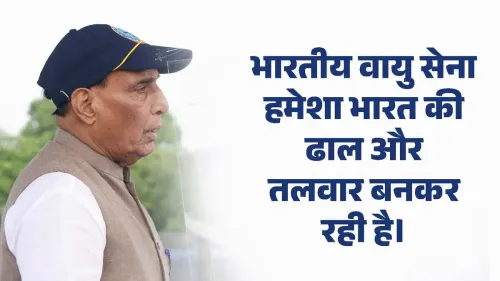
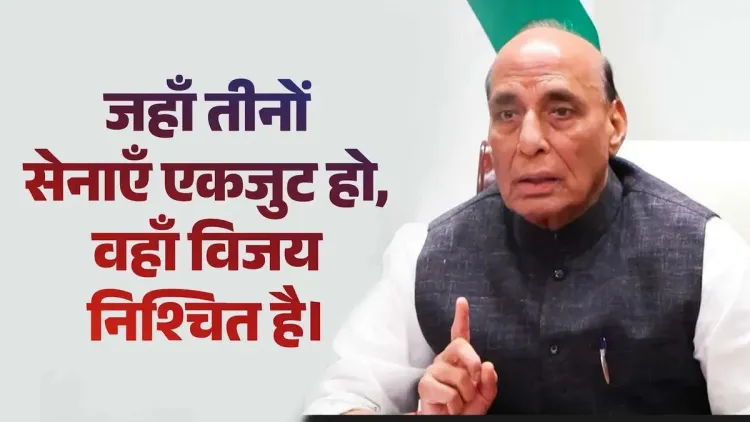
He declared: 'With one flag, one resolve, and one purpose, our three forces have shown the world that a united India conquers every challenge.' The post included a video , amplifying the visual message of tri-service solidarity.
India created the post of Chief of Defence Staff on 31 December 2019 to drive integration across the Army, Navy, and Air Force .
Cabinet approved plans for integrated theatre commands in 2020–21 , replacing single-service operational structures.
The next milestone to watch is formal notification of the first integrated theatre command headquarters and the upcoming Defence Budget debate.
Union Defence Minister Rajnath Singh on Wednesday, 22 July 2026, saluted the collective resolve of India's three armed services, declaring that a unified nation conquers every challenge. Posting on X, Singh invoked the imagery of a single flag, a single resolve, and a single purpose to describe the spirit of the Indian Army, Navy, and Air Force.
In his post, Singh wrote — translated from Hindi — 'एक ध्वज, एक संकल्प और एक उद्देश्य के साथ' ('With one flag, one resolve, and one purpose') — that the three services have shown the world that when India moves forward in unity, it prevails over every challenge. The post was accompanied by a video, underscoring the visual dimension of the message.
Context
The statement arrives at a moment when India's defence establishment has been actively pursuing structural integration of its three services. Rajnath Singh has been at the helm of the Ministry of Defence since 2019, a tenure that has coincided with some of the most consequential reforms in the country's military architecture. The language of 'one flag, one resolve, one purpose' directly echoes the doctrinal vocabulary of tri-service jointness that has shaped official defence discourse over the past several years.
Policy Backdrop
The institutional foundation for this unity was laid on 31 December 2019, when India appointed its first Chief of Defence Staff (CDS) — a four-star tri-service position created to promote joint planning, procurement, and theatre-level operations. This was followed by Cabinet approval in 2020–21 for the creation of integrated theatre commands, designed to replace single-service operational structures with unified regional commands.
The push for jointness gained urgency after the Balakot air strikes of 2019 and the Galwan Valley clash of 2020, both of which underscored the need for seamless coordination across the Army, Navy, and Air Force. Successive governments have pursued these reforms to reduce inter-service silos, streamline procurement pipelines, and enable multi-domain operations capable of addressing two-front contingencies.
Stakeholders and Impact
The message is directed at the broadest possible audience within India's defence ecosystem — active-duty personnel across all three services, veterans, and the wider strategic community. For tri-service personnel, a public affirmation of unity from the Union Defence Minister carries both symbolic weight and institutional significance, particularly as theatre command structures are being finalised.
For India's strategic partners and adversaries alike, the emphasis on unified national resolve is also a signal of deterrence posture. The framing — 'India moves forward as one' — is consistent with the government's broader communication on national security, which has increasingly stressed integrated capability over individual service excellence.
What's Next
Attention will now turn to parliamentary deliberations on the next Defence Budget and any formal notification of the first integrated theatre command headquarters — the structural milestone that would give institutional form to the unity Singh described. Progress on theatre commands has been closely watched by defence analysts as the defining test of whether India's jointness reforms move from policy to operational reality. Singh's public reaffirmation of tri-service cohesion may signal that such an announcement is on the horizon.
Point of View
One resolve, one purpose' is far more than ceremonial rhetoric — it is the political capstone of a seven-year institutional drive to transform India's military from three parallel services into a genuinely joint force. By publicly framing tri-service unity as a proven national asset rather than an aspirational goal, Singh is signalling that the government considers the jointness agenda sufficiently advanced to be celebrated, not merely promised. The timing matters: with theatre command structures still pending formal notification, such a high-profile endorsement from the Defence Minister can be read as political momentum-building ahead of a structural announcement. The broader arc points toward India positioning itself as a multi-domain military power capable of deterring simultaneous threats — a posture that will define defence procurement and doctrine well into the next decade.
NationPress
22 Jul 2026
Frequently Asked Questions
What did Rajnath Singh say about the Indian armed forces on 22 July 2026?
Rajnath Singh posted on X saying that India's three armed forces — Army, Navy, and Air Force — have demonstrated, with one flag, one resolve, and one purpose, that a united India overcomes every challenge.
What are India's integrated theatre commands?
Integrated theatre commands are unified regional military structures approved by the Cabinet in 2020–21 that bring the Army, Navy, and Air Force under a single operational command for a given geographic theatre, replacing the earlier single-service structure.
Who is the Chief of Defence Staff and why was the post created?
The Chief of Defence Staff is a four-star tri-service position created on 31 December 2019 to promote joint planning, procurement, and operations across India's three armed services, reducing inter-service silos.
Why is tri-service jointness important for India?
Jointness allows the Army, Navy, and Air Force to operate as a coordinated force in multi-domain conflicts, improving response times and reducing duplication — a priority highlighted by events such as the 2019 Balakot strikes and the 2020 Galwan Valley clash.
What is the next big step in India's defence integration reforms?
The most closely watched milestone is the formal notification of the first integrated theatre command headquarters, which would translate the jointness policy into an operational reality, alongside parliamentary debate on the next Defence Budget.