Rajnath Singh proposes Defence Youth Bridge with ASEAN
Synopsis
Defence Minister Rajnath Singh proposed a 'Defence Youth Bridge' between India and ASEAN on 29 October 2026, targeting people-to-people connectivity, digital innovation and capacity-building to shape a stable Indo-Pacific — adding a youth-focused layer to India's existing ADMM+ and Act East Policy defence framework.
Key Takeaways
Rajnath Singh proposed a Defence Youth Bridge between India and ASEAN on 29 October 2026 .
The initiative targets three pillars: People-to-People Connectivity , Digital Innovation , and Capacity-Building .
India upgraded its ASEAN relationship to a Strategic Partnership in 2012 and launched the Act East Policy in 2014 .
India engages ASEAN on defence through the ADMM+ framework and bilateral military exercises.
The proposal frames the combined India–ASEAN youth population as the region's greatest strategic strength.
Implementation progress is expected to be tracked at upcoming ASEAN-India summits and ADMM+ meetings .
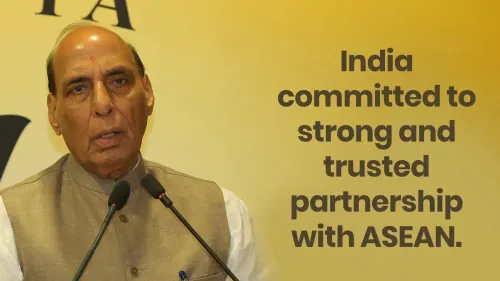
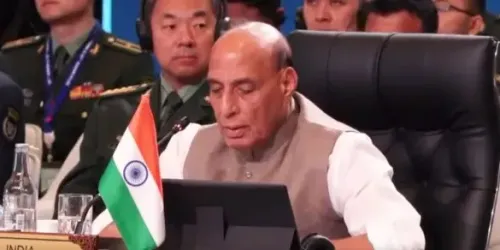
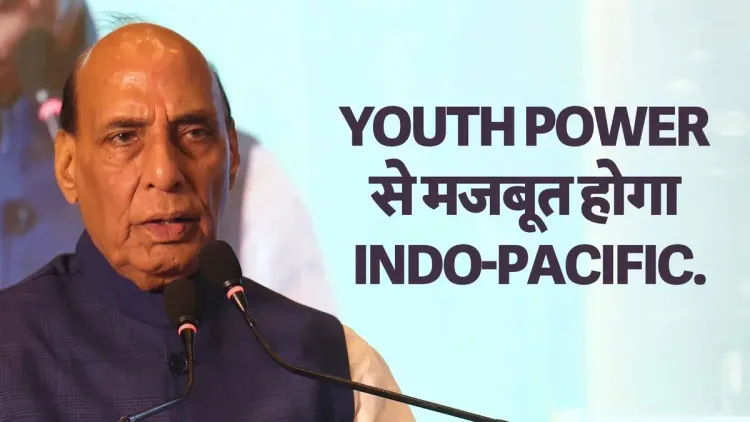
A youthful billion-strong partnership just got a new ambition. Union Defence Minister Rajnath Singh on Thursday, 29 October 2026, proposed the creation of a Defence Youth Bridge between India and ASEAN, framing the two regions' combined youth population as their greatest strategic asset and a foundation for a stable Indo-Pacific.
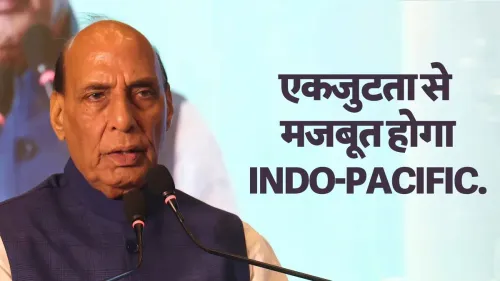
In his post, Singh wrote — 'भारत और ASEAN की युवा आबादी हमारी सबसे बड़ी ताकत है' ('The youth population of India and ASEAN is our greatest strength') — and outlined a vision anchored in three pillars: People-to-People Connectivity, Digital Innovation, and Capacity-Building. The proposal, he said, would empower young people to 'strengthen the future of a peaceful, stable and prosperous Indo-Pacific.'
What the Defence Youth Bridge would do
The proposal envisions a structured institutional bridge rather than a one-off exchange programme. By tying together digital innovation and capacity-building with direct people-to-people links, it signals India's intent to embed the next generation of defence-adjacent professionals — engineers, cyber specialists, peacekeeping trainees — into a shared regional framework. That is a meaningful escalation from traditional mil-to-mil exercises, which have historically been officer-led and hardware-focused.
Singh's framing also carries deliberate symbolism: invoking youth positions the initiative as a long-horizon investment in regional order, not a reactive security posture. The explicit mention of a 'peaceful, stable and prosperous Indo-Pacific' echoes the language India has used in multilateral forums to advocate for a free, open and rules-based maritime order — language that carries weight in a region where contestation over sea lanes remains a live concern.
India–ASEAN defence ties: the track record behind the proposal
India upgraded its relationship with ASEAN to a Strategic Partnership in 2012 and launched the Act East Policy in 2014 to deepen economic, diplomatic and security engagement with Southeast Asia. On the defence side, India has engaged through the ASEAN Defence Ministers' Meeting Plus (ADMM+) and a growing web of bilateral military exercises with individual member states.
A youth-and-capacity-building layer would add a new dimension to this architecture — one that operates below the level of formal summits but builds durable institutional muscle over time. It also fits a broader pattern in India's Indo-Pacific playbook, where people-to-people connectivity is increasingly treated as a force multiplier for formal security arrangements.
Why ASEAN, why now
ASEAN's ten member states collectively host one of the world's youngest and fastest-growing demographics. Paired with India's own youth bulge, the combined talent pool Singh invoked is not rhetorical flourish — it is a genuine demographic dividend that regional planners have long identified as an underutilised asset in multilateral security cooperation. Channelling that energy into structured defence-adjacent education, digital skills, and institutional exchange could yield dividends that no single bilateral treaty can replicate.
Implementation details will be the real test. Observers will watch closely at upcoming ASEAN-India summits and ADMM+ meetings to see whether the Defence Youth Bridge moves from ministerial proposal to funded programme — with timelines, participating institutions, and a clear secretariat.
Point of View
Defence-literate youth across Southeast Asia. It extends the logic of the Act East Policy into a domain — generational capacity-building — that traditional security diplomacy has rarely touched. The explicit three-pillar framing (people-to-people, digital, capacity) suggests a desire for a structured, auditable programme rather than a loose exchange initiative. Whether New Delhi can translate the ministerial pitch into a funded, secretariat-backed mechanism at the next ADMM+ or ASEAN-India summit will be the measure of its seriousness.
NationPress
29 Oct 2026
Frequently Asked Questions
What is the Defence Youth Bridge proposed by Rajnath Singh?
It is a proposed institutional initiative between India and ASEAN aimed at strengthening People-to-People Connectivity, Digital Innovation and Capacity-Building among the youth of both regions to support a stable Indo-Pacific.
When did Rajnath Singh announce the Defence Youth Bridge?
Union Defence Minister Rajnath Singh announced the proposal on 29 October 2026 via a post on X.
What is ADMM+ and how does India engage with it?
ADMM+ stands for the ASEAN Defence Ministers' Meeting Plus, a multilateral forum that includes ASEAN members and eight dialogue partners including India. India uses ADMM+ to coordinate defence cooperation, humanitarian assistance, and maritime security with Southeast Asian nations.
What is India's Act East Policy and its link to ASEAN defence ties?
Launched in 2014 , India's Act East Policy deepened economic, diplomatic and security engagement with Southeast Asia. It built on the 2012 Strategic Partnership with ASEAN and underpins current defence cooperation including bilateral military exercises.
What happens next with the Defence Youth Bridge proposal?
Observers will track upcoming ASEAN-India summits and ADMM+ meetings to see whether the proposal advances from a ministerial statement to a funded programme with defined timelines and participating institutions.