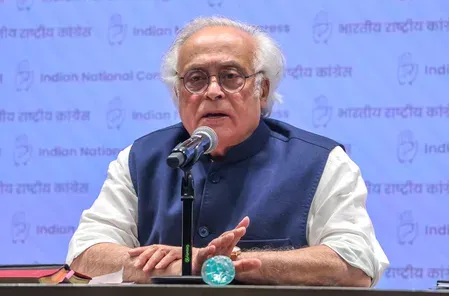
Jairam Ramesh writes to Rajnath Singh on Great Nicobar project, flags eco and tribal risks
Synopsis
Congress leader Jairam Ramesh has now written to three Union ministers in under three weeks over the Great Nicobar Island Project — and his letter to Defence Minister Rajnath Singh cuts to the core: the government's security justification for a scheme critics call an ecological and tribal rights disaster is, he argues, being retrofitted onto what is essentially a commercial venture.
Key Takeaways
Jairam Ramesh wrote to Defence Minister Rajnath Singh on 17 May 2026 over the Great Nicobar Island Project .
He challenged the government's claim that the project is justified on national security grounds , calling it 'essentially a commercial venture.' Ramesh had previously written to the Environment Minister on 10 May and the Tribal Affairs Minister on 13 May 2026 over the same project.
He proposed expanding INS Baaz at Campbell Bay and existing Andaman and Nicobar Command assets as lower-impact alternatives.
Ramesh warned the project 'in its present shape and form is a recipe for ecological disaster' and cited proposals by naval officers supporting the alternatives.
The Forest Rights Act, 2006 compliance and environmental clearance processes have both been flagged as 'dubious' and violative of tribal rights.
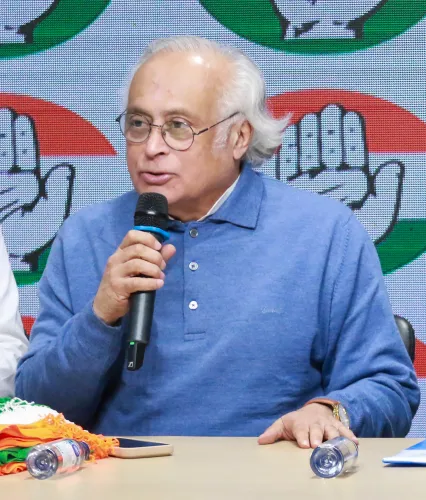
Congress leader Jairam Ramesh has written to Defence Minister Rajnath Singh over the Great Nicobar Island Project, challenging the government's strategic justification for a scheme he describes as 'essentially a commercial venture' that poses serious ecological and tribal rights risks. The letter, sent on 17 May 2026, is the third in a series Ramesh has addressed to senior Union ministers on the project in under three weeks.
A Sequence of Ministerial Letters
Ramesh had previously written to the Union Minister of Environment, Forests and Climate Change on 10 May 2026, arguing that a government press note — titled 'The Great Nicobar Island Project: FAQs', issued on 1 May 2026 — 'presents a completely false picture on the project's environmental clearances which, in reality, have been given on very dubious grounds.'
On 13 May 2026, he wrote to the Union Minister of Tribal Affairs, contending that the same FAQs 'misrepresent totally the position regarding the fulfillment of the provisions of the Forest Rights Act, 2006' and that the clearance process 'flagrantly violates, in letter and spirit, the individual and collective rights given to tribal communities by Parliament.'
Questioning the Strategic Rationale
In his letter to Rajnath Singh, Ramesh directly challenged the government's framing of the project as a national security imperative. 'The project, which is essentially a commercial venture and is facing growing public criticism because of the ecological damage it will cause, is being sought to be justified by the Government of India supposedly on overriding security considerations,' he wrote.
Ramesh was careful to preempt any charge of being anti-defence, stating: 'There can be no two opinions on the need to strengthen our nation's defences. There can also be no two opinions on the need to project India's strategic capabilities in a credible manner.'
Alternative Defence Infrastructure Proposed
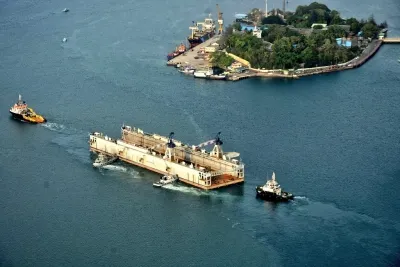
The Congress leader outlined three alternative options for bolstering India's strategic presence in the island region without the ecological footprint of the Great Nicobar project. He pointed first to INS Baaz, located at Campbell Bay on Great Nicobar Island, commissioned in July 2012, where plans to at least triple the existing runway length and construct a naval jetty have reportedly been pending approval for nearly five years. Ramesh noted these plans 'have far less adverse environmental impacts.'
He also cited existing assets of the Andaman and Nicobar Command — including INS Kardip, INS Kohassa, INS Utkrosh, INS Jarawa, and the Car Nicobar Air Force Station — as infrastructure that could be expanded at significantly lower environmental cost.
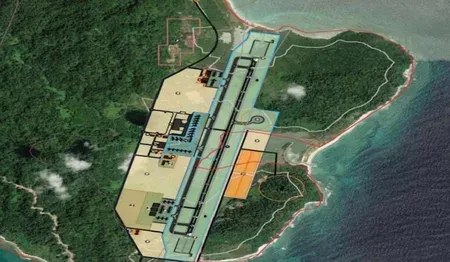
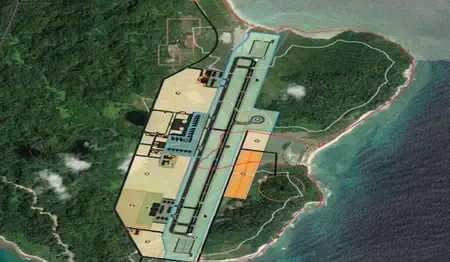
On the proposed transhipment port and township that form a core part of the Great Nicobar project, Ramesh argued they 'do not enhance our country's military capability in any way,' yet have 'suddenly emerged as a major justification' for the scheme.
Ecological Disaster Warning
Ramesh concluded his letter by urging the Defence Minister to reconsider, describing the project 'in its present shape and form' as 'a recipe for ecological disaster.' He noted that the alternatives he listed have, in fact, been proposed by 'distinguished naval officers themselves in their writings,' lending the critique additional weight beyond partisan politics.
The government is yet to respond publicly to Ramesh's latest letter. With environmental, tribal, and now defence ministries all addressed, the Congress leader appears to be building a multi-front legislative and public pressure campaign ahead of what could become a parliamentary flashpoint.
Point of View
Tribal Affairs, and now Defence, he is forcing each ministry to own a piece of a project that spans all three mandates — and making it harder for any single minister to deflect. The invocation of naval officers' own writings as sources for the alternatives is a deliberate move to insulate the critique from being dismissed as political grandstanding. The deeper question the government has not answered is why runway expansion at INS Baaz — pending for five years — has not been fast-tracked if strategic depth in the Andamans is genuinely the priority. That gap between stated urgency and administrative inaction is the most damaging element of Ramesh's case.
NationPress
9 Oct 2026
Frequently Asked Questions
What is the Great Nicobar Island Project?
The Great Nicobar Island Project is a large-scale infrastructure development plan for Great Nicobar Island in the Andaman and Nicobar archipelago, encompassing a transhipment port, township, and related facilities. Critics, including Congress leader Jairam Ramesh, have raised concerns about its environmental clearances, impact on tribal communities under the Forest Rights Act, 2006, and the government's use of national security as a justification for what they describe as a primarily commercial venture.
Why has Jairam Ramesh written to Rajnath Singh?
Ramesh wrote to Defence Minister Rajnath Singh on 17 May 2026 to challenge the government's framing of the Great Nicobar Island Project as a national security necessity. He argued that the project is essentially commercial in nature and that existing defence assets in the region — such as INS Baaz and other Andaman and Nicobar Command installations — could be expanded to meet strategic needs at far lower ecological cost.
What alternatives to the Great Nicobar project has Ramesh proposed?
Ramesh proposed three alternatives: expanding INS Baaz at Campbell Bay on Great Nicobar Island, where runway tripling and a naval jetty have been pending approval for nearly five years; upgrading existing Andaman and Nicobar Command assets including INS Kardip, INS Kohassa, INS Utkrosh, INS Jarawa, and Car Nicobar Air Force Station. He noted these options have been advocated by distinguished naval officers and carry significantly lower environmental impact.
What are the tribal rights concerns raised about the project?
Ramesh, in his 13 May 2026 letter to the Union Minister of Tribal Affairs, alleged that the government's FAQ document on the project misrepresents compliance with the Forest Rights Act, 2006. He argued the clearance process 'flagrantly violates, in letter and spirit, the individual and collective rights given to tribal communities by Parliament.'
How has the government responded to Ramesh's letters?
The government issued a press note on 1 May 2026 titled 'The Great Nicobar Island Project: FAQs,' which Ramesh has directly contested in his letters. As of 17 May 2026, no public response has been issued by the Defence, Environment, or Tribal Affairs ministries to Ramesh's specific letters.