Revanth Reddy, Rahul Gandhi Launch Telangana Gig Workers Welfare Scheme

Synopsis
Chief Minister A. Revanth Reddy and Lok Sabha Opposition Leader Rahul Gandhi jointly launched the Telangana Gig Workers Social Security and Welfare Scheme at Hitech City, Hyderabad on 14 November 2026, extending formal welfare coverage to app-based platform workers in one of India's largest tech-economy states.
Key Takeaways
Telangana Gig Workers Social Security and Welfare Scheme was officially launched on 14 November 2026 at Jayabheri Ground, Hitech City, Madhapur, Hyderabad .
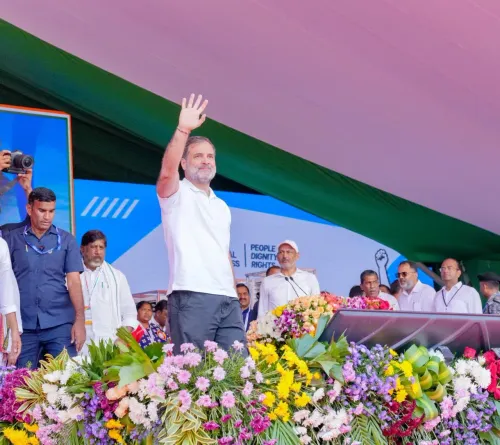
Revanth Reddy and Rahul Gandhi , Leader of the Opposition in the Lok Sabha, jointly presided over the launch.
The scheme targets gig and platform workers — including cab drivers, delivery riders, and logistics workers — who lack conventional employment protections.
The initiative is grounded in the Code on Social Security, 2020 , which first recognised gig workers as a formal labour category at the national level.
Telangana follows Rajasthan among Indian states that have moved to legislate or launch welfare frameworks specifically for platform workers.
Exact benefit packages, contribution structure, and enrolment timelines are yet to be published in the scheme rules.
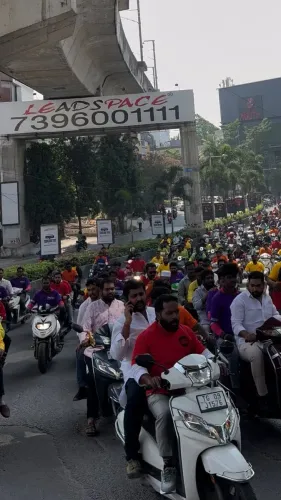
Millions of delivery riders, cab drivers, and app-based workers across Telangana moved a significant step closer to a formal safety net on Saturday, 14 November 2026, as Chief Minister A. Revanth Reddy and Leader of the Opposition in the Lok Sabha Rahul Gandhi jointly launched the Telangana Gig Workers Social Security and Welfare Scheme at Jayabheri Ground, Hitech City, Madhapur, Hyderabad.
A Safety Net for Hyderabad's Invisible Workforce
The launch, hosted in the heart of Hyderabad's technology corridor, was no accident of venue. Hitech City sits at the epicentre of the platform economy that has made Telangana one of India's busiest hubs for app-based ride-hailing, food delivery, and logistics services — the very sectors whose workers the scheme targets. These workers, who clock long hours on platforms but fall outside the protections of conventional employment contracts, have long occupied a legal grey zone: economically active, yet socially invisible to the welfare state.
The scheme draws its national policy foundation from the Code on Social Security, 2020, which for the first time formally recognised gig and platform workers as a distinct labour category and directed state governments to frame welfare mechanisms for them. Telangana's launch today translates that central mandate into a live state programme — a conversion that many states have been slow to make.
Where Telangana Fits in India's Gig-Worker Policy Race
Telangana is not the first state to act. Rajasthan enacted pioneering legislation for platform workers, establishing a registration board and mandating contributions from aggregator companies. Several other states have explored similar frameworks as the gig workforce has ballooned alongside the growth of super-apps and quick-commerce platforms. Telangana's move, however, carries added political weight: it is being inaugurated by the state's Congress Chief Minister alongside the party's national face, signalling that gig-worker welfare has become a plank the Congress intends to own at both the state and national level.
The specific benefit packages, contribution structure, and enrolment timelines of the Telangana scheme are expected to be detailed in the scheme rules that the government is set to publish. What to watch: whether platform companies — who have historically resisted being classified as employers — will be required to contribute to the fund, and how quickly workers can enrol and access benefits.
Congress's Political Calculus at Jayabheri Ground
The optics of the event were deliberate. Having Rahul Gandhi share the stage with CM Revanth Reddy at a mass public launch elevates a state welfare announcement into a national Congress statement on labour rights. The gig economy's workforce — young, urban, economically precarious — is a constituency that no party can afford to ignore as platform employment continues to outpace traditional job creation. For the Telangana government, the scheme also offers a tangible deliverable to a demographic that is large, organised through digital platforms, and increasingly vocal.
The question the scheme must now answer is not whether it was launched with fanfare, but whether the rules, the money, and the machinery will follow fast enough to reach the workers who need it most.
Point of View
But it also reflects a broader Congress strategy of using state governments as laboratories for labour-welfare messaging ahead of future electoral cycles. By placing Rahul Gandhi at the centre of a state-level scheme launch, the party is attempting to nationalise what is otherwise a regional announcement — signalling that gig-worker protections could become a central plank of the Congress platform economy agenda. The real test, however, will be in implementation: whether contribution mandates on platform companies survive legal challenge, and whether enrolment mechanisms reach the informal, often migrant, workforce they are designed to serve. Telangana's experience will be closely watched by other Congress-governed states considering similar moves.
NationPress
14 Nov 2026
Frequently Asked Questions
What is the Telangana Gig Workers Social Security and Welfare Scheme?
It is a state government initiative launched on 14 November 2026 to extend social security and welfare benefits to gig and platform workers — such as app-based cab drivers and delivery personnel — who are not covered by traditional employment protections.
Who launched the Telangana Gig Workers Welfare Scheme?
Chief Minister A. Revanth Reddy and Leader of the Opposition in the Lok Sabha Rahul Gandhi jointly launched the scheme at Jayabheri Ground, Hitech City, Madhapur, Hyderabad.
Which workers are covered under the Telangana Gig Workers Welfare Scheme?
The scheme targets gig and platform economy workers, including those employed through app-based ride-hailing, food delivery, and logistics platforms who lack conventional employment contracts.
Is Telangana the first Indian state to introduce a gig workers welfare scheme?
No. Rajasthan enacted earlier legislation for platform workers. Telangana's scheme is part of a broader trend of Indian states acting on the Code on Social Security, 2020, which directed states to frame welfare mechanisms for gig workers.
What benefits will gig workers get under the Telangana scheme?
The exact benefit packages, contribution structure, and enrolment timelines have not yet been officially published. The Telangana government is expected to release the detailed scheme rules following the launch.